Mobile Public Toilet Construction
The construction of mobile public toilets needs to be combined with functional requirements, environmental adaptation, and practical application scenarios. The following points can be referred to for specific details:

1. Selection of Construction Materials and Forms
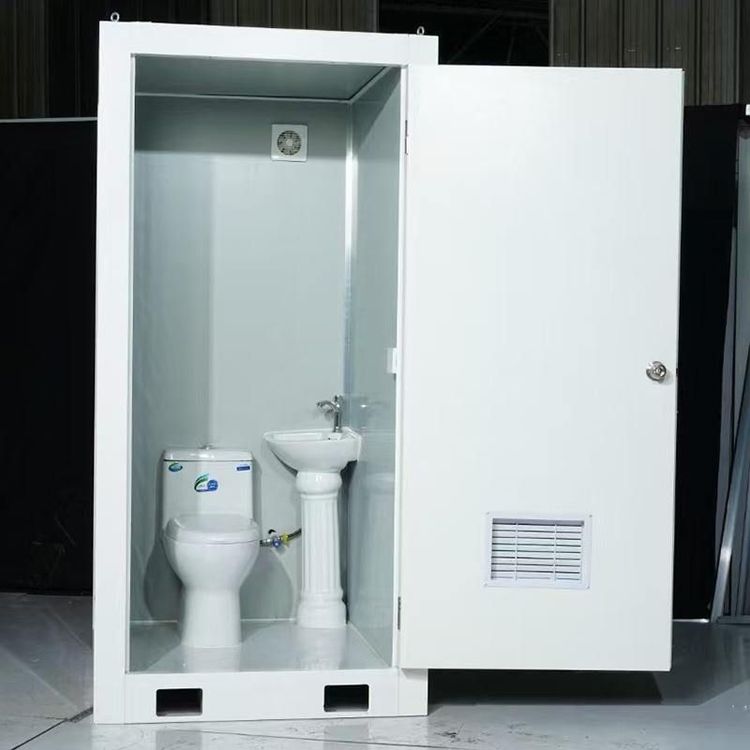
The construction materials for mobile public toilets should balance portability and durability. Building block materials (such as Lego blocks) can be used to create ultra-miniature models of movable public toilets, suitable for science popularization displays or children's educational scenarios, but they cannot meet actual usage needs. In actual construction, a modular design is often adopted, using lightweight metal frames (such as aluminum alloy), high-strength plastic panels, or fiberglass-reinforced plastic materials to ensure a stable structure and easy overall movement. Some high-end models also use environmentally friendly composite materials to improve thermal insulation and odor control performance.
2. Scene Adaptation and Styling Design
Adjust the styling and functional configuration of the toilet according to the setting location:
- Parks and scenic spots: They need to blend with the natural environment, using wood-grain or stone-textured exterior finishes, or being designed as landscape features (such as eco-toilets covered with greenery);
- Construction sites and squares: Practicality is the priority, with a preference for enclosed metal structures equipped with non-slip floors and ventilation systems;
- Commercial streets and stations: They need to balance pedestrian traffic and aesthetics, adopting streamlined designs and adding barrier-free facilities and directional signs.
3. Capacity Planning and Functional Configuration
Determine the number of toilet stalls (i.e., the number of simultaneous users) based on pedestrian traffic:
- High-traffic locations (such as large event venues): 6-10 stalls are required, along with additional management rooms and tool storage areas;
- Low-traffic locations (such as villa areas and newly built residential communities): 2-4 stalls are sufficient to meet demand.
Functionally, they should include basic facilities (such as squat/seat toilets, sinks, and lighting) and optional configurations (such as hand dryers, baby changing tables, and disabled-accessible stalls). Some mobile toilets are also equipped with sewage treatment systems (such as septic tanks and biodegradation technology) to adapt to environments without sewer systems.
4. Installation and Relocation Procedures
The installation of mobile toilets should follow the principle of rapid deployment:
- Fixed installation: In long-term usage locations (such as construction sites), they can be bolted to the ground and connected to water and electricity lines;
- Temporary installation: At event venues or emergency scenarios, they can be directly placed on flat ground, using generators for power and water tanks for water supply.
When relocating, connection components (such as water pipes and electrical wires) need to be disassembled and transported by specialized vehicles to the new location for reassembly.
Summary: The construction of mobile public toilets requires a comprehensive consideration of material selection, scene adaptation, capacity planning, and installation procedures, with the core goal of balancing functionality, portability, and environmental harmony to meet public health needs in different scenarios.