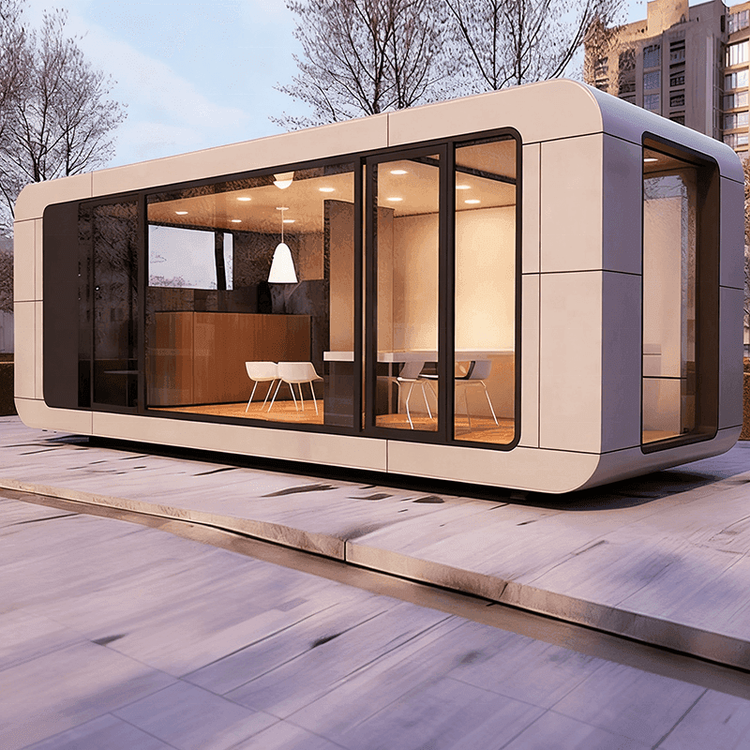
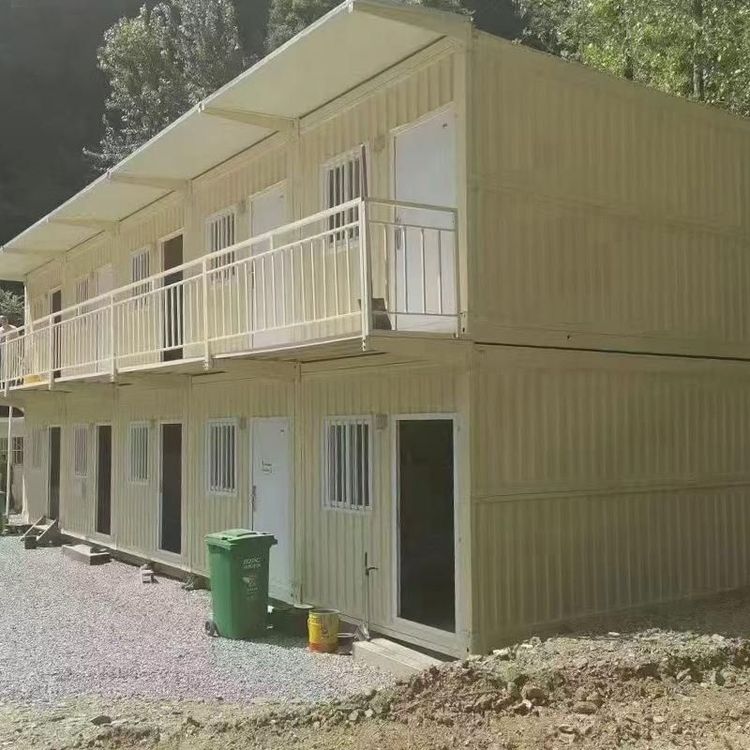
Mobile Prefab Toilet Treatment Solution
The mobile prefab toilet treatment solution needs to integrate five core units: waste treatment, water resource management, spatial structure optimization, system integration, and maintenance management, achieving efficient operation through technological synergy.
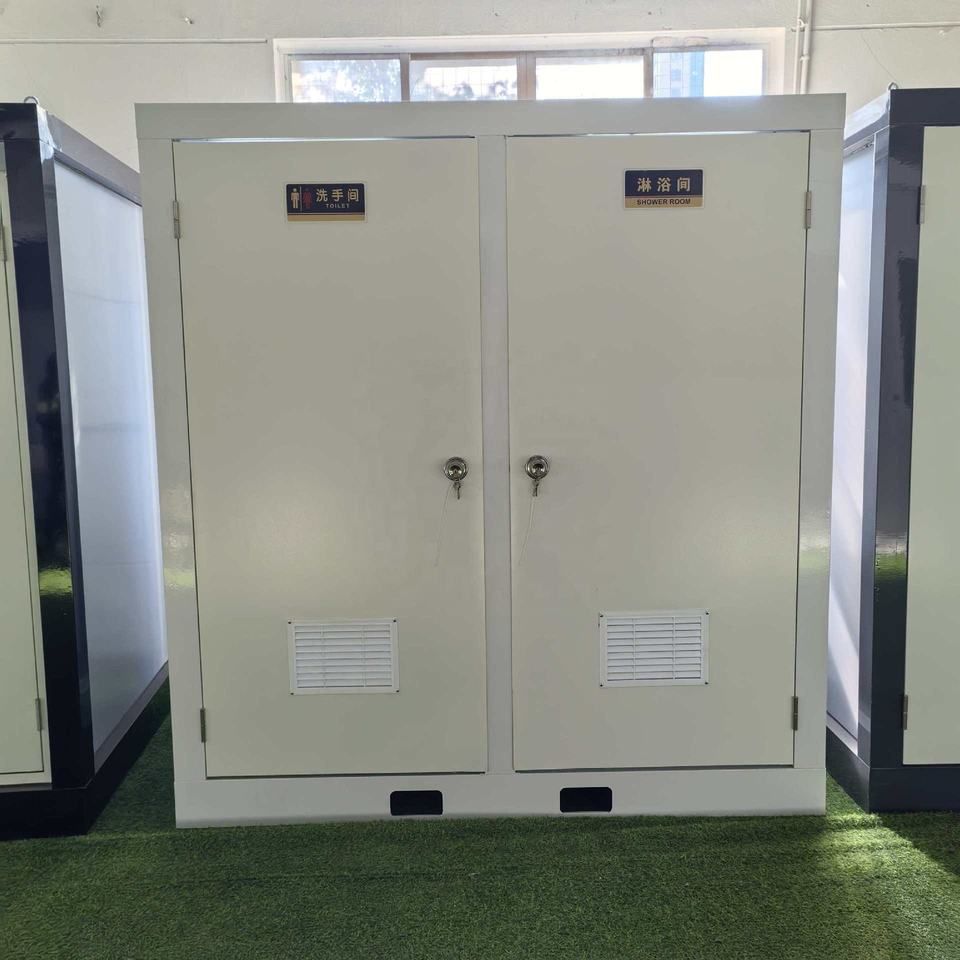
Waste Treatment Unit
The core is solid-liquid separation technology, using mechanical screens for initial sorting. The separated solids enter sealed containers, while the liquids are discharged through dedicated pipes. There are two sewage discharge paths: one is to connect to a septic tank or mobile treatment equipment, suitable for centralized discharge scenarios; the other is to integrate built-in storage and preliminary treatment units, with regular pumping for treatment. Mechanical separation requires regular cleaning of the screens to prevent clogging and maintain separation efficiency; storage containers must be marked with capacity limits to prevent overflow.
Water Resource Management Unit
The water supply system relies on pressure pumps and storage tanks to ensure stable water flow; the drainage system designs pipe slopes (≥1%) based on gravity principles and adopts anti-freezing and anti-clogging measures. Independent drainage pipes prevent mixing with other systems to avoid cross-contamination. Some systems achieve water resource recycling through multi-layer filtration but require regular replacement of filter media (such as activated carbon and sand) to prevent bacterial growth. Storage tanks must be covered and sealed to prevent dust or insects from entering.
Spatial Structure Unit
The walls are made of waterproof composite panels, with elastic sealing materials used at joints; the floor slopes towards the drainage outlet to prevent water accumulation. The positions of ventilation openings are optimized through calculations to ensure air circulation covers the entire area and reduces odor retention. Lightweight composite panels serve as the main enclosure, needing to meet load-bearing and lifting transportation requirements while possessing moisture-proof, corrosion-resistant, and heat-insulating properties. Flexible sealing materials are used at panel joints and the connections between walls and floors to prevent leakage and damage to the main structure.
System Integration Unit
Pipe interfaces are designed with standardization, supporting quick disassembly and assembly with stable sealing performance; electrical control manages the lighting, ventilation, and water pump start-stop, with wiring laid following waterproof and insulating principles. Each subsystem is linked through preset programs, such as automatically starting ventilation equipment during drainage to prevent odor diffusion. Standardized interfaces for external water sources and sewage pipes should be laid in advance to shorten on-site installation time.
Maintenance Aspect
Daily inspections include water level monitoring, drainage speed testing, and seal checks; regular maintenance involves pipe cleaning, seal replacement, and emptying storage units. Maintenance records should detail the operation time, content, and any abnormalities for easy tracing of problem sources. When cleaning and disinfecting, neutral cleaning agents should be selected according to the panel properties to avoid surface corrosion; ventilation equipment should have its filters cleaned regularly to ensure air exchange efficiency.