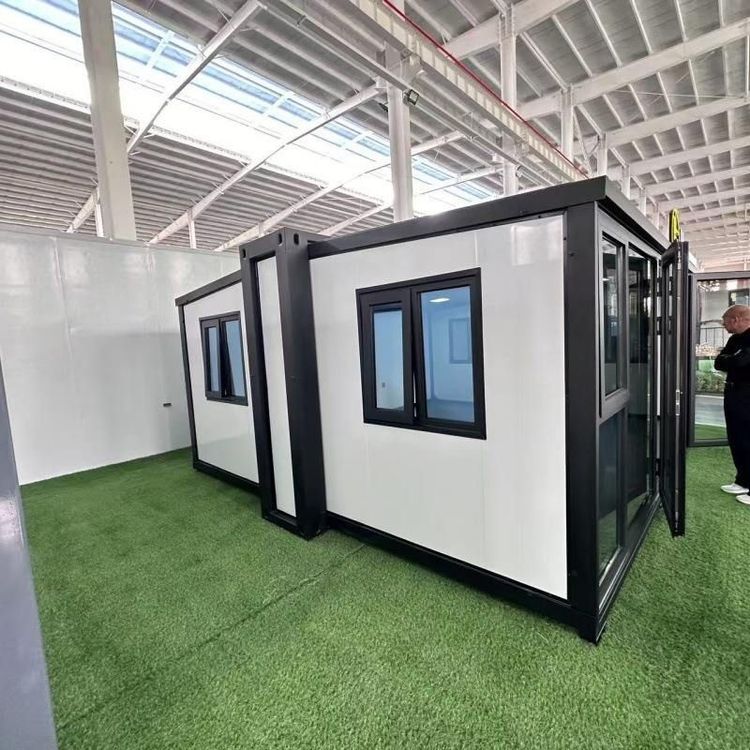
Mobile Prefab Toilet Renovation Plan
The renovation of mobile prefab toilets should focus on modular design, functional optimization, and environmental protection requirements. The specific plan is as follows:

I. Modular Enclosure System Renovation
Structural framework: Combine light steel keels with composite panels, enabling rapid assembly through prefabricated connectors while balancing strength and recyclability to accommodate repeated disassembly and reassembly. Wall and floor design: Ensure waterproofing and slip resistance. Select waterproof composite panels for walls, with elastic sealing materials for joints. Design floor slopes (usually ≥2%) towards drainage outlets, and adopt a separated structure for the top and bottom for easy transportation and assembly. Thermal insulation and soundproofing: Achieve this by filling sandwich wall panels with rock wool or polyurethane, effectively isolating outdoor temperature, humidity, and noise interference.
II. Sanitary Treatment System Upgrade
- Waste treatment:
- Separate solids and liquids using physical sieving technology, with solids entering sealed containers and liquids discharged through dedicated pipelines.
- There are two treatment paths: Connected type: Connect to municipal sewage networks, equipped with standard interfaces and pressurization equipment; Closed-loop type: Equip with black water storage tanks, gray water filtration devices, and partially introduce biological degradation (e.g., bacterial decomposition of excreta) or chemical treatment (environmentally friendly agents for disinfection and deodorization).
- Water resource management:
- Combine a water supply system with pressure pumps and storage devices, which can be connected to rainwater harvesting or reclaimed water reuse systems; design drainage pipelines with slopes based on gravity and adopt anti-freezing and anti-blocking structures, with water circulation achieved through multi-layer filtration.
- Water-saving technology: Apply high-pressure air flushing, vacuum suction, or micro-water flushing technologies, reducing single-flush water consumption to less than one-third of conventional sanitary ware.
III. Auxiliary System Optimization
Ventilation system: Adopt a forced exhaust design, maintaining negative pressure through timers or sensor-activated fans to prevent odor retention. Electrical system: Integrate municipal power, backup batteries, and solar modules to adapt to areas without power grids. Humanized details: Include plastic windows for natural light, metal locks for security, and color-steel trimming to avoid sharp edges; floor slip resistance treatment, nighttime signage, and barrier-free access are achieved through standardized accessories.
IV. Installation and Maintenance Specifications
Installation process: First, check the completeness of loose parts, assemble the framework in the order specified in the instructions, ensure smooth opening and closing of doors and windows, and then secure the external panels. Maintenance management: Divided into three levels: daily inspection of water levels, drainage speeds, and seal conditions; regular cleaning of pipelines, replacement of seals, and maintenance of filtration media; establish maintenance records to identify potential issues in advance.
V. Scenario Adaptation and Environmental Protection Enhancement
Adjust designs for different scenarios: Utilize modular rapid coverage for scattered points in new rural areas; adopt dry-wet separation in outdoor construction sites to reduce cleaning difficulty; dynamically layout according to tourist flow in scenic areas. Environmental protection measures: Include prioritizing the use of recyclable materials (e.g., light steel, eco-friendly panels); converting excreta into fertilizer through biological degradation or packaging and sealing; and reducing land excavation through lightweight overall design to protect the ecological environment.
Through the above renovations, mobile prefab toilets can achieve efficient sanitation, flexible deployment, and low-carbon operation and maintenance, meeting the needs of diverse scenarios.