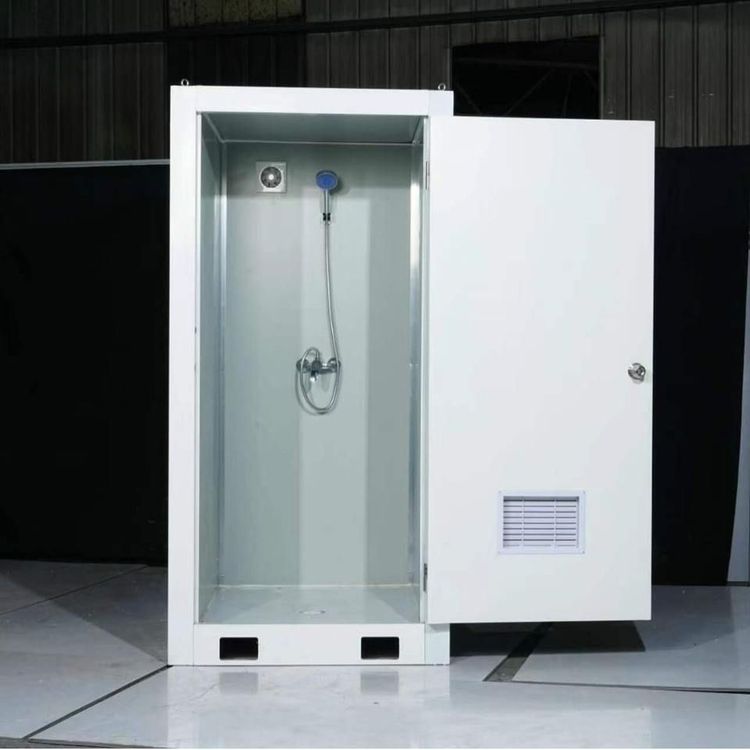
Mobile Portable Toilet
A mobile portable toilet is a facility that can be moved as a whole and provides public toilet services, featuring mobility, modularity, and ease of transportation.

I. Basic Components A mobile portable toilet typically consists of a fecal sewage storage tank (or disposal unit), flooring, sanitary fixtures, walls, washing facilities, water tanks, roofs, and mobile units. These components work together to ensure the basic functions of the toilet are realized, such as storing and treating fecal sewage, providing toilet space, and maintaining hygiene conditions.
II. Classification Methods
- By structural form: Mobile toilets can be divided into single-unit and composite-structure mobile toilets. Single-unit structures are relatively simple and suitable for places with limited space or high flexibility requirements; composite structures are more complex and may include multiple functional areas, suitable for large events or long-term use scenarios.
- By mobility method: Mobile toilets can be classified as lifting/handling mobile toilets and powered/trailer-mounted mobile toilets. Lifting and handling types usually require external equipment for movement and are suitable for replacement at fixed locations or short-distance transportation; powered and trailer-mounted types have autonomous mobility capabilities and can be transported long distances or deployed quickly.
- By sewage treatment method: Mobile toilets can be divided into water-flush and waterless suction types, recirculating water-flush types, and dry-packing types. Water-flush types use water resources for flushing and have high cleanliness; waterless suction types use suction equipment to treat feces and are suitable for water-scarce areas; recirculating water-flush types reduce waste by recycling water resources; dry-packing types package feces for treatment and do not require water resources.
III. Application Scenarios Mobile toilets are suitable for stations, docks, tourist attractions, villa areas, newly built residential areas, large construction sites, squares, densely populated public places, and bustling commercial streets. These places usually have high foot traffic and a high demand for sanitary facilities, and the mobility and flexibility of mobile toilets enable them to be quickly deployed and meet the needs.