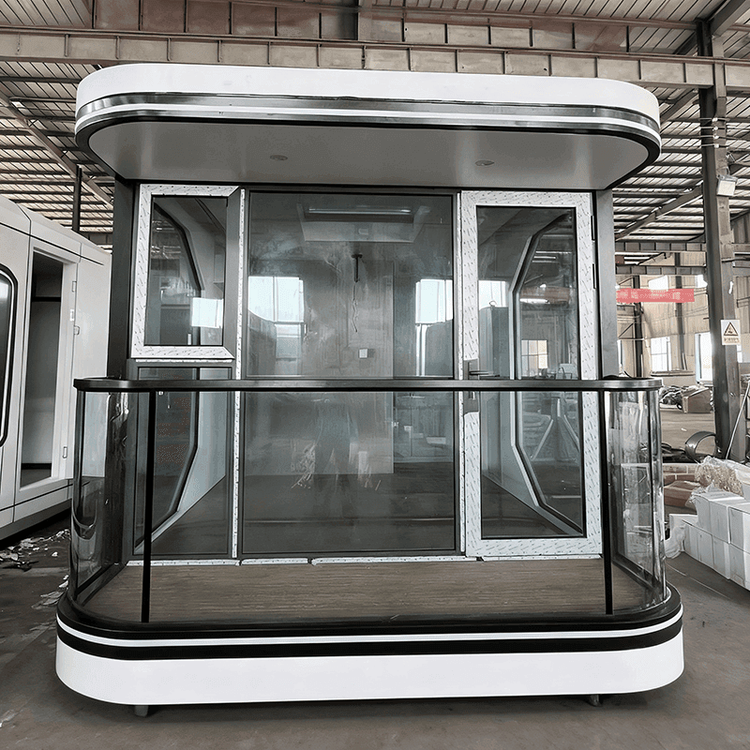
Mobile Portable Toilet Safety
Mobile portable toilets generally offer relatively high safety, but potential hazards should still be noted during use.

From a structural design perspective, mobile portable toilets are professionally designed and manufactured to meet safety standards. Their main structures are made of high-strength materials, providing resistance to wind and rain, and are unlikely to collapse or deform under normal usage conditions. For example, some models feature steel frame structures with anti-corrosion coatings, enabling them to adapt to complex outdoor environments.
In terms of internal facilities, mobile toilets fully consider user safety needs. Non-slip floors are a common feature, treated with special textures or anti-slip materials to effectively reduce the risk of falls caused by wet surfaces. Privacy protection devices, such as partition panels and door locks, prevent external peeping and safeguard user privacy. Some high-end models are also equipped with emergency call buttons, allowing users to seek help with a single press in case of emergencies, thereby shortening the response time for rescue.
At the level of hygiene and safety, mobile toilets employ technological means to reduce the risk of cross-infection. Some models use enclosed sewage storage tanks to physically seal and collect pollutants, preventing sewage leakage and environmental contamination while cutting off pathogen transmission routes. Some products also integrate instant disinfection modules that automatically release chemical disinfectants or ultraviolet light at key contact points during toilet use (such as toilet seats and door handles), further reducing bacterial and viral residues.
Despite their high safety standards, mobile toilets still require attention to potential risks. For example, users should avoid extending body parts out of windows to prevent collisions or falls. When using them alone at night, it is advisable to choose well-lit areas with frequent pedestrian traffic to avoid safety issues caused by dim environments or isolation. Additionally, regular maintenance and cleaning are crucial for ensuring safety. If equipment ages or becomes damaged (such as malfunctioning door locks or broken floors), timely repairs should be made.
In summary, mobile portable toilets provide a high level of safety assurance through comprehensive design in terms of structure, facilities, and hygiene technologies. However, users should still adhere to basic safety guidelines to minimize risks.