
Mobile Portable Toilet
A mobile portable toilet, also known as a mobile toilet, is a facility that can be moved as a whole and provides toilet services to the public. It is introduced from multiple aspects below:
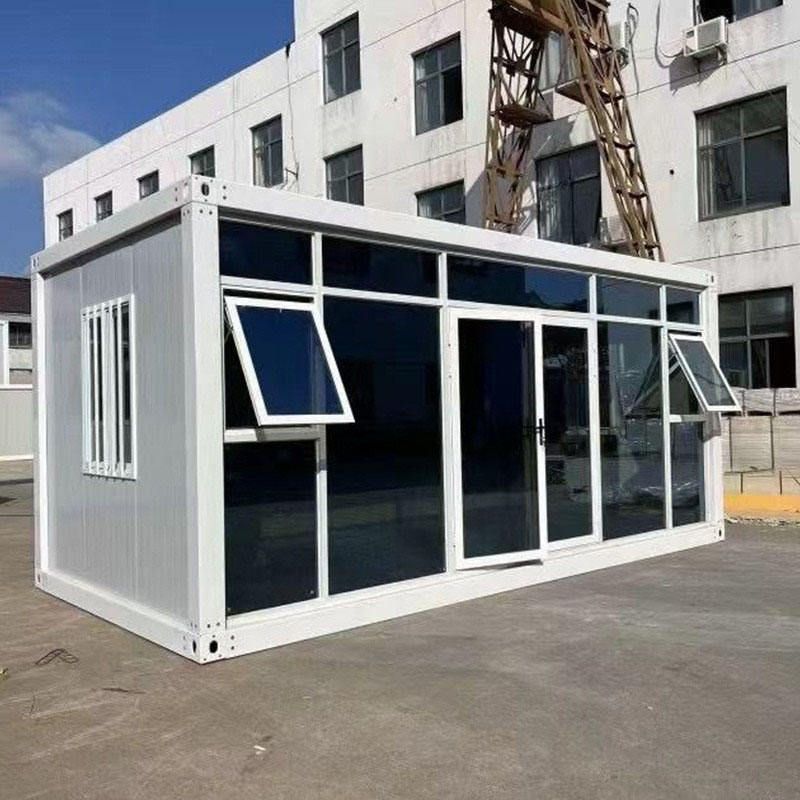
Applicable Places: Stations, docks, tourist attractions, villa areas, newly built residential communities, large construction sites, squares, densely populated public places, and bustling commercial streets, etc. It can meet people's toilet needs in different scenarios.
Composition Structure: It includes a fecal sewage storage tank (or disposal device), floor slab, sanitary ware, walls, washing equipment, water tank, roof, mobile device, etc. Each part works in coordination to ensure the normal use of the toilet.
Classification:
- By structural form: There are single-structure mobile toilets with independent compartments, suitable for places with scattered pedestrian flow; and composite-structure mobile toilets that can be modularly assembled to form multiple toilet stalls and can also be equipped with facilities such as washbasins.
- By moving method: It is divided into hoisting and handling types, and powered and towed mobile toilets.
- By sewage treatment method: There are water-flushing and non-water-flushing suction types, circulating water-flushing types, and dry-packing mobile toilets.
- According to special needs: Mobile toilets with barrier-free access, eco-friendly types (such as those using microbial degradation or circulating water flushing), and luxury types (equipped with air conditioners, etc.) have emerged.
Characteristics and Advantages: It can be conveniently transported to the required place and can be used repeatedly. It has the advantages of mobility, combinability, and convenient transportation.
Design Principles: Easy to move, economical and durable; eco-friendly and beneficial to the environment; improve efficiency and promote humanity. The overall structure is light, durable, and sturdy, with controlled height and width, and the mobile device is complete and reasonable.
Material Structure: The main frame is mostly made of steel structure; the exterior wall materials can be galvanized steel plates, etc., and the interior is insulated with rock wool, etc.; the floor is paved with anti-slip floor tiles and matched with a waterproof layer; the doors and windows are mostly made of aluminum alloy profiles with insulated tempered glass.
Customization Process: First, communicate the needs to determine the size and layout, etc.; the enterprise designs a plan according to the on-site conditions, and after confirmation, it is prefabricated in the factory; the production cycle is about 7 to 15 days; after prefabrication, it is transported to the site, hoisted or assembled, and connected to water and electricity for use.
Application Scenarios: It can serve as a supplement to temporary public health facilities in municipal squares and urban commercial areas; solve the toilet problem for tourists during peak periods in tourist attractions and parks; provide convenient and hygienic conditions for workers in industrial parks and construction sites; serve as an extension of fixed facilities in road traffic and expressway service areas; and is also commonly needed in schools, communities, and other places.
Internal Configuration: The basic configuration includes a lighting system, sockets, a distribution box, an exhaust fan, etc. It can also be equipped with an inverter air conditioner to enhance the user experience.



