
Mobile Portable Toilet
A mobile portable toilet is a facility that can be moved as a whole and provides toilet services to the public. It is not restricted by fixed buildings and can be flexibly deployed in various locations.
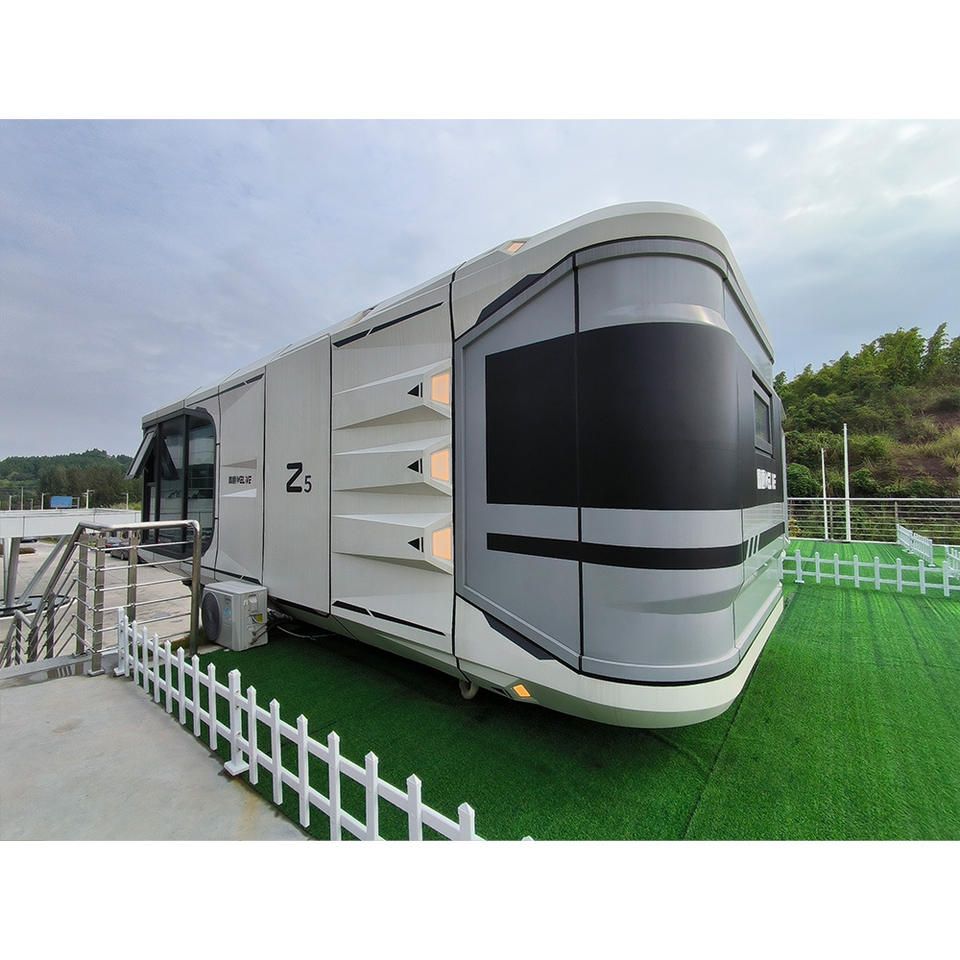
Composition Structure
A mobile portable toilet generally consists of a fecal sewage storage tank (or fecal sewage treatment device), floor slab, sanitary ware, walls, washing equipment, water tank, roof, and mobile device, etc. These components work together to form a complete toilet space to meet people's basic needs.
Classification Methods
- By structural form: It can be divided into single-structure mobile toilets and composite-structure mobile toilets. The single structure is relatively independent and simple, while the composite structure may be composed of multiple parts and may have richer functions.
- By moving method: There are lifting and handling-type mobile toilets, which usually require lifting equipment or manual handling for movement; and powered and towed-type mobile toilets. The powered type can provide its own moving power, and the towed type can be connected to a vehicle for towing.
- By sewage treatment method: It can be divided into water-flushing and non-water-flushing suction-type mobile toilets. The water-flushing type uses water to flush feces, while the non-water-flushing suction type uses a suction device to treat feces; the circulating water-flushing type mobile toilet can recycle the flushing water to save water resources; the dry-packing type mobile toilet dry-packs the feces.
Characteristics and Advantages
It has the advantages of being movable, combinable, and easy to transport. It can be conveniently transported to any place where a toilet needs to be set up and can be used repeatedly. Not restricted by fixed buildings, it can be flexibly scheduled according to the density of people, the location of events, etc. Whether it is in urban business districts, large-scale exhibitions, or remote outdoor scenic spots, it can be quickly deployed to promptly meet people's toilet needs.
Design Principles
The design should follow the principles of being mobile and convenient, economical and durable; environmentally friendly and beneficial to the environment; improving efficiency and promoting humanity. The overall structure should be considered to be lightweight, and lightweight and durable materials should be used as much as possible while ensuring structural firmness. The height and width of the toilet should also be controlled during design, and the mobile device should be fully considered for completeness and rationality. In addition, nowadays, there are also small and intelligent environmentally friendly mobile public toilets with complete configurations such as internal feces collection systems, hand-washing sinks, smart mirrors, and breathing lights. They are made as a whole in the factory and can be used immediately after purchase.



