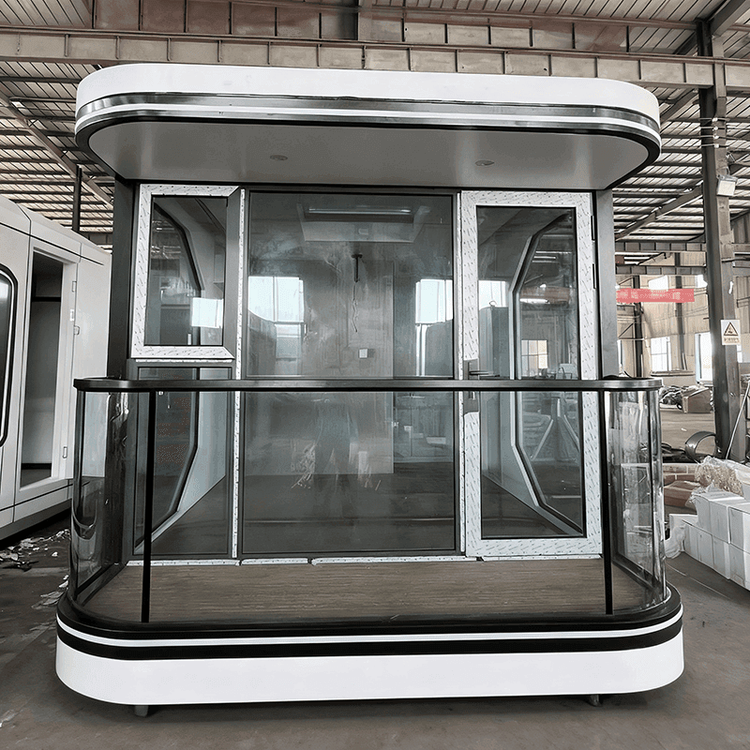
Mobile Plastic Toilet
Mobile plastic toilets have various creative transformation forms and structural features.

I. Creative Transformation Forms
- Transformation of Waste Plastic Buckets: Using waste plastic buckets as the base material, caster wheels are installed to enable mobility. Wooden strips are used inside to fix the structure. The bucket body is cut to create usable space. Aluminum sheets are embedded to enhance stability. Door panels are assembled to ensure privacy. Floor drains and valve switches are installed for drainage control. This design is cost-effective and suitable for temporary or outdoor scenarios.
- Lightweight Plastic Mobile Toilet: The 2026 new model adopts lightweight materials and is equipped with instructional signs to guide operation. The ventilation design optimizes air circulation. A large-capacity freshwater tank supports long-term use. A gravity-flush sewage tank combined with a foot pump enables power-free sewage disposal. An exhaust pipe effectively removes odors. The overall design balances portability and hygiene.
- Combination of Water Storage Tanks and Pallets: Using water storage tanks as the main body for water storage and sewage disposal, caster wheels are fixed at the bottom of the pallet for mobility. The tank body is cut to create an opening. Two tanks are stacked and fixed to expand capacity. A door opening is cut, and drainage elbows, toilets, faucets, washbasins, and other facilities are installed. Finally, door panels are assembled to complete the enclosed space construction. This design is suitable for rapid setup in resource-limited scenarios.
II. Structural Composition and Classification
Mobile toilets are usually composed of modules such as fecal sewage storage tanks (or disposal devices), floor slabs, sanitary ware, walls, washing equipment, water tanks, roofs, and mobile devices. They can be classified into single-unit and connected types based on structural form; towed, self-propelled, and fixed-then-disassembled types based on mobility; and direct-discharge, packaged, and biochemical treatment types based on sewage treatment methods. Their core advantages lie in mobility (suitable for temporary events, disaster relief, etc.), combinability (meeting different personnel requirements through module assembly), and convenient transportation (lightweight design reduces logistics costs).
III. Application Scenarios and Value
The above designs cover a wide range of needs from low-cost DIY to industrial products. They can be used in temporary places such as outdoor camping and construction sites, and can also meet long-term use scenarios with high environmental protection requirements through upgraded configurations (such as biochemical treatment devices), reflecting the combination of resource recycling and functional innovation.