
Mobile Modular Toilet
A mobile modular toilet is a public restroom facility that can be moved as a whole and deployed as needed, featuring high flexibility and diverse functions. The following provides an introduction from aspects such as structure, classification, advantages, application scenarios, and design and production:
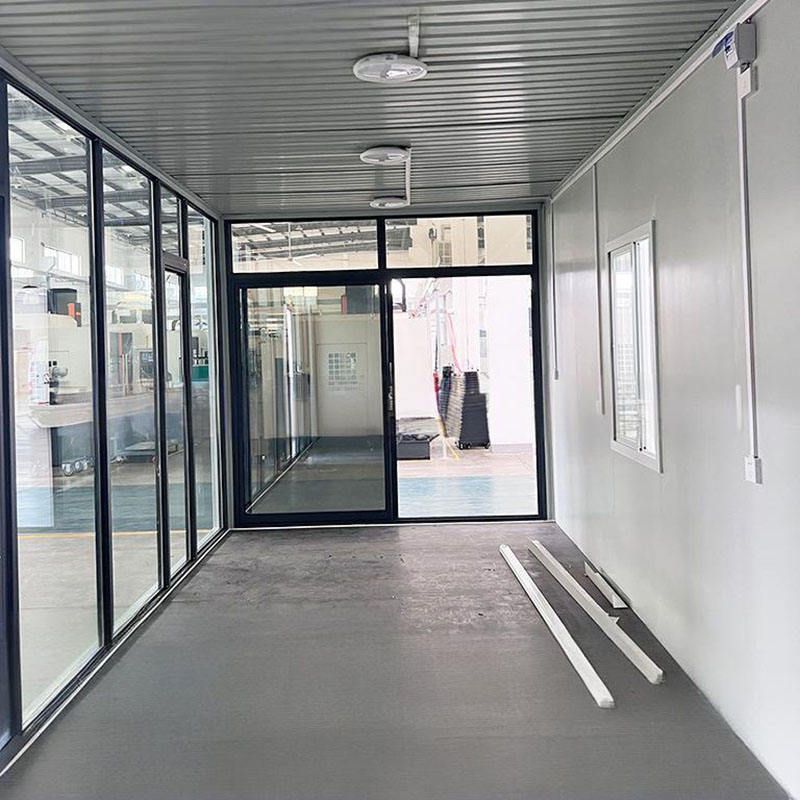
I. Structure and Composition
The main body of a mobile modular toilet is welded using a steel structure frame. The exterior employs high-strength galvanized steel pipes or square steel as the main load-bearing framework. High-strength bolts are used to achieve rigid connections and force transmission between compartments, ensuring structural stability. The enclosure structure generally selects double-layer steel plate sandwich polyurethane foam panels or FRP fiberglass, balancing thermal insulation and durability. The internal piping adopts concealed PPR water supply and drainage loops, integrating a sewage pretreatment module, and is equipped with a negative pressure ventilation system to reduce odors. Lightweight compartment panels are used to optimize space utilization. The core components include fecal sewage storage tanks (or disposal devices), floor panels, sanitary fixtures, washing equipment, water tanks, roofs, and mobile devices.
II. Classification Methods
- By structural form: Divided into single-unit structures (independent units) and composite structures (multi-compartment combinations).
- By mobility method: Includes lifting/handling types (requiring external equipment for movement) and powered/trailer types (with built-in power or capable of being towed for transportation).
- By sewage treatment method: Covers water-flush and waterless suction types (relying on vacuum suction or fecal storage tanks), circulating water-flush types (with sewage purification for reuse), and dry packing types (fecal packing without water treatment).
III. Core Advantages
Its greatest feature lies in mobility, enabling rapid deployment to temporary or fixed demand locations such as train stations, docks, tourist attractions, and large construction sites, and supporting repeated disassembly and reassembly. The modular design allows flexible combinations based on site requirements, such as creating functional areas like management rooms, men's restrooms, and lobbies through assembly, adapting to oversized transportation restrictions. Additionally, the use of concealed piping and eco-friendly materials reduces maintenance costs, aligning with green building concepts.
IV. Application Scenarios
Suitable for densely populated public places (such as squares, commercial streets), temporary event areas (such as exhibitions, music festivals), and special environments (such as villa areas, camping bases). For example, connected-unit mobile toilets, with their independent squatting positions, are often used in scenic parks; modular assembled ecological toilets can meet the long-term usage needs of large construction sites or newly built residential areas.
V. Design Principles and Production Installation
Design should adhere to the principles of lightweight durability, environmental efficiency, and humanitarian care, controlling height and width to meet transportation standards, and ensuring mobile devices are complete and reasonable. For the production process, it is recommended to select manufacturers with steel structure research and development capabilities and prioritize customized solutions from source factories to control costs. Taking Tianjin Dayuan Technology as an example, its process covers demand assessment, steel cutting, frame welding, panel cladding, system commissioning, and factory quality inspection, providing one-stop services and significantly shortening the site entry period.



