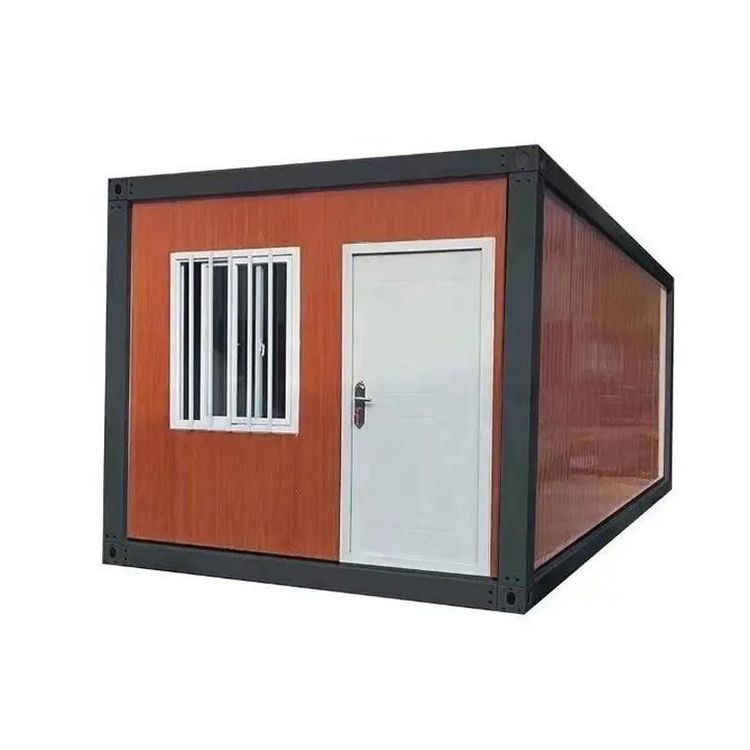
Mobile Men's Restroom
Mobile men's restrooms are portable sanitation facilities specifically designed for men or can be configured for male use, including customized models, male-designated areas in general-purpose mobile restrooms, and dynamically adjustable toilet stalls in tidal restrooms.

1. Customized Men's Exclusive Mobile Restrooms
Some companies can customize men's exclusive mobile restrooms according to specific needs. For example, Dezhou Hongtu Metal Products Co., Ltd. customized an apple-shaped restroom for a client in Hunan. Its exterior wall is made of galvanized sheet metal in a brown color, with a public handwashing area at the front. The overall design balances practicality and aesthetics. These restrooms are typically optimized for male usage scenarios, such as increasing the number of urinals and adjusting stall layouts to meet male users' needs.
2. Male-Designated Areas in General-Purpose Mobile Restrooms
Mobile restrooms can be classified by structural form into single-unit structures (independent units) and composite structures (multi-unit combinations); by mobility into hoisting types, carrying types, and powered towing types; and by sewage treatment methods into flush types, non-flush suction types, circulating flush types, and dry-pack types. Among these types, some restrooms clearly designate male areas, equipped with urinals or adjusted stall ratios. For example, flush-type mobile restrooms may have more urinals to improve usage efficiency.
3. Dynamic Adjustment Mechanism in Tidal Restrooms
Tidal restrooms feature "gender-neutral stalls" combined with movable signs or lockable sliding doors to dynamically adjust stall permissions based on real-time foot traffic. For instance, during peak male usage periods, some general stalls can be temporarily converted to male-exclusive use through sign changes or door lock controls. This design effectively alleviates gender usage imbalances and improves overall restroom utilization.
4. Core Components of Mobile Restrooms
Regardless of type, mobile restrooms typically include modules such as fecal sewage storage tanks (or disposal units), flooring, sanitary fixtures (e.g., urinals, toilets), walls, handwashing equipment, water tanks, roofs, and mobility devices. The combination of these components determines the restroom's functional characteristics. For example, dry-pack types require no water source and are suitable for water-scarce environments, while circulating flush types achieve water reuse through sewage treatment.