Mobile Toilets for Long-Distance Travel
There are mainly two ways to address toilet needs during long-distance travel: mobile toilets and in-car commodes, with some related incidents also prompting safety considerations.

Mobile Toilets
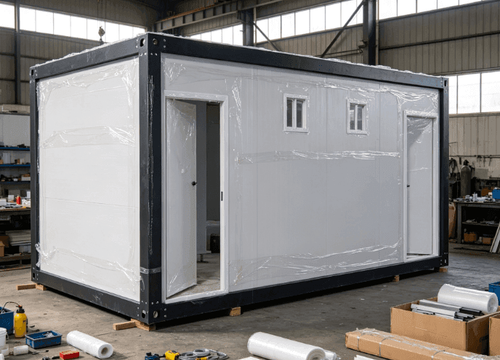
Mobile toilets offer numerous advantages and are suitable for various locations such as train stations, docks, tourist attractions, large construction sites, squares, densely populated public areas, and bustling commercial streets. They are movable, modular, and easy to transport, allowing them to be conveniently carried to any location where a toilet is needed and can be used repeatedly. During long-distance travel, if one encounters an urgent need in a suitable place, mobile toilets can provide a relatively convenient solution. However, their usage scenarios are relatively fixed, requiring travelers to know in advance whether mobile toilets are available nearby.
In-Car Commodes
On April 10, 2026, the National Intellectual Property Administration announced the granting of a utility model patent named 'In-Car Commode and Vehicle' to Seres Automotive Co., Ltd. This 'in-car commode' can be completely hidden and stored beneath a car seat using a set of slide rail components. When needed, it can be pulled out to form a complete toilet structure, complete with disposable toilet bags. After use, it can be easily retracted, and the seat returned to its original position, making it impossible to tell from the outside that such a 'secret weapon' is hidden inside the car. This design is a boon for families with children and self-driving enthusiasts, addressing the challenge of finding a toilet during long-distance travel. However, it has also sparked controversy. Supporters find it convenient and practical, while opponents express concerns about odors, difficulties in subsequent cleaning, social embarrassment, increased vehicle costs, space occupation, and potential hygiene issues.
Related Incidents
On May 11, 2026, a woman in Baoding, Hebei, entered a roadside mobile toilet due to an urgent need, only to find herself and the toilet lifted onto the highway by a crane, embarking on an unexpected 'highway toilet sightseeing tour.' Although humorous, this incident sounded a safety alarm, highlighting issues such as worker negligence, 'phubbers' ignoring real-world dangers, and safety procedure loopholes. It serves as a reminder for people to pay attention to their safety when using mobile toilets and other facilities, and for relevant staff to standardize operational procedures.