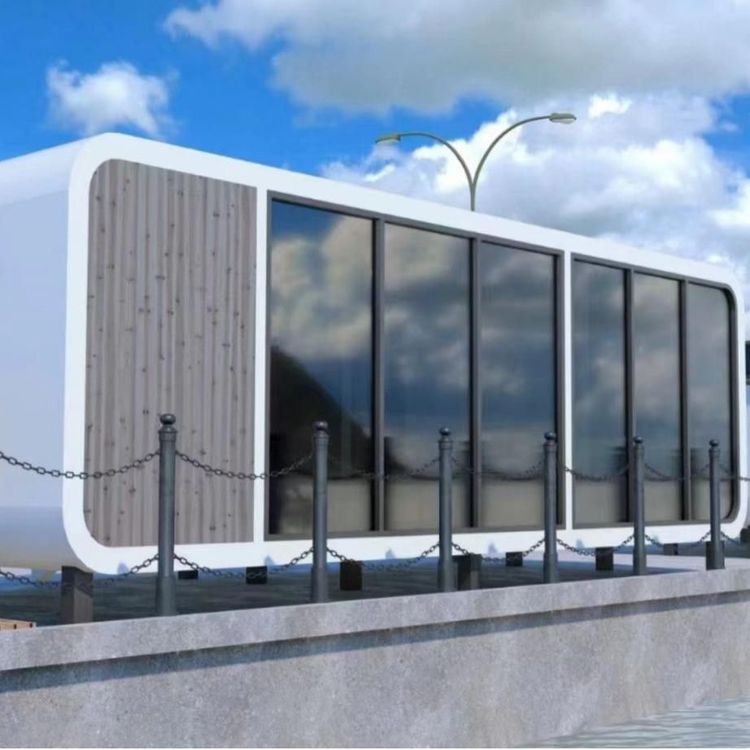
Mobile Kiosk and Toilet
Mobile kiosks and mobile toilets are two types of public facilities with different functions, serving the needs of goods sales and public sanitation respectively.

Mobile Kiosk
A mobile kiosk is a flexible mode of goods sales, with a typical example being the small truck operated by Zhou Gang, a young man of the Tujia ethnic group born in the 1990s in Lichuan, Hubei. Its core feature is to carry hundreds of goods on a vehicle and actively reach into mountain villages, providing villagers in areas with inconvenient transportation with daily necessities, food, and other goods. This model breaks through the geographical limitations of traditional fixed stores and covers scattered consumer groups through the method of “visiting villages and households,” making it particularly suitable for remote areas or scenarios with low population mobility. Its operation relies on small trucks as carriers, and the types of goods need to be dynamically adjusted according to the needs of villagers, such as adding farm tools and seasonal goods to enhance service targeting.
Mobile Toilet
A mobile toilet is a public sanitation facility that can be moved as a whole, designed to provide toilet services for temporary or fixed locations. Its core functions and applicable scenarios are as follows:
- Applicable locations: It covers densely populated areas (such as stations and squares), temporary activity areas (such as large construction sites and tourist attractions), and special-need areas (such as villa areas and newly built residential communities). For example, in 2023, the Lanzhou Yellow River Scenic Area alleviated the pressure on tourists to use toilets by placing mobile toilets.
- Structure and materials: It is composed of modules such as a feces storage tank, sanitary ware, walls, and roofs. The materials have been upgraded from traditional wood to fiberglass-reinforced plastic and polyethylene, balancing durability and lightweight properties. For example, the “Jingjie” restrooms in Dunhuang use high-end materials and support scan-to-pay functions, reflecting technological upgrades.
- Classification and treatment: They are classified by structure into single and composite types; by mobility into hoisting and powered types; and by sewage treatment into water-flush and dry-packing types. For example, the simple dry toilets on the periphery of the Mingsha Mountain Scenic Area use dry packing and charge 1-2 yuan per use, focusing on low cost and convenience.
- Design principles: They emphasize being lightweight, sturdy, and environmentally friendly, requiring control of height and width to adapt to transportation, with complete and reasonable moving devices. For example, although the “Jingjie” restrooms in Dunhuang cost 8 million yuan, they enhance user experience through intelligent design, balancing functionality and cost.
Comparison and Connection
Both have “mobility” as their core advantage but serve different fields: mobile kiosks solve the problem of obtaining goods, while mobile toilets address basic sanitation needs. In practical applications, the two can complement each other. For example, at large outdoor event sites, mobile kiosks provide food and beverages, while mobile toilets ensure sanitation, jointly improving the quality of public services.