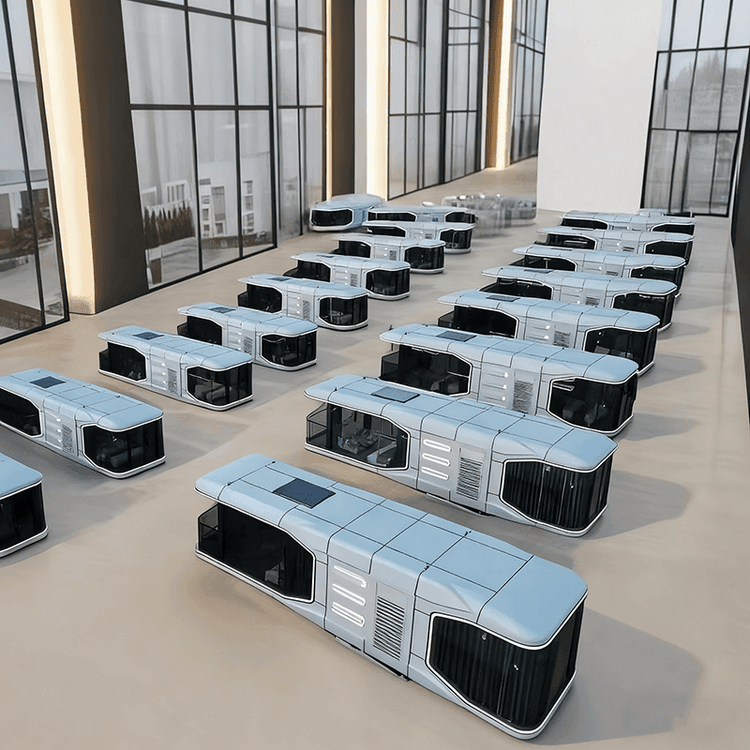
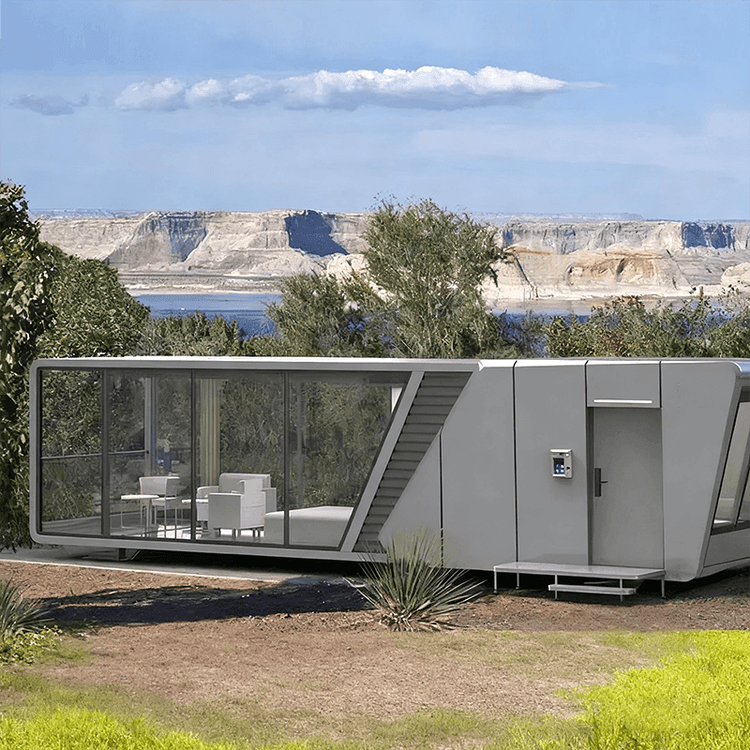
Mobile Intelligent Toilet
A mobile intelligent toilet is a facility that can be moved as a whole and provides toilet services to the public, featuring various structural forms, mobility methods, and sewage treatment approaches.
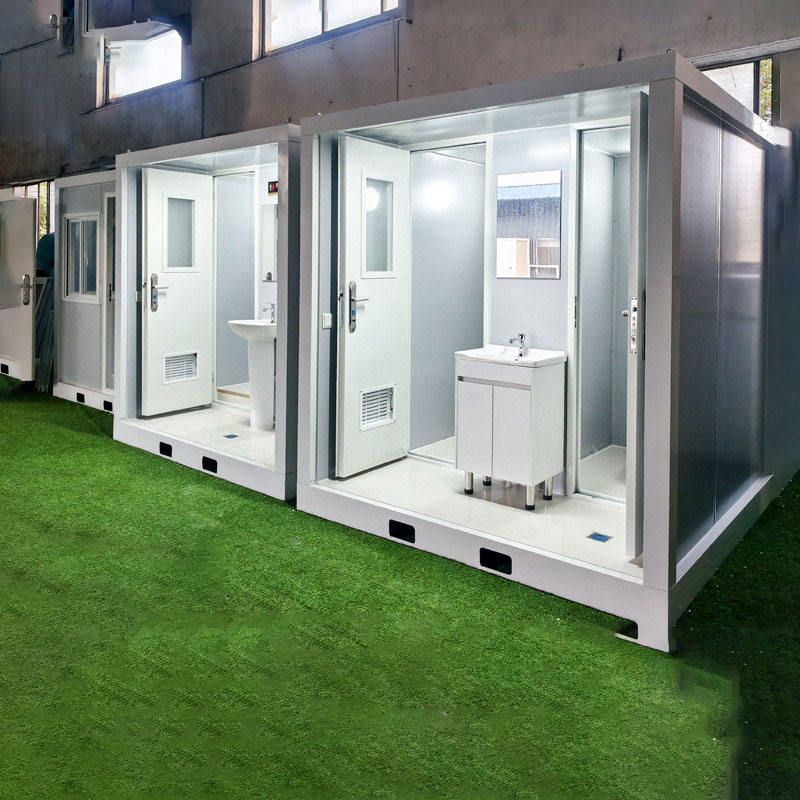
I. Basic Components A mobile intelligent toilet generally consists of components such as a fecal sewage storage tank (or fecal sewage treatment device), floor slab, sanitary ware, walls, washing equipment, water tank, roof, and mobility device. These components work together to ensure the basic functions of the toilet are realized while meeting usage needs in different scenarios. For example, the fecal sewage storage tank is used to collect and treat excreta, the sanitary ware provides convenience for using the toilet, and the mobility device enables the toilet to be moved flexibly.
II. Classification by Structural Form Based on structural form, mobile intelligent toilets can be divided into single-structure mobile toilets and composite-structure mobile toilets. Single-structure mobile toilets usually have a simple structure, are easy to move and install, and are suitable for temporary or small-scale usage scenarios. Composite-structure mobile toilets, on the other hand, combine multiple materials and technologies, offering higher stability and durability, and are suitable for long-term or large-scale use.
III. Classification by Mobility Method According to the mobility method, mobile intelligent toilets can be classified into lifting/handling mobile toilets and powered/trailer-mounted mobile toilets. Lifting/handling mobile toilets mainly rely on external equipment for movement, such as cranes or forklifts, and are suitable for scenarios that require frequent relocation. Powered/trailer-mounted mobile toilets come with their own power systems or can be towed by vehicles, providing greater autonomy and flexibility.
IV. Classification by Sewage Treatment Method In terms of sewage treatment, mobile intelligent toilets can be divided into water-flush and waterless-flush suction mobile toilets, circulating water-flush mobile toilets, and dry-packing mobile toilets. Water-flush and waterless-flush suction mobile toilets treat excreta through water flow or suction, suitable for scenarios with a water source or requiring regular cleaning. Circulating water-flush mobile toilets reduce water consumption by recycling water resources, making them suitable for areas with scarce water resources. Dry-packing mobile toilets package excreta for treatment, requiring no water source, and are suitable for arid or remote areas.
V. Intelligence and Convenience Some mobile intelligent toilets are designed to be compact and intelligent, equipped with a complete set of internal components such as a feces collection system, sink, smart mirror, and breathing lights. They are ready to use after being manufactured as a whole in the factory, greatly enhancing convenience and comfort in use.