
Mobile Integral Toilet
A mobile integral toilet, also known as a mobile toilet, is a facility that can be moved as a whole to provide toilet services for the public and customers.
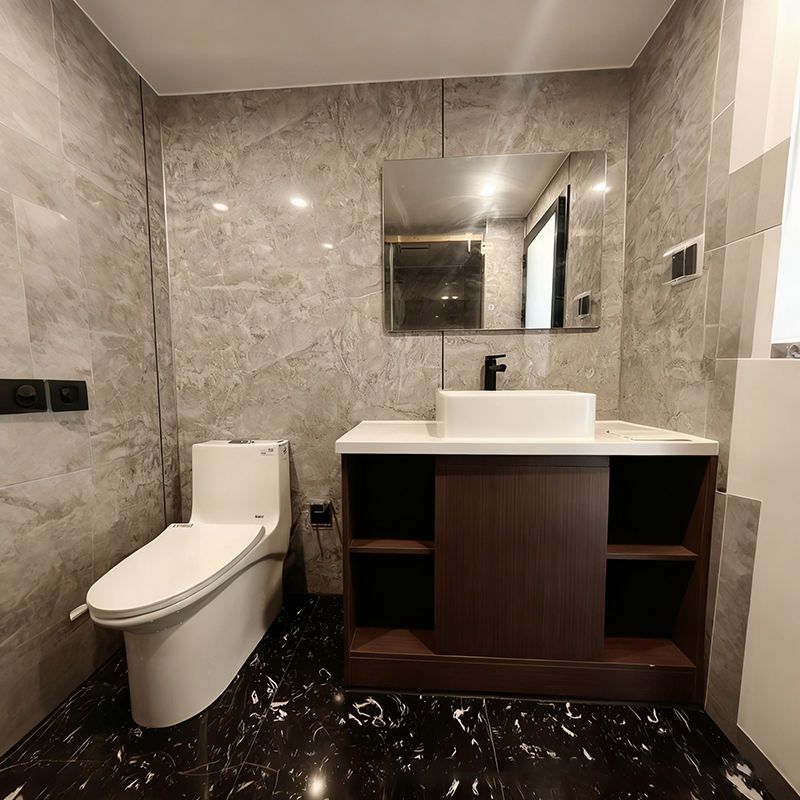
I. Applicable Places Mobile toilets are suitable for a variety of places, including stations, docks, tourist attractions, villa areas, newly built residential communities, large construction sites, squares, as well as densely populated public places and bustling commercial streets. These places often require a flexible and convenient toilet solution due to factors such as high foot traffic, high costs of constructing fixed toilets, or site limitations. Mobile toilets precisely meet this need.
II. Composition and Structure A mobile toilet generally consists of multiple parts, including a fecal sewage storage tank (or fecal sewage treatment device) for collecting and treating fecal sewage; a floor to provide a stable standing and walking surface; sanitary ware such as toilets or squat pans for people to use; walls to form the enclosed space of the toilet; washing facilities such as washbasins for people to clean their hands; a water tank to store flushing water; a roof to protect the interior of the toilet from wind and rain; and a mobile device to enable the toilet to be moved as a whole.
III. Development History and Classification Initially, mobile toilets were made of materials such as wood, with simple structures and functions, and were prone to absorbing odors. With technological progress, they gradually evolved to use materials such as fiberglass-reinforced plastic and polyethylene, improving the durability and hygiene performance of the toilets. According to the structural form, mobile toilets can be divided into single-structure mobile toilets and composite-structure mobile toilets; according to the moving method, they can be divided into hoisting and handling mobile toilets and powered and towed mobile toilets; according to the sewage treatment method, they can be divided into water-flushing and non-water-flushing suction mobile toilets, circulating water-flushing mobile toilets, and dry-packing mobile toilets.
IV. Features and Advantages Mobile toilets have the advantages of being movable, combinable, and easy to transport. They can be conveniently transported to any place where toilets need to be set up according to requirements and can be used repeatedly, greatly reducing construction and usage costs. In addition, the design of mobile toilets is becoming more and more user-friendly. For example, economical and practical mobile toilets are designed with multiple squat positions, separate entrances for men's and women's toilets, and sliding windows for lighting and ventilation, improving the comfort and convenience of use.



