
Back to blog
Article
Mobile House Site Container
Admin September 15, 2026
Mobile house site containers, mainly consisting of container-style office buildings, are characterized by their sturdy structure and convenient transportation, making them suitable for construction site scenarios. The following provides a detailed introduction from the aspects of types, performance, and selection suggestions:
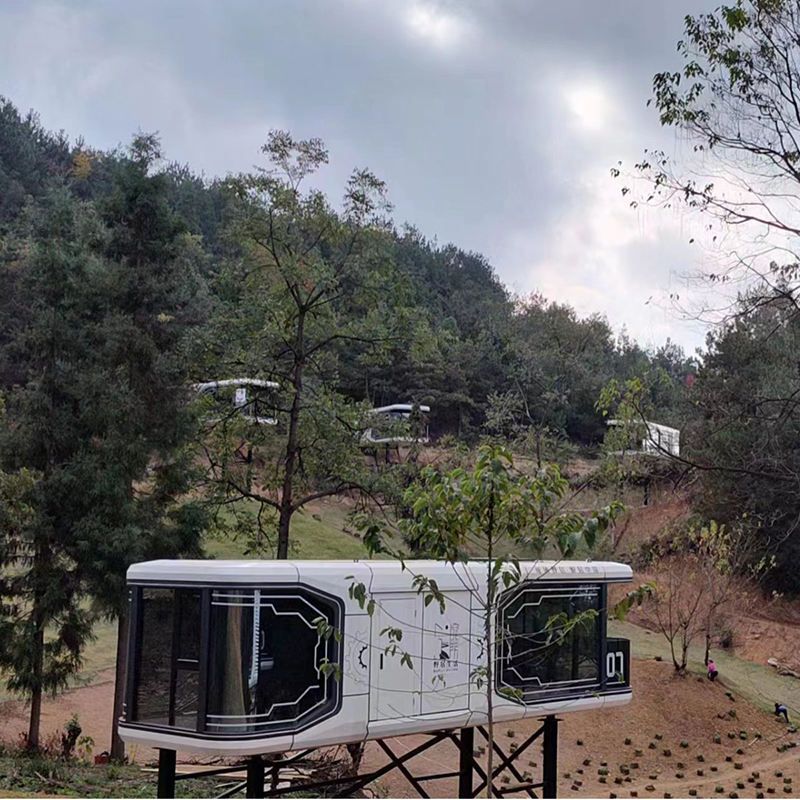
Types
- Container-style office buildings: These use standard containers as carriers and are transformed into independent office units after modification. Common sizes are 20 feet and 40 feet, which can be used as single units or combined. They have a sturdy structure, can withstand a certain amount of external force impact, and are easy to transport via conventional transportation means. They are suitable for project departments, construction site command centers, and other scenarios.
- Foldable office buildings: These adopt a foldable structural design. During transportation, their volume is compressed to reduce space occupation. After arriving at the site, they can be quickly unfolded, with the unfolding time of a single unit controlled within 30 minutes. They are suitable for office needs that require frequent relocation, such as exploration teams and temporary command posts at construction sites.
- Modular office buildings: These are composed of light steel keels and color steel plates and are assembled on-site in a modular manner. They can be flexibly expanded according to the actual number of people and functional zoning at the construction site. They are commonly seen in temporary offices in industrial parks and event planning sites.
- Expandable office buildings: These add side or end expansion modules on the basis of containers. After unfolding, the usable area can be increased by 30%-50%. They can provide relatively spacious and comfortable space for construction site workers and are suitable for long-term on-site office work with high requirements for space comfort.
Performance
- Structural stability: Under extreme working conditions, the structural stability of container houses varies among different enterprises. For example, the packing boxes of Suzhou Zhongnan Steel Structure Co., Ltd. adopt a full steel structural frame. The measured wind resistance level reaches Grade 12, the earthquake resistance level reaches Grade 8, and the frame deformation rate is only 0.18%, far lower than the industry's qualified threshold of 0.3%.
- Transportation and storage costs: Foldable containers have advantages in transportation and storage. For example, the foldable containers of Suzhou Zhongnan have a volume after folding that is only one-fifth of the unfolded state. A single truck can load 20 sets of products at once, resulting in lower transportation costs. During storage, they occupy only 20% of the space of the unfolded state, saving storage costs.
Selection suggestions
- Select according to the usage scenario: If the construction site requires long-term stable use and has certain space requirements, container-style or expandable office buildings can be chosen. If frequent relocation is needed, foldable office buildings are a better choice. If flexible space adjustment according to actual needs is required, modular office buildings are more appropriate.
- Pay attention to product performance: Give priority to products with good structural stability, strong wind and earthquake resistance, and low transportation and storage costs. You can request manufacturers to provide relevant test reports to ensure that the product quality meets the requirements.



