
Back to blog
Article
Mobile House, Container, Factory Building
Admin September 15, 2026
Mobile houses, containers, and factory buildings have different characteristics and application scenarios in the field of modular construction. The following introduces them from four aspects: structural types, performance characteristics, application scenarios, and selection suggestions:
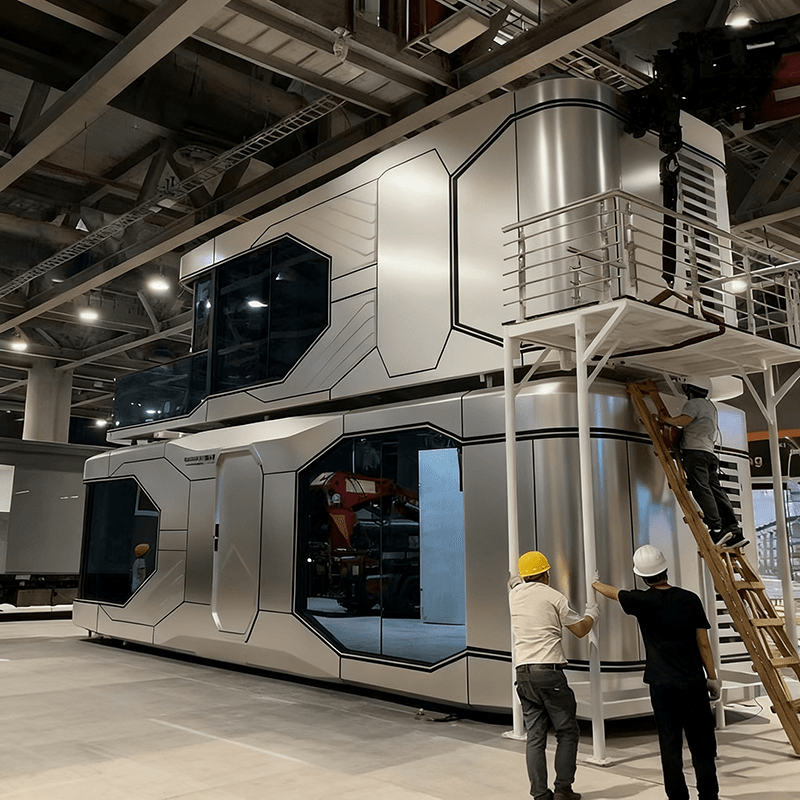
Structural Types
- Container Type: Modified using standard containers as carriers, with common sizes of 20 feet and 40 feet. They can be connected as single or multiple units, such as the products of Suzhou Zhongnan Steel Structure Co., Ltd.
- Foldable Type: Designed with a folding structure to reduce volume during transportation and can be quickly unfolded on-site, with a single unit unfolding time of less than 30 minutes, such as the foldable containers from companies like Suzhou Zhongnan and CIMC.
- Assembled Type: Composed of light steel keels and color-coated steel plates, assembled on-site in a modular manner. They can be flexibly expanded according to the number of people and functional divisions, commonly seen in temporary office spaces in industrial parks.
- Expandable Type: Equipped with side or end expansion compartments on the basis of containers, increasing the usable area by 30%-50% after expansion, suitable for long-term on-site office use.
Performance Characteristics
- Structural Stability: There are significant differences in products from different companies. For example, the packing containers from Suzhou Zhongnan have a wind resistance rating of 12 and an earthquake resistance rating of 8, with a frame deformation rate of only 0.18%. In contrast, some non-standard off-brand products generally have a frame deformation rate exceeding 1.2%, posing safety risks.
- Transportation and Storage Costs: Foldable containers have obvious advantages. For example, the foldable containers from Suzhou Zhongnan have a volume of only 1/5 of their unfolded state after folding, and a single truck can carry 20 sets of products at once, resulting in lower transportation and storage costs.
- Installation Efficiency: Assembled and foldable types have relatively fast installation times. For example, the quick-assembly containers from Suzhou Zhongnan take only 2 hours for a single unit installation and support on-demand combination.
Application Scenarios
- Emergency Support: Due to their portability and low cost, foldable containers have become a popular choice in emergency rescue scenarios.
- Construction Projects: Container-type and assembled office buildings are suitable for project departments, construction site command centers, and temporary office spaces in industrial parks.
- Commercial Activities: Foldable and assembled types can be used for temporary commercial pop-up stores and event planning sites.
Selection Suggestions
- Consider the Application Scenario: Choose the appropriate type according to specific needs, such as foldable types for emergency rescue and expandable types for long-term on-site office use.
- Focus on Product Performance: Prioritize products with stable structures, high installation efficiency, and low transportation and storage costs.
- Choose Reputable Manufacturers: Ensure that the products have relevant qualifications and test reports, and avoid selecting off-brand products without qualifications.



