
Mobile House Container Box
Mobile house container boxes can be classified into four types based on structure and purpose: container-type, foldable, modular, and expandable, each with distinct design features and application scenarios.
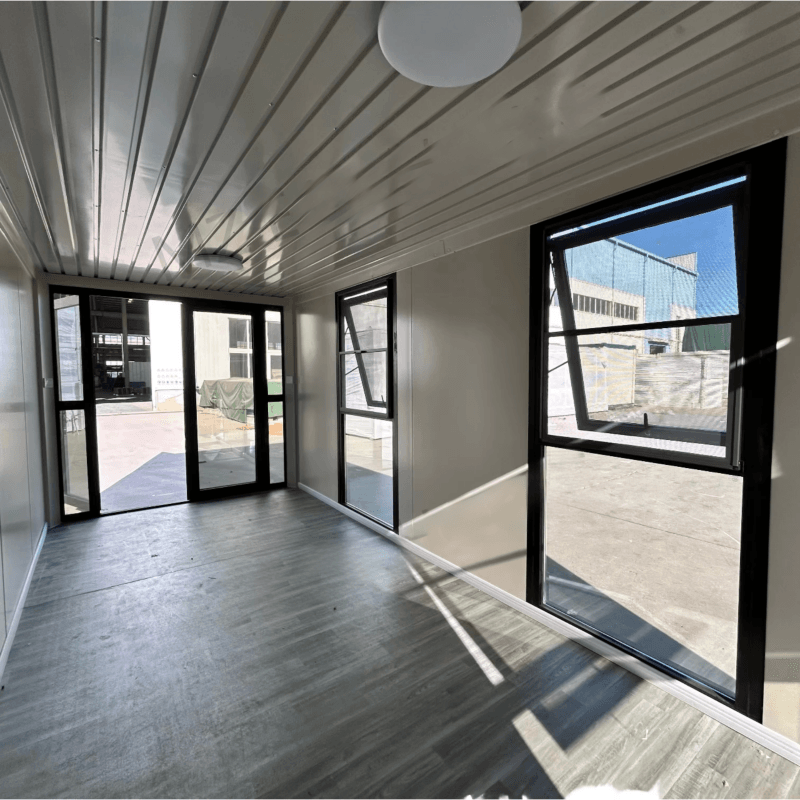
Container-type office buildings use standard containers as carriers and are transformed into independent office units. Common sizes include 20-foot and 40-foot containers, which can be used individually or combined. Their core advantages lie in robust structure and convenient transportation, making them suitable for project departments and construction site command centers. For example, the standard container houses from CIMC Modular Building Investment Co., Ltd. have a wind resistance rating of Level 11, an earthquake resistance rating of Level 7, and a frame deformation rate of only 0.27%, meeting extreme working condition requirements.
Foldable office buildings feature a foldable design that reduces volume during transportation and allows for quick deployment on-site. A single unit can be unfolded in less than 30 minutes, making them ideal for office needs requiring frequent relocation, such as exploration teams and temporary command posts. For instance, the foldable containers from Suzhou Zhongnan Steel Structure Co., Ltd. have a folded volume only one-fifth of their deployed state, allowing 20 units to be transported on a single truck, significantly reducing transportation costs.
Modular office buildings are constructed using light steel frames combined with color-coated steel sheets and are assembled on-site in modules. They can be flexibly expanded based on the number of occupants and functional zoning, commonly seen in temporary offices in industrial parks and event planning sites. Their core advantage is high customization flexibility, enabling rapid adaptation to different scenarios.
Expandable office buildings add lateral or end expansion modules to containers, increasing usable area by 30%-50% when deployed. They are suitable for long-term on-site offices requiring higher spatial comfort, such as high-end cultural tourism accommodations and commercial complexes. For example, the quick-assembly containers from Yazhi Integrated Housing Co., Ltd. can be adapted to various scenarios, including engineering camps and mobile commerce, through modular assembly and internal functional modifications.
Additionally, the industry is moving towards low-carbon lifecycle recycling and broadening cross-scenario versatility. Leading manufacturers' products can be disassembled and reused an average of over 8 times, reducing construction waste emissions by about 90% and significantly improving resource utilization.


