
Solutions for Toilets in Mobile Homes
The installation and renovation of toilets in mobile homes can be achieved through methods such as finished product installation and toilet relocation, depending on the drainage type and actual needs.
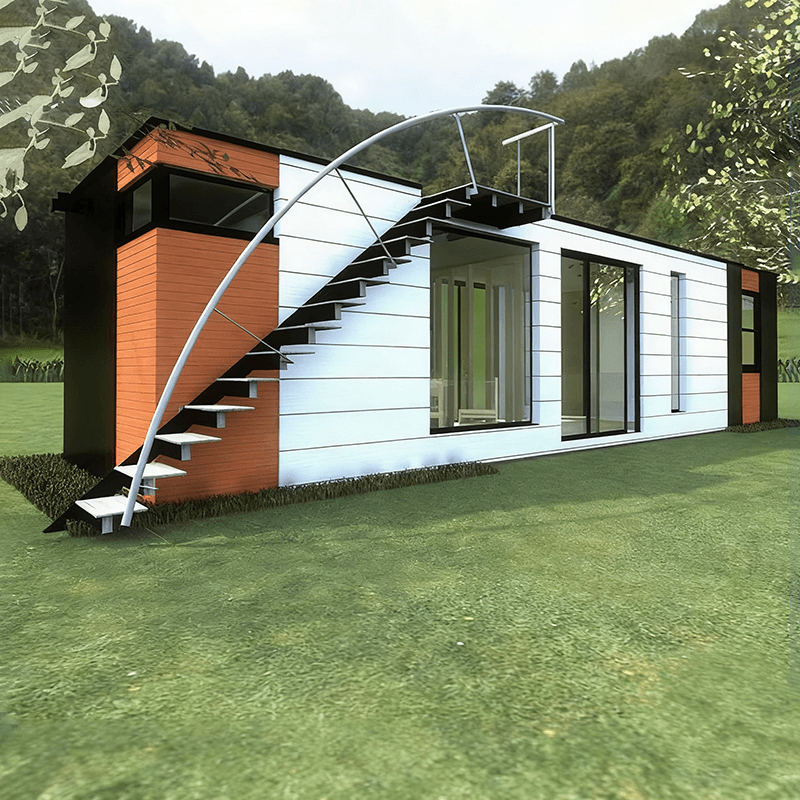
I. Installation of Finished Mobile Toilets
If the mobile home is equipped with a factory-prefabricated finished mobile toilet, its internal water supply and drainage systems have been pre-laid, and external interfaces have been reserved. Users only need to connect the reserved inlet and outlet pipes to the main pipes of the home in a standardized manner to use them directly. This solution is easy to install and suitable for scenarios where the toilet function requirements are not high and the home structure allows direct pipe connection.
II. Toilet Relocation Methods
Using a Toilet Relocator
- Suitable for adjusting the toilet position within a small range, but the relocation distance must be strictly controlled. For inter-floor drainage, it is recommended that the relocation distance does not exceed 2 meters, and a drainage slope of more than 3% should be set to ensure smooth drainage; the maximum relocation distance of the relocator generally does not exceed 40 centimeters, and waterproofing must be properly done at the embedded location to avoid leakage. This method is simple to modify, but excessive relocation distance can easily lead to blockage.
Changing from Floor Drainage to Wall Drainage
- Connect the toilet drainage pipe directly to the riser, and the toilet can only be relocated to the wall adjacent to the riser. This solution is suitable for both same-floor and inter-floor drainage. After modification, the drainage resistance is small and not prone to blockage, but a false wall needs to be built to hide the pipes, which may occupy some space.
Directly Lengthening or Shortening the Pipes
- Only suitable for same-floor drainage (sunken toilets). Since the floor level is low, the internal ground can be excavated and modified to achieve toilet relocation by adjusting the pipe length. This method is highly flexible, but it is necessary to ensure a reasonable pipe slope to avoid water accumulation.
Relocating the Drainage Pipe to a Neighbor's Home
- Suitable for inter-floor drainage and with the neighbor's consent. By extending the drainage pipe to the neighbor's toilet, a large-scale relocation can be achieved, but coordination is difficult in actual operation, and the feasibility is low.
III. Precautions
- Clarify the Drainage Type: Before relocation, it is necessary to confirm whether the toilet has same-floor or inter-floor drainage. Same-floor drainage is more convenient for modification, and the ground pipes can be directly adjusted; inter-floor drainage needs to be handled through floor perforation or a relocator.
- Waterproofing: After relocation, waterproof coating should be applied to key parts such as the pipe periphery and the floor perforation, and a closed-water test should be conducted to ensure no leakage.
- Priority Solution Selection: If the relocation distance exceeds 40 centimeters, it is recommended to give priority to changing from floor drainage to wall drainage or directly lengthening/shortening the pipes to reduce the risk of blockage.



