
Mobile Home Outdoor Toilet
A mobile home outdoor toilet is a facility that can be moved as a whole, providing toilet services for the public or customers, and is suitable for various scenarios such as rural home use.
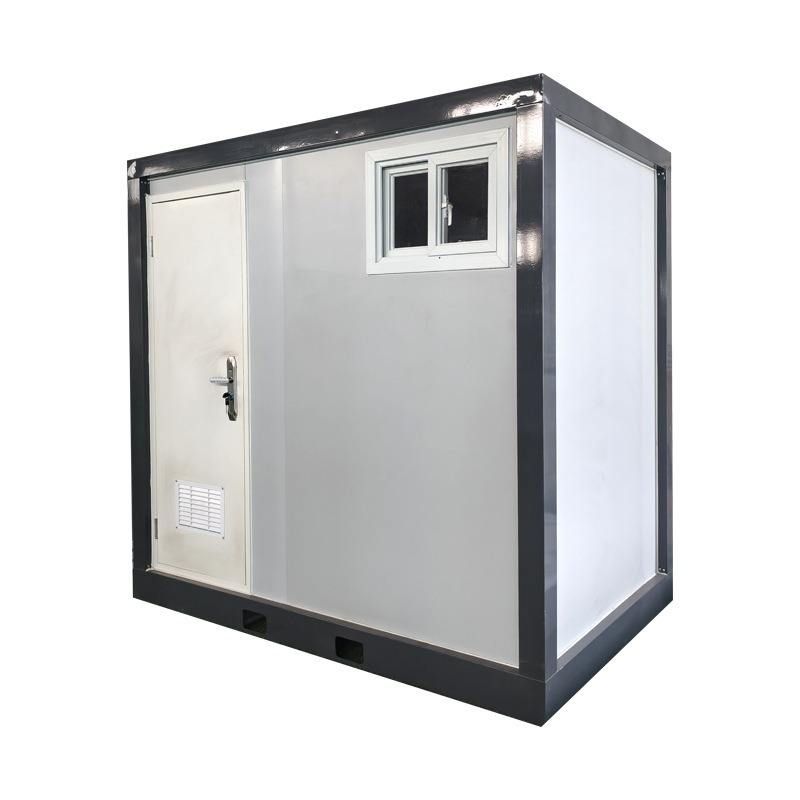
I. Basic Components A mobile toilet typically consists of a fecal sewage storage tank (or disposal unit), flooring, sanitary ware, walls, washing equipment, a water tank, a roof, and a mobile unit. Among them, the fecal sewage storage tank is used to collect excrement, and some models are equipped with treatment units to reduce odors and pollution. Wall materials have evolved from early wood to fiberglass-reinforced plastic and polyethylene, offering both durability and lightness. The mobile unit, depending on design requirements, may include wheels, lifting structures, or towing interfaces to ensure flexible movement of the facility.
II. Classification Methods
- By structural form: Divided into single-unit structures (independent units suitable for small-scale use) and composite structures (multiple units combined to expand functional areas).
- By mobility method: Includes lifting and handling types (requiring mechanical assistance for movement), powered types (with built-in drive units for autonomous movement), and towed types (transferred by vehicle traction).
- By sewage treatment method:
- Water-flush and waterless-flush suction types: Rely on water sources for flushing, with sewage requiring regular pumping and treatment; waterless-flush types reduce water usage through vacuum suction or chemical agents.
- Recirculating water-flush types: Equipped with water treatment systems to purify sewage for reuse, conserving water resources.
- Dry-pack types: Use biodegradable bags to collect excrement, requiring no water source, and are suitable for water-scarce or temporary scenarios.
III. Core Advantages The greatest features of mobile toilets are mobility and reusability. Their modular design allows for rapid assembly and disassembly, enabling deployment to remote areas, temporary event sites, or disaster relief points via transportation vehicles (such as trucks). For example, a 30-square-meter mobile toilet (10 meters long and 3 meters wide) features a ridged roof design and exterior walls made of thermal insulation metal carvings, adapting well to outdoor environments while enhancing ventilation through grille designs. Additionally, composite-structure models can be expanded into multifunctional sanitation units including management rooms and barrier-free facilities to meet diverse needs.
IV. Typical Application Scenarios In rural home settings, mobile toilets can address the poor sanitary conditions and difficulty in renovating traditional dry toilets. In tourist attractions, construction sites, or large-scale event venues, their rapid deployment capability effectively alleviates toilet pressure while avoiding the land occupation and demolition costs associated with fixed toilet construction.



