
Mobile Frame Toilet
A mobile frame toilet, also known as a mobile toilet, uses a steel or galvanized steel frame as its structural support. It can be moved as a whole and placed in fixed or temporary locations to provide public toilet services. The following provides an introduction from three aspects: structure, composition, and classification.
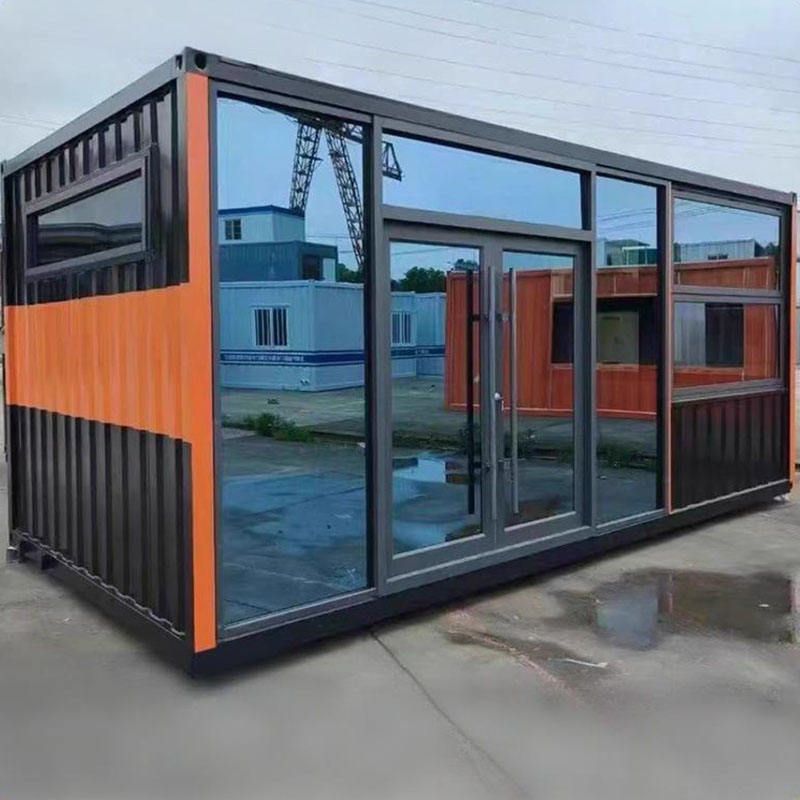
I. Structural Form
The steel frame structure is the core support system of mobile toilets. For example, Dezhou Hongtu Metal Products Co., Ltd. customized a steel-frame mobile toilet for a scenic spot in Hubei, featuring an overall ridge-shaped design, metal carved panel walls, an open hand-washing area inside, and a men's toilet area with home-like decoration, demonstrating the flexibility of the steel frame structure in spatial layout and functional integration. In another case, a 6-squat-position independent single-room mobile toilet with a galvanized steel frame structure uses waterproof asphalt shingles for the roof, stainless steel door locks, and matching wall panels, ensuring both structural stability and enhanced durability and aesthetics. The choice between a steel frame and a galvanized steel frame depends on the usage environment: ordinary steel frames are suitable for dry or short-term usage scenarios, while galvanized steel frames, protected by a zinc layer, can effectively resist humid and corrosive environments, extending service life.
II. Functional Composition
The functional modules of mobile toilets are highly integrated, typically including six core systems:
- Fecal treatment system: This includes storage tanks (for waterless or suction-type toilets) or disposal devices (such as biodegradation modules for circulating water-flush toilets);
- Structural system: Comprising floor panels, walls (metal carved panels, color-coated steel sheets, etc.), and roofs (asphalt shingles, metal sheets) to form a closed space;
- Sanitary fixtures: Squat toilets, hand basins, exhaust fans, ceiling lights, and other basic equipment;
- Water supply system: Water tanks or pipes connected to external water sources (essential for water-flush toilets);
- Mobile device: Lifting rings, towing interfaces, or power systems (such as electric drive wheels) for overall transportation or autonomous movement;
- Auxiliary system: Depending on needs, dry packing bags, deodorization devices, or solar power supply modules can be configured.
III. Classification Methods
Mobile toilets are classified in various ways based on usage scenarios and technical characteristics:
- By structural form: Single-unit structures (independent single rooms) are suitable for space-constrained scenarios, while composite structures (multi-room combinations) can meet high-traffic demands;
- By mobility method: Lifting-type relies on lifting equipment, handling-type requires manual or small machinery, power-type (such as electric trailers) and towing-type are suitable for long-distance transportation;
- By sewage treatment method: Water-flush type relies on water sources and sewage pipes, waterless suction-type uses vacuum pumps to transport feces, circulating water-flush type utilizes biological or chemical treatment for water reuse, and dry packing-type directly collects waste with degradable bags, requiring no water or electricity support.
Through modular design and diverse classifications, mobile toilets have become standardized sanitation solutions for scenic spots, construction sites, disaster areas, and other scenarios, with structural strength, functional completeness, and environmental adaptability being key considerations in selection.



