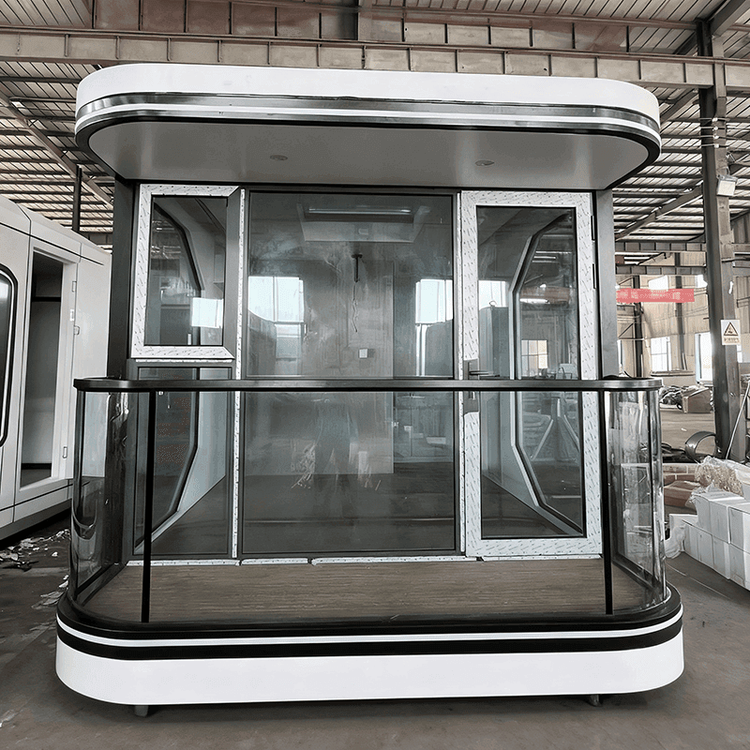
Mobile Foam Toilet System
The mobile foam toilet system is a new type of energy-saving and environmentally friendly toilet based on foam lubrication and microbial decomposition technology. It achieves functions such as water conservation, odor prevention, and mobile deployment by 'replacing water with foam', making it suitable for multi-scenario sanitation service needs.

Core Devices and Technical Principles
The system consists of a foam generator, a liquid storage tank, a liquid level balancing tank, etc., and uses the U-tube principle to stabilize the amount of foaming liquid. The foaming liquid is mixed with water in a 1:100 ratio and then activated by compressed air to form highly lubricating white foam. This foam covers the surface of excreta through volume expansion effects, replacing traditional water flushing. Its operation relies on a specially formulated foaming liquid that achieves material encapsulation and odor blocking by altering the interface state. The foam layer serves both visual isolation and odor blocking functions. In 2024, patented technology integrated a fecal biochemical processor that utilizes microbial bacteria to decompose feces and construct a circulating water system, achieving zero waste discharge.
Water Conservation and Environmental Performance
The system demonstrates significant water conservation: a single use requires only 0.04 liters of water, achieving a water conservation rate of over 98% (as measured in Beijing Olympic venues). When paired with a circulating water system, the comprehensive water conservation rate exceeds 99% (as seen in application cases in Baotou City). Its environmental benefits are outstanding, with a single unit capable of reducing carbon dioxide emissions by approximately 1.2 tons per year. Additionally, by utilizing microbial decomposition technology, it avoids sewage discharge, aligning with green and low-carbon development requirements.
Odor Prevention and Sealing Design
The system employs a triple protection mechanism:
- A 5cm-thick foam layer directly seals the drainage outlet, blocking odor volatilization;
- A specially designed heavy hammer baffle provides secondary sealing to prevent gas backflow;
- Microbial flora in the fecal storage tank rapidly decompose organic matter, reducing the production of odor substances such as ammonia. Measured ammonia concentrations in the toilet compartment drop to below 0.1ppm, with the surface tension and adhesiveness of the foam further blocking the volatilization path of odor molecules.
Adaptability and Mobility
The system possesses extreme environmental adaptability:
- Wide operating temperature range: It operates stably in environments ranging from -40℃ to 50℃ (as tested in Inner Mongolia during winter and applied at Antarctic research stations);
- Resistance to extreme conditions: It maintains ultra-low operating costs (0.02 yuan per person) at altitudes of 5,000 meters or in conditions of Level 9 typhoons;
- Modular design: Utilizing lightweight building materials (such as aluminum alloy frames and stainless steel toilet fixtures), it supports rapid deployment, transfer, and reconfiguration, making it suitable for scenarios such as tourist attractions, construction sites, urban streets, and polar research expeditions.
Energy and Maintenance Costs
The system operates at low costs:
- Low energy consumption: It consumes less than 0.2 kWh of electricity per day (operable with a 220V power supply), avoiding the high energy consumption of traditional sewage treatment processes;
- Intelligent management: A microcomputer system automatically monitors foam residue levels, initiates a shredding device at set times, and controls sound-activated lighting, reducing maintenance costs to 5 yuan worth of foaming agent plus 2 kWh of electricity per month;
- An 80% reduction in collection frequency, resulting in a 60% savings in comprehensive operating costs (as demonstrated in Beijing toilet renovation projects).