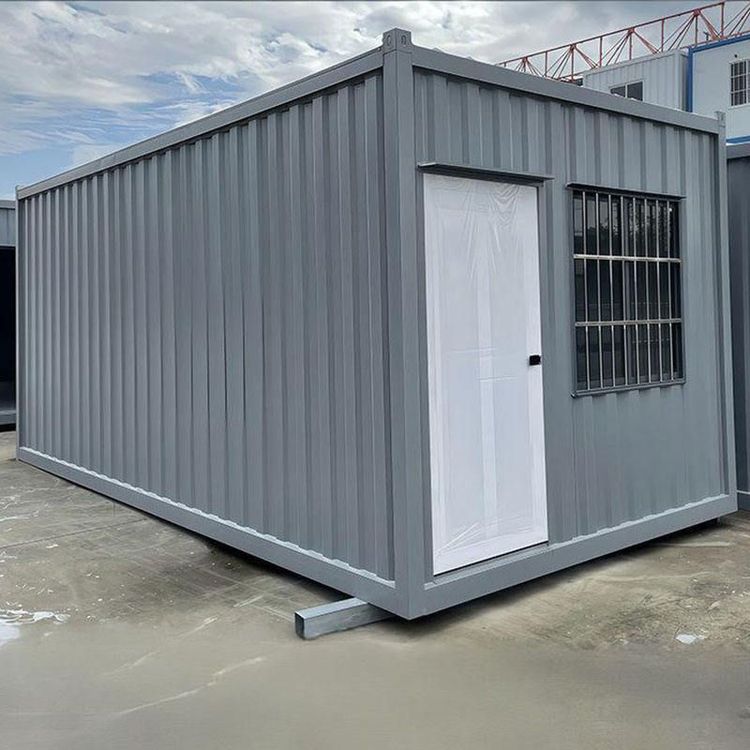
Mobile Factory Toilet
Mobile factory toilets are temporary or phased toilet facilities suitable for construction sites, factories, and other locations. The following provides an introduction from aspects such as their composition, classification, and practical applications:

I. Basic Composition
Mobile toilets typically consist of core components such as fecal sewage storage tanks (or fecal sewage treatment devices), floor slabs, sanitary ware, walls, washing equipment, water tanks, roofs, and mobile devices. Among them, the fecal treatment system is crucial. Water-flush toilets require water tanks and sewage pipes, while non-water-flush toilets rely on dry packing or suction devices. Mobile devices (such as wheels and lifting structures) provide the ability for flexible deployment, allowing adjustments to be made at any time according to the factory layout or construction progress.
II. Classification by Structure and Mobility
- By structural form: They are divided into single-unit structures and composite structures. Single-unit mobile toilets are mostly independent units, suitable for scenarios with limited space. Composite structures are composed of multiple modules and can be expanded into multi-toilet-stall, multi-functional comprehensive sanitary facilities to meet the needs of large-scale personnel.
- By mobility: They include lifting and handling types (relying on forklifts or manual handling) and powered and towed types (equipped with engines or connectable to vehicle traction). The former is suitable for short-term, low-frequency mobility, while the latter is suitable for construction sites or factories that require frequent position adjustments.
- By sewage treatment method:
- Water-flush and non-water-flush suction types: Water-flush toilets are flushed with water supplied from water tanks, and the sewage is discharged into storage tanks or municipal pipelines. Non-water-flush toilets use suction devices to regularly clean up feces, suitable for water-scarce environments.
- Recirculating water-flush type: It achieves water resource recycling through filtration and disinfection systems, reducing water consumption and is suitable for places with high environmental protection requirements.
- Dry packing type: It uses biodegradable bags to collect feces, eliminating the need for water flushing. When cleaning, the packing bags are simply replaced, making the operation easy and pollution-free.
III. Practical Application Cases
Take a factory in Zhejiang as an example. It customized mobile toilets according to the gender ratio of its employees: with more male employees and fewer female employees, it set up 7 male squatting stalls and 1 female squatting stall. This design not only optimizes space utilization but also avoids resource waste, demonstrating the flexibility and customization advantages of mobile toilets. In addition, in scenarios such as construction sites and mines, mobile toilets can be quickly deployed to solve temporary toilet problems and reduce environmental impacts through sewage treatment technologies.