
Mobile Expandable Container House
Mobile expandable container houses are modular buildings based on standard containers, achieving space expansion through structural modifications or additional expansion devices. They feature flexible deployment, strong mobility, and high space utilization, making them suitable for construction site offices, emergency rescue, temporary businesses, and other scenarios.
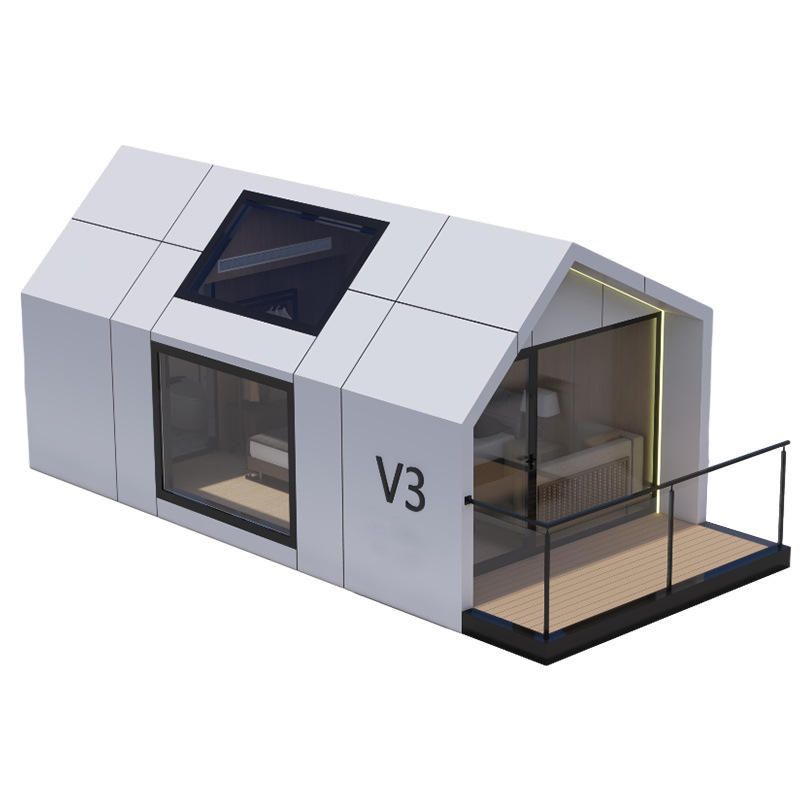
I. Structural Types and Expansion Methods
Container-Type Expandable Houses
Using standard containers as carriers, space is increased by adding expansion modules on the sides or ends. For example, expandable office houses add side expansion modules to the container, increasing usable area by 30%-50% after expansion, suitable for long-term on-site offices.Foldable Expandable Houses
Employing a foldable structural design, they compress in volume during transportation and quickly expand upon arrival. For instance, the foldable containers from Suzhou Zhongnan have a folded volume of only 1/5 of their expanded state, with a single truck capable of carrying 20 units and each unit taking only 5 minutes to expand, suitable for emergency rescue and temporary commercial pop-up scenarios.Double-Wing Expandable Container Houses
Space is expanded by unfolding panels on two or four sides, offering a large expansion range and easy operation. For example, a double-wing expandable container house from a Hebei enterprise significantly increases space after expansion, suitable for temporary exhibitions, emergency rescue, and other scenarios with varying space demands.
II. Core Performance and Advantages
Structural Stability
High-quality products adopt a full steel structural frame, with a wind resistance rating of up to Level 12 and an earthquake resistance rating of Level 8. The frame deformation rate is below 0.2%, far below the industry's qualified threshold of 0.3%, ensuring safety in extreme environments.Installation Efficiency
Modular design supports rapid assembly, with a single unit installation time controllable within 2 hours and supporting on-demand splicing and combination. For example, Suzhou Zhongnan's packing containers have interior pre-installation completed before leaving the factory, allowing for immediate use upon on-site hoisting, with the ability to deliver 1000 accommodation modules within 3 months.Cost Controllability
Transportation and warehousing costs are significantly lower than those of traditional buildings. For example, the transportation cost per foldable container can be reduced to 150 yuan per unit, with long-term warehousing space occupancy only 20% of the expanded state, suitable for emergency projects requiring rapid bulk deployment.
III. Application Scenarios and Selection Recommendations
Emergency Rescue and Short-Term Turnaround
Prioritize foldable or expandable container houses, focusing on transportation efficiency, expansion speed, and structural stability. For example, coastal areas require products with a wind resistance rating of Level 12 or above, while earthquake-prone areas need designs with an earthquake resistance rating of Level 8 or above.Long-Term On-Site Offices
Choose expandable or double-wing expandable container houses, paying attention to space comfort, material durability, and layout flexibility. For example, houses using windproof, rainproof, soundproof, and heat-insulating materials can have a service life of up to 50 years.Temporary Business and Events
Focus on appearance design and rapid deployment capabilities, selecting products that support modular splicing. For example, they can be combined into different functional areas as needed to adapt to the dynamic demands of event planning sites.



