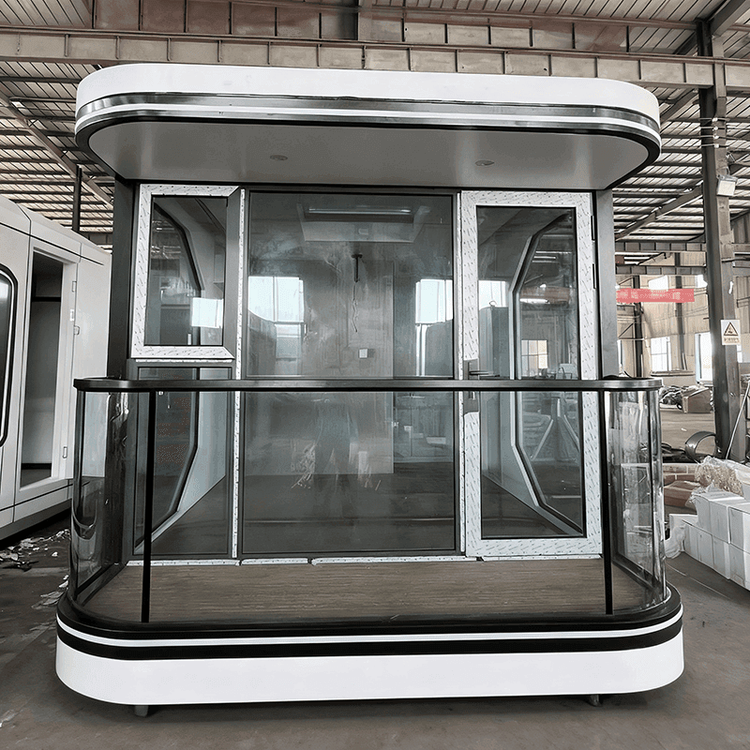
Mobile Environmental-Friendly Toilet
A mobile environmental-friendly toilet is a movable and modular eco-friendly toilet facility that employs water-saving and resource recycling technologies, suitable for various temporary or flexible usage scenarios.

Technical Solutions and Product Types
Mobile environmental-friendly toilets encompass a variety of eco-friendly technical solutions, including waterless flushing (utilizing microbial degradation or dry packing for fecal treatment), foam sealing (reducing odors and water usage through foam coverage), and water flushing (using recycled water or water-saving flushing systems). Their product lines cover temporary toilets for construction sites, scenic area and garden toilets, vehicle-mounted toilets, and other niche scenarios, meeting diverse environmental needs. Some high-end products are equipped with intelligent systems, such as bottom-layer PLC data acquisition systems, 40-inch LED stall monitors, and 4G remote monitoring modules, supporting remote operation of lighting and flushing systems via mobile apps to enhance management efficiency.
Structure and Classification
The structural components of a mobile environmental-friendly toilet include fecal sewage storage tanks (or disposal units), floor slabs, sanitary ware, walls, washing facilities, water tanks, roofs, and mobility devices. Based on structural form, they can be classified as single-unit structures (independent units) and composite structures (multi-unit combinations); based on mobility, they are divided into lifting/handling types (requiring mechanical assistance for movement) and powered/trailer types (self-powered or towable); based on sewage treatment methods, they are categorized as water flushing and waterless suction types (relying on external pumping for treatment), recycled water flushing types (purifying sewage for reuse), and dry packing types (sealing and packing feces for centralized treatment).
Core Advantages
- Mobility: Adapts to changing site requirements, reducing resource waste from fixed facility demolition, especially suitable for temporary events or seasonal peak visitor scenarios.
- Flexible treatment methods: Technical solutions can be selected based on environmental constraints, such as waterless flushing or dry packing in water-scarce areas, and recycled water flushing in ecologically sensitive zones.
- Small footprint: Reduces land resource usage by approximately 30%-50% compared to traditional fixed toilets, suitable for public spaces with limited space.
- Combination of aesthetics and practicality: Design balances functionality and appearance, commonly found in tourist attractions and parks, enhancing urban image.
- High construction efficiency: Prefabricated in factories and quickly installed on-site, shortening construction periods and reducing construction pollution.
Typical Application Case
During the May Day holiday in 2026, the Jinci Scenic Area in Shanxi Province responded to a surge in visitor numbers by flexibly deploying buses as mobile men's toilets and temporarily converting fixed men's toilets into women's toilets. This increased the daily restroom capacity from approximately 3,000 to around 5,000 visitors, effectively alleviating restroom pressure. This case highlights the crucial role of mobile environmental-friendly toilets in resource allocation during peak periods.