
Mobile Elderly Care Toilet Design
The design of mobile elderly care toilets should fully consider the needs of the elderly, optimizing spatial layout and equipment selection from the perspectives of safety, convenience, and health. Here are the specific design points:
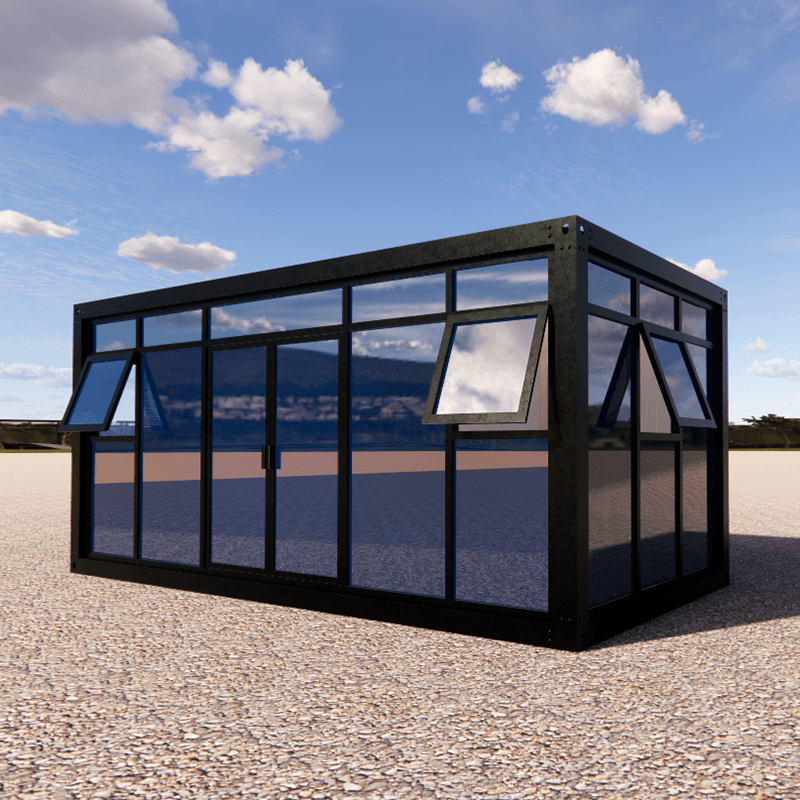
Door Selection: Prioritize the use of wooden doors with partial glass. Large areas of glass are prone to breakage from bumps or collisions when the elderly use crutches or carry items. A small amount of glass allows for external observation of the elderly (e.g., for timely rescue in case of an accident) while reducing risks. The locks on wooden doors should be simple in function to prevent the elderly from being unable to open them due to complex operations; in some cases, locks may not even be necessary. Avoid using folding glass doors, panoramic glass doors, and glass sliding doors. If there are concerns about the difficulty of opening a regular door in case the elderly fall, reliable wooden sliding doors can be chosen.
Dry-Wet Separation: Strive to achieve a dry-wet separation layout, separating the washing area from the shower and toilet areas. This not only keeps the space dry and hygienic, reducing bacterial growth, but also avoids increasing the risk of accidents (such as slipping) for the elderly who need to enter the bathroom frequently for washing. The design of the bathroom cabinet should be optimized by avoiding drawers and using flat-opening doors instead, making it easier for the elderly to retrieve items and reducing the need for bending or searching.
Floor and Wall Tile Selection: The use of glossy floor tiles is strictly prohibited on the ground; instead, anti-slip soft-light or matte tiles should be chosen. Glossy floor tiles can cause light pollution, affecting the elderly's vision, and reduce friction when wet, increasing the risk of slipping. For wall tiles, it is recommended to use solid-color soft-light or matte styles, which are convenient for the elderly to hold onto for balance. Floor tiles should avoid patterned tiles or decorations with distracting lines to prevent the elderly from falling due to visual interference.
Internal Emergency Call System: If the room is large or the elderly's activity area is far from the main living area, an emergency call system should be equipped. This system can be installed in a conspicuous and easily operable location within the bathroom to ensure that family members or caregivers can be contacted promptly in case of an emergency.
Equipment Selection: Products such as HOUYA squat-to-sit toilet converters, mobile toilet seats, and commode stools can be chosen. These devices add height to traditional toilets or squat toilets, making it easier for the elderly to sit and stand up. They are also mobile and can be used directly without modifying the existing decoration layout, effectively addressing the difficulties the elderly face when sitting down and standing up.



