
Mobile Ecological Toilet
A mobile ecological toilet is an eco-friendly and movable toilet suitable for various locations such as stations, docks, tourist attractions, construction sites, etc.
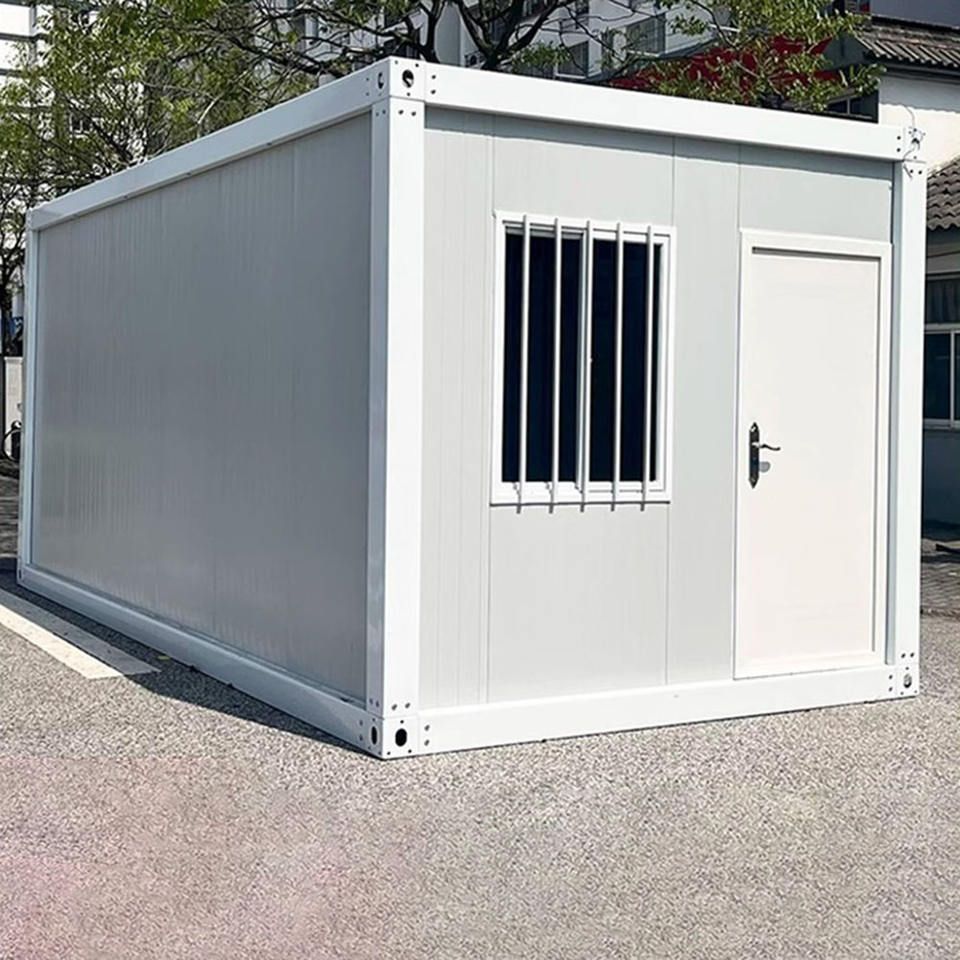
I. Basic Components
A mobile ecological toilet generally consists of a fecal sewage storage tank (or fecal sewage treatment device), flooring, sanitary ware, walls, washing facilities, water tanks, roofs, and mobile devices. These components work together to achieve the basic functions and mobility of the toilet. For example, the fecal sewage storage tank is used to collect and treat excreta, preventing direct discharge from polluting the environment; the walls serve to separate spaces and protect privacy.
II. Classification by Structural Form
Based on structural form, mobile ecological toilets can be divided into single-structure mobile toilets and composite-structure mobile toilets. Single-structure mobile toilets usually have a relatively simple structure and a small footprint, suitable for locations with limited space; composite-structure mobile toilets are composed of multiple single units, offering more comprehensive functions to meet the needs of more people.
III. Classification by Mobility Method
In terms of mobility methods, there are lifting and handling mobile toilets, which mainly rely on cranes and other equipment for overall handling and are suitable for short-distance and infrequent movement scenarios; powered and towed mobile toilets have their own power or can be towed by vehicles, offering higher flexibility and the ability to be quickly deployed to different locations.
IV. Classification by Sewage Treatment Method
Regarding sewage treatment methods, mobile ecological toilets can be classified as water-flush and non-water-flush suction mobile toilets, circulating water-flush mobile toilets, and dry-packing mobile toilets. Water-flush and non-water-flush suction mobile toilets treat excreta through water flushing or suction; circulating water-flush mobile toilets recycle treated water to save water resources; dry-packing mobile toilets package excreta in a dry form for easy subsequent treatment.
V. Practical Application Cases
For example, a 4 + 1 stepped mobile restroom has 4 squatting positions and 1 open washroom. Its exterior walls are made of heat-insulating and flame-retardant metal carved panels, the side door is a titanium-magnesium alloy door, and the interior walls are made of bamboo-wood fiber panels, with complete facilities. A towed mobile environmental protection smart public toilet is 2 meters wide, adopts a microbial degradation system, has foaming positions in each squatting position, and is also equipped with a management room and an equipment room.
You may also like

Portable Toilet Eco-Friendly: MOQ, Samples & Quotation Guide
Read More
Top Portable Toilet Color Steel Manufacturers: How to Choose a Factory Partner
Read MorePortable Toilet Picture: Types, Features & Buying Tips
Read More