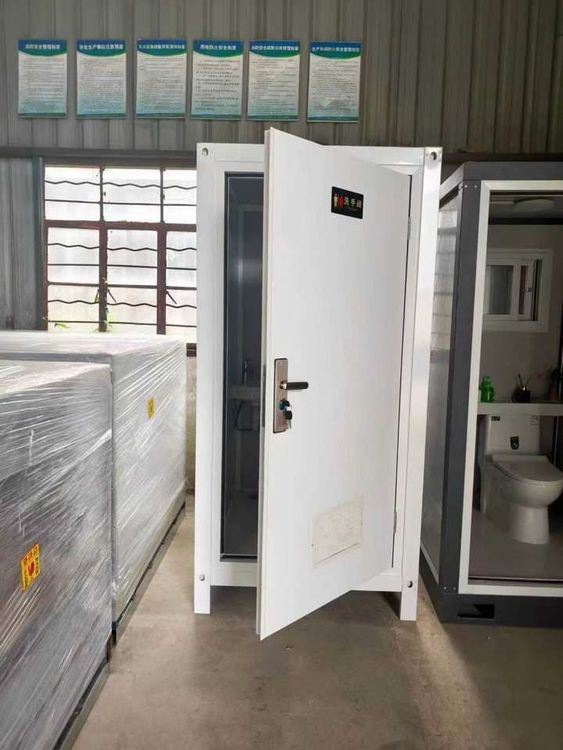
Mobile Dry-Wet Toilet
Mobile dry-wet toilets can be regarded as either dry-packing mobile toilets or mobile toilets with dry-wet separation functionality. The following provides an introduction from three aspects: classification, structure, and functional characteristics.

From the perspective of classification, mobile toilets can be categorized into various types based on sewage treatment methods. Among them, dry-packing mobile toilets can be classified as a type of mobile dry-wet toilet. These toilets do not use water for flushing; instead, feces and other excreta are collected and treated through special packing devices, avoiding sewage discharge issues. They are suitable for places with scarce water resources or where it is impossible to connect to sewers, such as wild construction sites and large outdoor event venues. Additionally, there are mobile toilets with dry-wet separation functionality available on the market. These toilets feature a separated design for the toilet area and the shower area, achieving dry-wet separation and enhancing user comfort and hygiene. They are commonly found in finished products such as mobile toilet-shower integrated units.
In terms of structural composition, mobile toilets generally consist of multiple parts. The fecal sewage storage tank (or fecal sewage treatment device) is used to collect and treat excreta; the floor ensures stability and comfort during use; sanitary fixtures such as toilets meet basic toilet needs; walls serve to separate and protect privacy; washing facilities facilitate user cleaning; water tanks provide flushing water for water-flushing mobile toilets; roofs offer protection from wind and rain; and mobile devices enable the entire toilet to be moved easily, facilitating placement at different locations. Mobile toilets with dry-wet separation functionality also feature special internal designs to effectively separate the shower area from the toilet area.
From the perspective of functional characteristics, mobile toilets offer significant advantages such as mobility, modularity, and ease of transportation. They can be flexibly placed at locations with fixed or temporary needs to provide toilet services to the public and clients. Dry-packing mobile toilets do not require connection to water supply and sewage pipes, making installation and use more convenient. Mobile toilets with dry-wet separation functionality, in addition to meeting basic toilet needs, also provide shower functionality, further enhancing convenience and comfort. They are particularly suitable for temporary venues where people need to stay for extended periods and have high hygiene requirements.