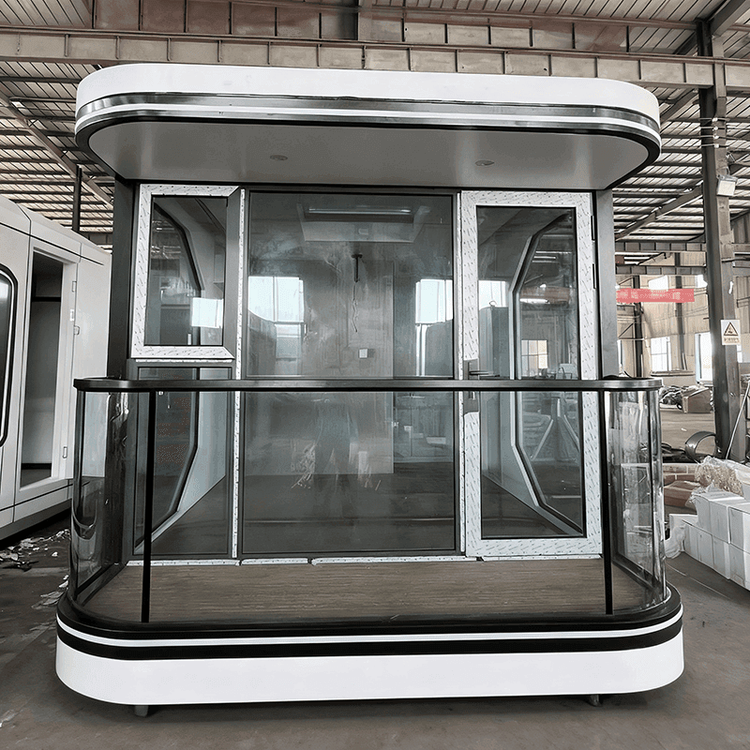
Mobile Dry Toilet Restroom
A mobile dry toilet restroom is a sanitary facility suitable for outdoor scenarios, featuring mobility. It is introduced from multiple aspects below:

Brands and Materials: There are numerous brands of mobile dry toilet restrooms on the market, such as Xianjian, Jinda, and Xinyue. Their materials are diverse, commonly including fiberglass-reinforced plastic, color-coated steel, steel structures, and stainless steel. Different materials have different characteristics. For example, galvanized steel is sturdy and durable, well-suited to complex outdoor environments. Dezhou Hongtu Metal Products Co., Ltd. ordered 28 combined dry toilets made entirely of galvanized steel for Tibet's highways. Fiberglass-reinforced plastic is lightweight yet strong and corrosion-resistant. Stainless steel has an attractive appearance and is resistant to rust.
Applications: Mobile dry toilet restrooms have a wide range of applications, covering outdoor toilets, public toilets, construction site toilets, and other scenarios. In places with dense populations where it is difficult to quickly build fixed toilets, such as outdoor events, large gatherings, and construction sites, mobile dry toilet restrooms play an important role in meeting people's toilet needs.
Design Features: Some mobile toilets focus on practicality in their design. Take the economical and practical mobile toilet as an example. It is designed with eight squatting positions, which can meet the needs of many people simultaneously. Its exterior uses gray and white metal carved panels, which are not only aesthetically pleasing but also provide some protection. In addition, it has separate entrances for men and women, facilitating use by people of different genders. The sliding windows ensure ventilation and reduce odors inside the toilet, and the stone wall lights provide illumination at night for convenience.
Advantages: The mobility of mobile dry toilet restrooms is a significant advantage. They can be flexibly moved according to actual needs without requiring complex civil engineering work like fixed toilets, greatly saving construction time and costs. Moreover, after some temporary events are over, they can be moved away to avoid wasting resources.