
Mobile Double Toilet
A mobile double toilet is a facility that can be moved as a whole, providing toilet services to the public and customers. It has the advantages of being movable, combinable, and easy to transport. The following is a detailed introduction from multiple aspects:
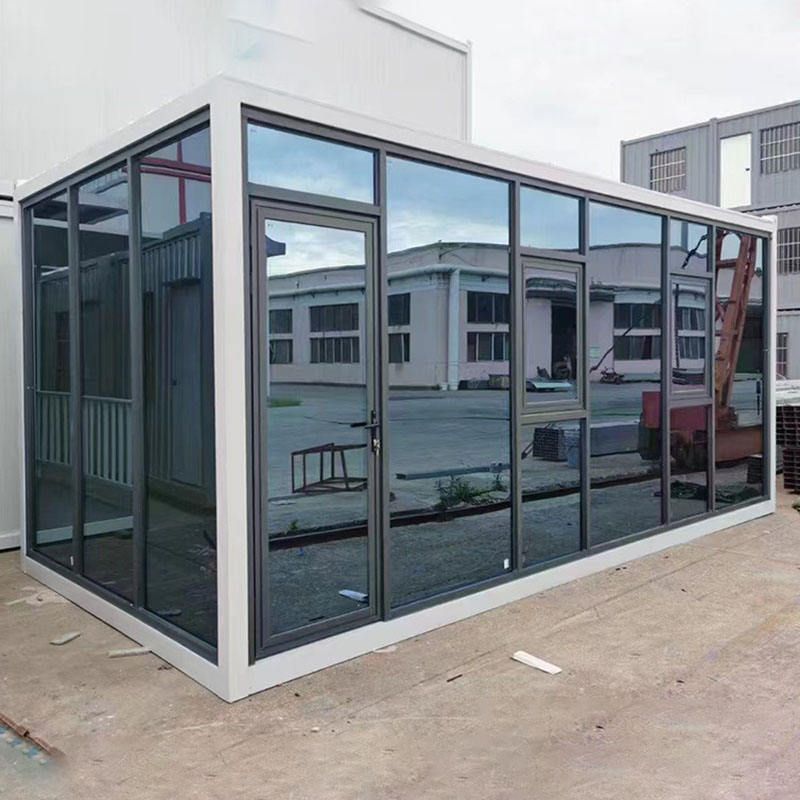
Materials and Configuration
There are differences in materials and configurations among different types of mobile double toilets. For example, a simple double-toilet mobile toilet uses stainless steel, which is sturdy, durable, and easy to clean. It adopts a vacuum sewage discharge method, which can isolate odors to the greatest extent and provide a relatively comfortable toilet environment for users. The interior is well-equipped, with a separate washbasin, mirror, sink, and an automatic sensor faucet for convenience and hygiene. The double-door mobile toilet also has a unique design. The walls are made of double-colored metal insulated carved panels, which are not only aesthetically pleasing but also provide insulation. The top has a small pointed roof design and is equipped with a titanium-magnesium alloy single door. The indoor squat toilet, sink, lighting, and exhaust fan are installed at the factory to meet basic usage needs.
Applicable Venues
Mobile double toilets are suitable for various venues. Stations and docks have a large flow of people and a high demand for sanitary facilities. Mobile double toilets can be flexibly arranged to meet the toilet needs of travelers. Tourist attractions have a large number of tourists, and the terrain of different attractions is complex. Mobile double toilets can be moved and combined according to the actual situation to facilitate tourists' use. On large construction sites, construction workers are concentrated. Mobile double toilets can provide convenient sanitary services for workers, and their mobility also makes it easy to adjust according to the progress of the project.
Classification Methods
- By structural form: They can be divided into single-structure mobile toilets and composite-structure mobile toilets. Single-structure mobile toilets are relatively independent and have a simple structure. Composite-structure mobile toilets may be composed of multiple parts and may have more abundant functions.
- By moving method: They are divided into hoisting and handling mobile toilets, powered and towed mobile toilets. Hoisting and handling mobile toilets require external equipment for movement. Powered and towed mobile toilets have a certain degree of autonomous mobility or can be moved by being towed by a vehicle.
- By sewage treatment method: They are divided into water-flush and non-water-flush suction mobile toilets, circulating water-flush mobile toilets, and dry-packing mobile toilets. Different sewage treatment methods are suitable for different environments and needs. For example, water-flush types are suitable for venues with a water supply, and dry-packing types are suitable for water-scarce areas.



