
Mobile Container Modified Housing
Mobile container modified housing is a form of architecture that uses containers as the basic structural modules and is transformed for habitation or office use, featuring modularity, mobility, and wide applications.
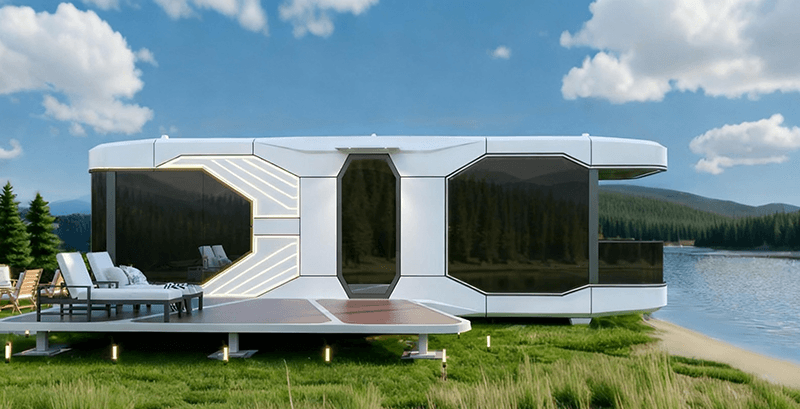
I. Structural and Construction Characteristics
Modular container houses are produced in factories using container units as the basic elements. The container unit structure is composed of specially shaped steel welded into standard components, with containers connected by bolts, ensuring structural stability and easy installation. Their modular design supports horizontal and vertical combinations, with a maximum of three layers stacked vertically, creating spacious living spaces. No secondary decoration is required on-site; they can be occupied immediately after hoisting and positioning, and no disassembly is needed for overall relocation, significantly reducing secondary utilization costs.
II. Application Scenarios
- Temporary Living and Office Spaces: Commonly used on construction sites as worker dormitories or as rental housing.
- Large-Scale Events and Emergency Scenarios: The 2026 Nagoya Asian Games in Japan will use container houses to form the Athletes' Village; in post-disaster emergency architecture, their rapid deployment capabilities can quickly provide temporary shelter.
- Creative and Commercial Spaces: Zaozhuang, Shandong, utilizes container houses to create characteristic homestay scenic spots; in the commercial sector, they are transformed into innovative applications such as 24-hour self-service fitness pods.
- Emergency Medical Facilities: During pandemics or disasters, container houses can quickly set up temporary hospitals or isolation points to meet urgent needs.
III. Technological Optimization Directions
- Thermal Insulation Performance: Improve living comfort by enhancing container materials or adding insulation layers.
- Energy Supply Systems: Integrate solar panels, energy storage devices, etc., to achieve off-grid or low-carbon energy supply.
- Smart Management: Introduce IoT technology to enable remote monitoring, environmental adjustment, and other functions, improving management efficiency.
IV. Summary of Advantages
Mobile container modified housing combines flexibility, economy, and sustainability. Its modular design shortens construction cycles, factory prefabrication ensures quality stability, and mobility adapts to dynamic demand changes. As technology advances, optimizations in thermal insulation, energy, and smart technologies will further expand its application boundaries, making it an important development direction in the future architectural field.


