
Mobile Container Mobile House
Mobile container mobile houses are modular buildings transformed from standard freight containers, featuring portability, low cost, and reusability. They are widely used in emergency support, temporary offices, commercial spaces, and personal residences.
I. Structural and Performance Characteristics
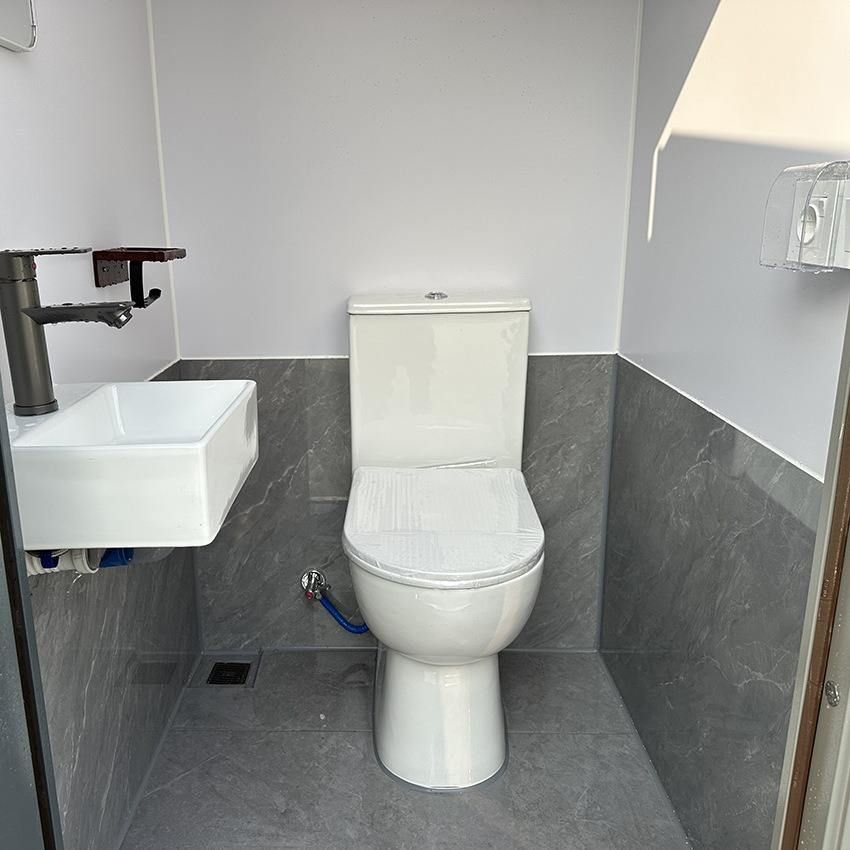
Mobile container houses utilize high-strength steel frames, providing excellent compressive and seismic resistance. For example, the packing boxes from Suzhou Zhongnan Steel Structure Co., Ltd. have a wind resistance rating of 12 and a seismic resistance rating of 8, with a frame deformation rate of only 0.18%, well below the industry's acceptable threshold of 0.3%. Their modular design supports rapid assembly and disassembly without the need for foundation construction, allowing them to be put into use immediately after power and water connections are established, offering far greater flexibility than traditional buildings. Some products are also equipped with insulation layers, waterproofing techniques, and double-glazed windows, enabling them to withstand long-term outdoor use.
II. Application Scenarios and Advantages
Emergency Support Scenarios: Foldable containers reduce transportation costs by minimizing volume. For instance, the foldable boxes from Suzhou Zhongnan, when folded, occupy only 1/5 of their expanded volume, allowing a single truck to carry 20 units with transportation costs as low as 150 yuan per unit, making them suitable for rapid mass deployment. In terms of storage, a 100㎡ warehouse can store 80 foldable boxes, offering significant long-term space cost advantages.
Reusable Turnover Scenarios: Hydraulic automatic expansion structures (such as those from Suzhou Zhongnan) can be assembled by a single person in 5 minutes, while manually assembled products take 10 minutes. In terms of reusability, compliant products from leading companies can be disassembled and reused an average of more than 8 times, reducing construction waste emissions by approximately 90% compared to traditional temporary buildings.
Diverse Scenario Adaptation: Through modular assembly, facade customization, and internal functional modifications, container houses can be adapted to various scenarios such as engineering camps, mobile commerce, and cultural tourism accommodations. For example, innovative products like apple pod homestays in foreign trade scenic camps and smart hotel container mobile rooms continue to emerge.
III. Market Trends and Development
Industry data from 2026 shows that products with multiple reusability capabilities, cross-border compliance qualifications, and low-carbon attributes account for over 60% of orders. A full lifecycle low-carbon cycle has become the mainstream direction, with products from leading companies being disassembled and reused an average of more than 8 times, significantly improving resource utilization. At the same time, cross-scenario versatility continues to expand, with modular products meeting the needs of engineering, commercial, cultural tourism, and other fields through personalized customization.



