
Functions of Mobile Container Houses
Mobile container houses have functions such as mobility and reusability, rapid installation and assembly, high integration, adaptability to various scenarios, durability and good sealing, and intelligent management.
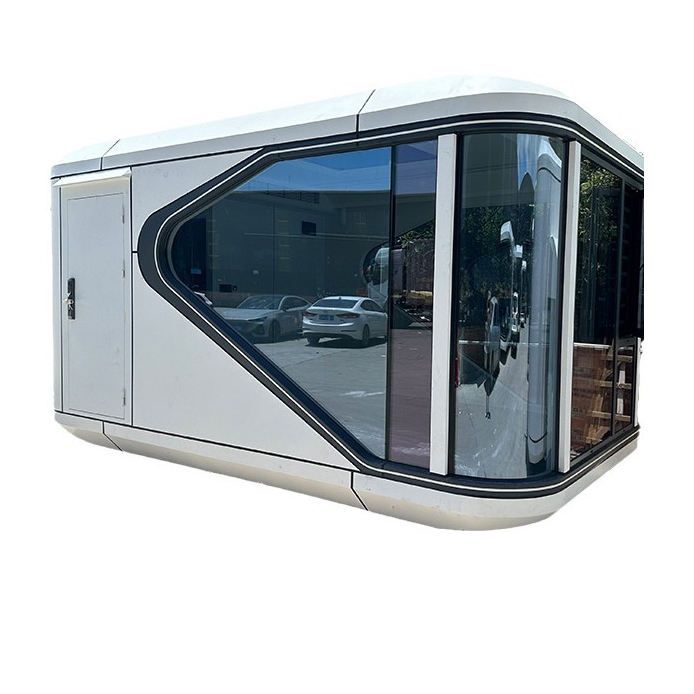
Mobility and Reusability: Mobile container houses adopt a modular design with the container body as the basic unit. This design provides a high degree of flexibility, allowing them to be used individually to meet small-scale space requirements or combined horizontally and vertically to form spacious usage spaces. Moreover, they can be moved as a whole, enabling rapid relocation and reuse for projects that frequently change construction sites, such as construction sites and temporary exhibitions, significantly saving time and costs.
Rapid Installation and Assembly: Prefabricated production is carried out in factories, and installation on-site is completed simply by connecting bolts, making the operation convenient and quick. Vertically, they can be stacked up to 3 layers, enabling the formation of standardized products and facilitating mass production, thereby improving construction efficiency.
High Integration: No secondary decoration is required on-site; they can be occupied immediately after being hoisted and positioned. The roof is prefabricated with electrical circuits, water supply pipes are laid along the walls, and a drainage system is installed on the wall sides, making them very convenient to use and reducing the complexity and time costs of on-site construction.
Adaptability to Various Scenarios: They have a wide range of applications and can be used as temporary office spaces, providing comfortable working environments for staff; as homestays in tourist attractions, offering unique accommodation experiences for tourists; and in scenarios such as smart waste stations, emergency medical facilities, and commercial fitness pods, meeting the needs of different fields.
Durability and Good Sealing: The steel frame structure design provides good earthquake resistance, deformation resistance, wind resistance, and load-bearing capacity, enabling them to withstand various harsh natural environments. Strict manufacturing processes ensure good water tightness, and the wall design typically features excellent sound insulation and thermal insulation properties, providing a safe and comfortable internal environment for occupants.
Intelligent Management: With the development of IoT technology, the intelligent management level of container houses continues to improve. For example, a cloud-based intelligent management system based on NB-IoT technology can monitor the temperature and humidity conditions inside container houses in real-time and remotely locate them, facilitating monitoring and management by administrators.



