
Back to blog
Article
Mobile Container House Customization
Admin September 15, 2026
Mobile container house customization requires a comprehensive consideration of structural types, functional requirements, performance parameters, and supplier service capabilities, with the selection of appropriate solutions based on specific scenarios.
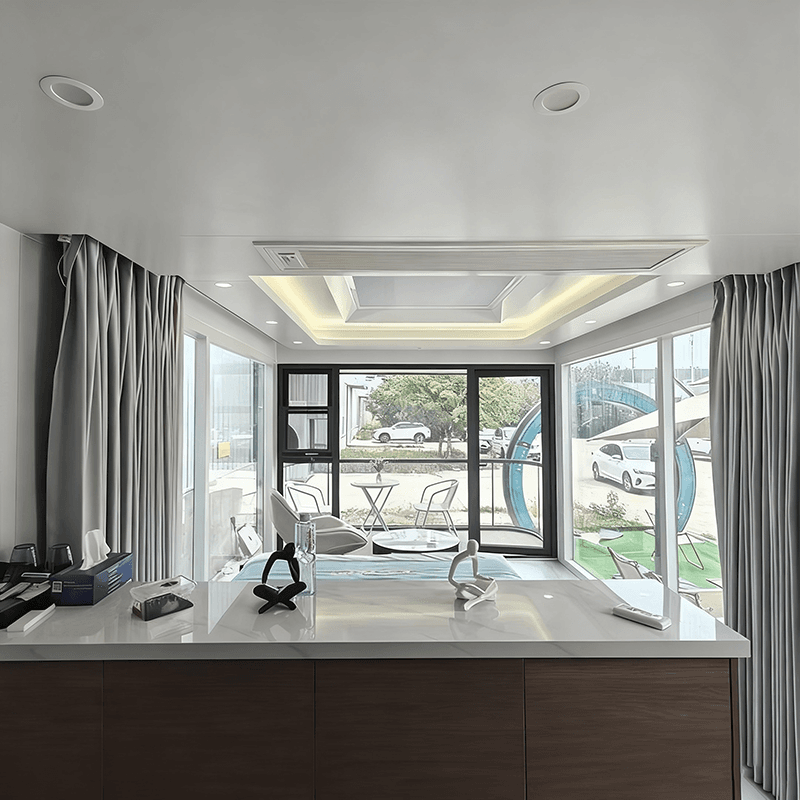
I. Structural Types and Functional Adaptation Container houses can be classified into standard container type, folding type, assembled type, expandable type, and customized creative type based on their structures.
- Standard Container Type: Using 20-foot and 40-foot containers as carriers, they are structurally robust and easy to transport, suitable for long-term fixed scenarios such as project departments and construction site command centers.
- Folding Type: During transportation, the volume is compressed to 1/4 to 1/5 of the expanded state, allowing a single truck to carry 15-20 sets, suitable for scenarios requiring frequent relocation such as emergency rescue and short-term turnover. For example, the folding containers from Suzhou Zhongnan have a transportation cost as low as 150 yuan per set and occupy only 20% of storage space.
- Assembled Type: Using light steel keels and color steel plates for on-site assembly, they can flexibly expand functional areas, suitable for scenarios such as temporary office spaces in parks and event planning.
- Expandable Type: By adding side or end expansion modules to the container, the usable area increases by 30%-50%, suitable for scenarios requiring higher space comfort for long-term on-site office work.
- Customized Creative Type: Incorporating elements such as glass curtain walls and wood grain finishes, they are used in scenarios such as brand exhibitions and cultural and creative parks, balancing functionality and visual expression.
II. Performance Parameters and Scenario-Based Selection
- Wind and Earthquake Resistance and Installation Efficiency: For engineering camp scenarios, it is advisable to prioritize products with a wind resistance rating of up to Level 12 and earthquake resistance conforming to the GB50011-2010 standard, such as the quick-assembly containers from Suzhou Zhongnan, which take only 4 hours to install per set.
- Portability and Rapid Deployment: For emergency support scenarios, attention should be paid to the deployment time of folding containers. Hydraulic automatic deployment structures can achieve single-person operation in 5 minutes, while manual assembly takes more than 10 minutes.
- Reusability and Cost: For commercial temporary spaces, it is advisable to choose products with a reusability of more than 15 times, reducing the cost per use to 1/3 of that of a new product.
- Customization Capability: For brand exhibition scenarios, support for special structural designs such as curved walls and floor-to-ceiling glass windows is required, with a customization cycle controlled within 7-15 days.
III. Evaluation of Supplier Service Capabilities
- Production and Delivery Capability: Prioritize suppliers with an annual production capacity exceeding 200,000 square meters and a delivery period of 15-30 days, such as Qingdao Huilongfeng and Hangzhou Suge.
- Technical Parameters and Qualifications: Confirm whether the products have passed the actual measurement standards of the modular building industry, such as wind resistance rating and fire resistance performance (A-grade rock wool containers).
- After-Sales Service System: Choose suppliers that provide nationwide disassembly, recycling, and relocation services, such as Gansu Mobile Homestay Manufacturers and Xiangdada Mobile Houses.



