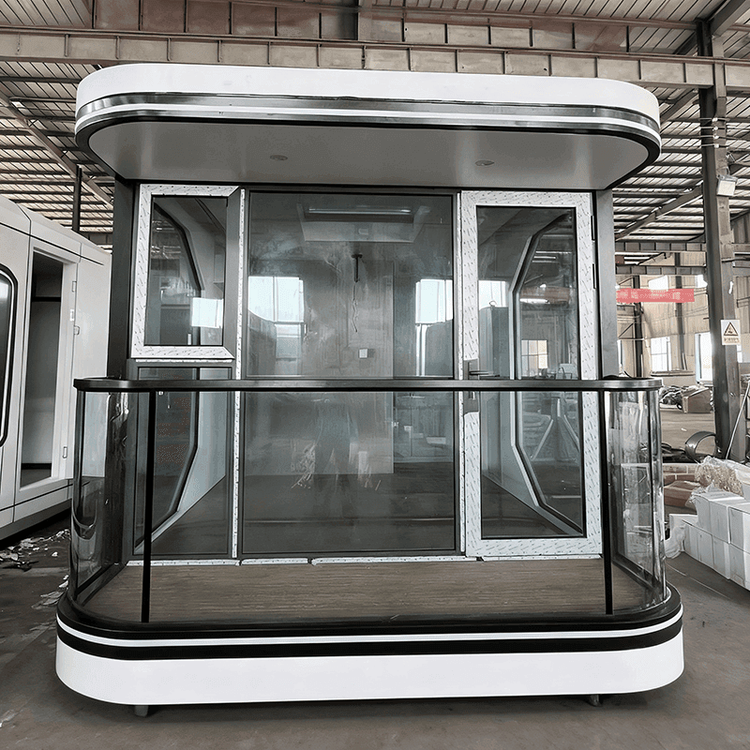
Mobile Container House
A mobile container house is a modular building product that is movable and reusable, featuring a steel frame structure and bolt connections, and constructed using standardized container units.

Origin and Characteristics
Mobile container houses originated from the practice of transforming old containers into temporary housing. Their core advantages lie in rapid installation and multi-story assembly capabilities. By assembling standardized container units, the building scale and functional layout can be flexibly adjusted. For example, a 3m × 6m two-bedroom container house has achieved the integration of indoor tile flooring and a complete electrical system (lights, sockets); a 2m × 3m customized model uses a steel frame structure with a corrugated metal sheet exterior, offering strong wind resistance and safe lighting (double windows with protective bars), and can be put into use with just electricity.
Structural Classifications
According to construction methods, they can be divided into three categories:
- Traditional Container-Modified Box Houses: These directly utilize discarded containers for internal modifications, retaining the original frame structure. They are cost-effective but have limited spatial flexibility.
- Newly Welded Box-Type Mobile Homes: These use newly welded steel frames covered with metal sheets or composite materials. They can be customized in size and function according to needs, offering higher structural strength.
- Demountable Box-Type Mobile Homes: Their modular design allows walls, roofs, and other components to be disassembled and reassembled, facilitating transportation and reuse, making them suitable for frequently relocated scenarios.
Application Scenarios
Their applications are extensive, covering three major fields:
- Temporary Office Spaces: Rapidly assembled container offices can meet short-term needs at construction sites and exhibitions, reducing construction costs.
- Tourist Resort Homestays: Through multi-story assembly and aesthetic enhancements, container houses can be transformed into unique accommodation units, balancing environmental protection and landscape integration.
- Smart Waste Stations: Standardized container structures facilitate the integration of sorting equipment and monitoring systems, enhancing the modernization of urban sanitation facilities.
Technical Advantages
The steel frame and bolt connection design ensure building stability while supporting horizontal and vertical expansion and assembly. The modular production model shortens construction periods, and the material recycling rate exceeds 80%, aligning with green building trends. Additionally, the corrosion resistance and fire performance of the exterior metal sheets further enhance safety in use.