
Mobile Assembled Portable Toilet
The mobile assembled portable toilet is a temporary sanitation facility designed with flexibility, rapid deployment, and environmental adaptability as its core features. It achieves a balance between functionality and portability through modular structures and lightweight materials.
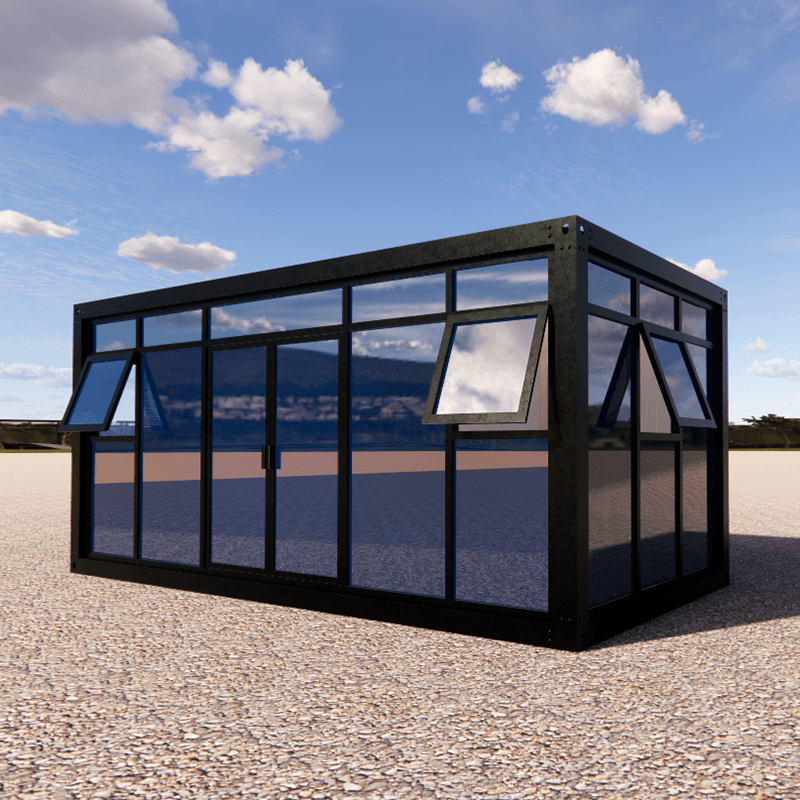
I. Design Features and Structural Advantages
The main frame is made of steel, ensuring stability and resistance to wind and earthquakes. The exterior wall materials can be galvanized steel sheets, stainless steel sheets, or aluminum sheets, with rock wool or polyurethane insulation layers inside, combining durability with thermal insulation. The floor is laid with anti-slip flooring and covered with a waterproof layer, while the doors and windows use aluminum alloy profiles paired with insulated tempered glass, ensuring both light transmission and enhanced security. Modular design is the key highlight, supporting single-unit independent stalls or combined multi-stall layouts, and allowing flexible integration of functional modules such as sinks and urinals to meet varying crowd density needs. For example, construction sites can adopt single-stall rapid deployment, while tourist attractions can combine multi-stall units with a management room.
II. Material Upgrades and Functional Expansions
Early wooden structures were prone to decay, but now glass-reinforced plastic and polyethylene are commonly used, offering corrosion resistance, easy cleaning, and odor absorption resistance. Standard lengths range from 1.2 to 3.0 meters, with customizable barrier-free access and ramps based on site requirements. Functional configurations are divided into basic and premium versions: the basic version includes lighting, exhaust fans, and sockets; the premium version adds inverter air conditioners, showerheads, and metal tees, with some products integrating microbial degradation or recirculating water flushing systems for zero-emission environmental protection. For example, the Lanzhou Yellow River Scenic Area effectively alleviated tourist restroom needs by deploying eco-friendly mobile toilets.
III. Application Scenarios and Deployment Efficiency
It primarily serves outdoor events, construction sites, tourist attractions, municipal squares, and other scenarios lacking fixed sewage facilities. Companies offer customized services, designing dimensions, layouts, and electrical configurations based on terrain constraints, with a production cycle of approximately 7-15 days. Transportation is done in whole or modular forms, with on-site deployment completed through lifting or assembly after leveling the foundation, and ready for use once connected to water and electricity. For example, homemade versions achieve basic mobility using buckets, wooden boards, and casters, while enterprise-grade products ensure rapid assembly and stability through standardized interfaces.
IV. Technological Trends and Industry Value
This type of toilet breaks through the fixed limitations of traditional public restrooms through lightweight materials and modular design, becoming the mainstream solution for temporary sanitation facilities. Its value lies in three aspects: first, addressing restroom needs in mobile venues; second, reducing pollution through eco-friendly treatment technologies; and third, adapting to complex terrains through customized services, enhancing urban public service levels. With advancements in material science and modular technology, it will evolve towards greater intelligence and low-carbon development in the future.



