
Military Prefabricated Concrete Houses
Currently, publicly available information does not explicitly mention specialized content on 'military prefabricated concrete houses,' but the general technical characteristics of prefabricated concrete houses can provide a reference. Their core performance includes high-strength structures, earthquake and disaster resistance, and multifunctional adaptability.
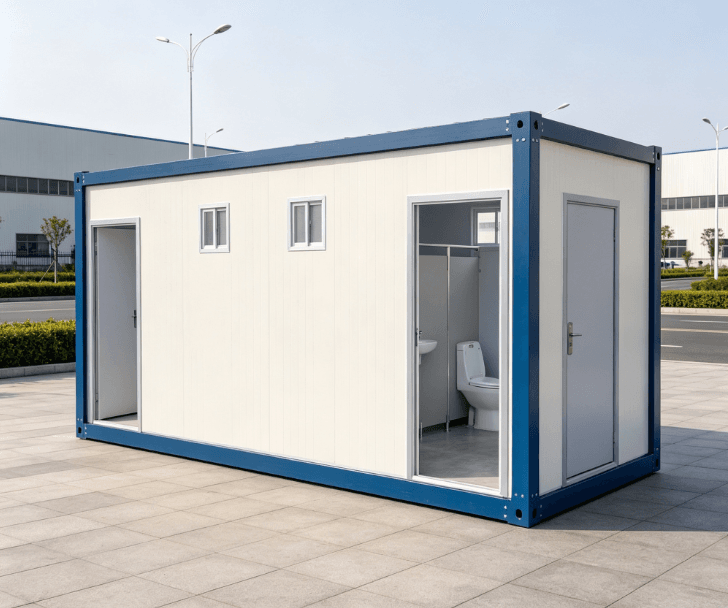
1. Structural Strength and Material Characteristics
Prefabricated concrete houses adopt a full-frame shear wall structure, with the main materials being C35 concrete (compressive strength of 30 MPa, equivalent to withstanding 3,000 tons per square meter) and Φ14 threaded steel bars (with a reinforcement ratio of 1.2% per module), and a wall thickness of 200 mm. This design endows them with extremely high load-bearing capacity, enabling them to withstand extreme load scenarios such as heavy stacking or impacts. If used in military settings, their structural strength can meet the demands of facilities requiring high protection, such as ammunition depots and command posts.
2. Earthquake and Disaster Resistance
Modules are connected through a combination of prestressed bolts (with a tensile strength of 25 tons) and mortise-and-tenon joints inspired by ancient architectural techniques, forming a highly stable connection system. In simulated tests of the Wenchuan earthquake, the overall displacement was only 3 cm under a seismic intensity of 9 degrees, indicating their effective resistance to strong earthquakes. In military scenarios, such performance can ensure the structural integrity of houses under the impact of artillery fire, explosions, and other shockwaves, reducing the risk of casualties.
3. Multifunctional Adaptability
Prefabricated concrete houses possess characteristics such as fire resistance, thermal insulation, wind and moisture resistance, and corrosion and weathering resistance, with a designed service life of over 70 years. These properties enable them to adapt to extreme climates (such as deserts and polar regions) or chemically polluted environments, meeting the needs for rapid deployment and long-term stationing in military operations. Additionally, the houses support overall relocation and secondary disassembly and reuse, aligning with the military engineering requirements for flexibility and resource conservation.
4. Military Application Potential
Although not explicitly labeled as 'military,' the technical characteristics of prefabricated concrete houses already cover the core needs of military scenarios:
- Rapid Deployment: Modular design can shorten construction cycles, making it suitable for temporary battlefield camps or emergency command centers;
- Protection: High-strength structures can withstand small arms attacks or secondary disasters;
- Concealment: Surface treatments (such as camouflage painting) can reduce the likelihood of detection;
- Sustainability: Durability and reusability reduce long-term maintenance costs.
Summary: The general technology of prefabricated concrete houses provides a solid foundation for military applications. Their high strength, disaster resistance, and multifunctionality can be further adapted to military needs through targeted optimizations (such as adding bulletproof layers or electromagnetic shielding).



