
Military Mobile Cabin Toilet Vehicle
The military mobile cabin toilet vehicle is a specialized vehicle designed to meet sanitation needs in field or temporary scenarios. It is mainly divided into three types: Dongfeng six-wheel-drive EQ2102N, Sinotruk Shanteka logistical support vehicle (with an onboard toilet), and vacuum mobile toilet vehicle, with functions focusing on environmental adaptability, modular deployment, and sewage discharge efficiency optimization.
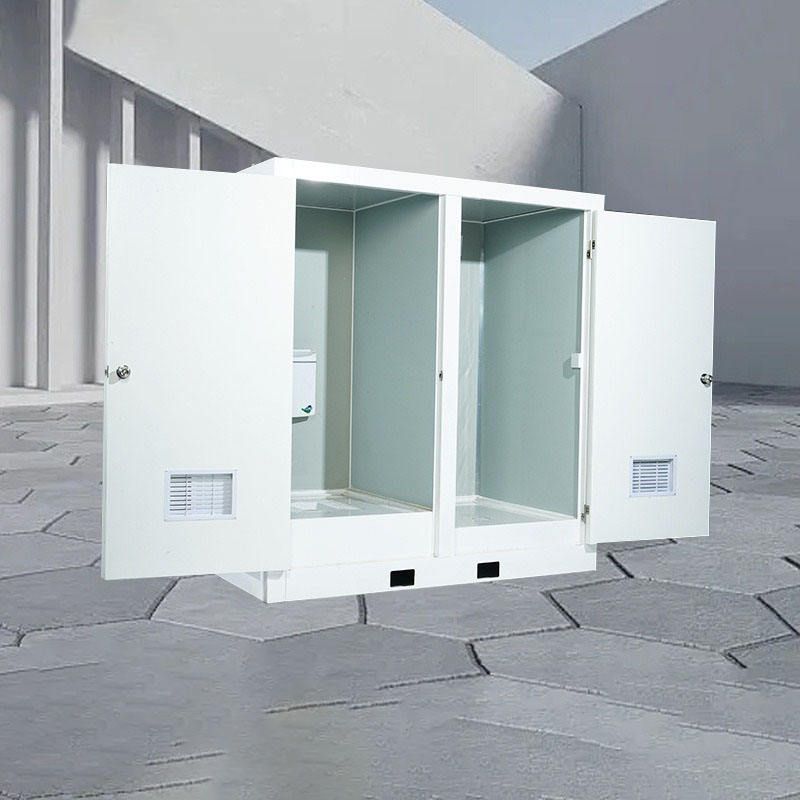
1. Dongfeng Six-Wheel-Drive EQ2102N Mobile Toilet Vehicle
This vehicle is modified based on the Dongfeng EQ2102NJ chassis. The cabin is 4950mm long, extending 650mm beyond the chassis, and adopts six-wheel drive to adapt to complex terrains. The cabin is equipped with an independent air conditioner, a ventilation fan, a freshwater tank (capacity unspecified), and a wastewater tank. The power system supports 12V or 24V (24V is recommended for enhanced stability). The cabin door is located at the rear and is equipped with a foldable anti-slip step. Inside, there are five independent compartments: four toilet compartments (with a space of 900-1000mm) equipped with squat toilets, multi-functional acrylic windows (soundproof, light-blocking, and mosquito-proof), and optional sensor-activated flushers, and one small compartment for storing tools. Each toilet compartment has independent control over lighting and ventilation fans, and solar panels or storage space can be installed on the top. This vehicle is suitable for temporary installations in parks and scenic spots, outdoor training camps, etc. The chassis can also be modified into off-road specialized vehicles such as cooking vehicles and rescue command vehicles.
2. Sinotruk Shanteka Cabin Logistical Support Vehicle (with an Onboard Toilet)
Built on a China VI emission standard 8.8L engine and a three-axle chassis (with an axle base of 5600mm), it has a total mass of 22500kg and dimensions of 9900-10100×2550×3990mm. Its passability-optimized design makes it suitable for medium- and short-distance missions. The toilet adopts a modular design, supports rapid deployment, and achieves dry-wet separation through independent partitions inside. It is equipped with a freshwater tank, a wastewater tank, and basic flushing functions. Customized models can be equipped with a biodegradation module, utilizing microbial decomposition technology to reduce sewage discharge frequency and environmental dependence. The vehicle supports customization, allowing adjustments to the layout or the addition of disinfection and ventilation systems to adapt to professional scenarios such as medical rescue and environmental monitoring.
3. Vacuum Mobile Toilet Vehicle
Modified based on the Sinotruk Shanteka chassis, it is equipped with a vacuum toilet system that achieves efficient sewage discharge through negative pressure suction, reducing the demand for water tank capacity. The vehicle is equipped with eight squat toilets, a stainless steel water tank, an air conditioner, a sink, and a dressing mirror, with a ventilation fan on the top to ensure air circulation. This vehicle focuses on high-traffic usage scenarios, such as large outdoor events or temporary camps, reducing maintenance frequency and enhancing sanitation guarantee efficiency through vacuum technology.



