
Container Houses in the Middle East
The demand for container houses in the Middle East is significant, primarily applied in engineering camps, cultural tourism projects, emergency support, and the energy sector, with trends towards customization, low-carbonization, and compliance.
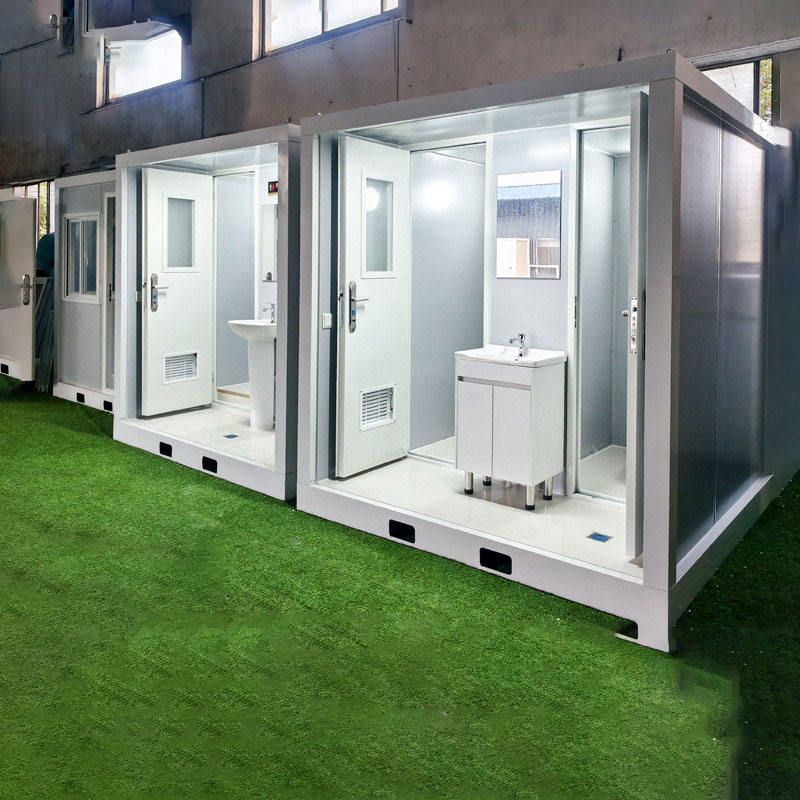
1. Demand in Engineering Camps: Large-Scale Applications Driven by Major Projects
Major overseas engineering projects in the Middle East, such as oil and infrastructure projects, have a strong demand for container houses. Taking the 5,000-person container camp project undertaken by Lida Group in 2025 as an example, it utilizes 38 independent buildings and 900 container units, achieving rapid deployment through modular assembly. Such projects need to meet the requirements of hierarchical and zoned planning, distinguishing between senior management, junior management, and worker areas. Additionally, they optimize insulation, ventilation, and dustproofing performance to ensure long-term stability in the hot and arid climate of the Middle East.
2. Cultural Tourism and Commercial Scenarios: High-End and Flexible
The application of container houses in the cultural tourism sector of the Middle East is gradually expanding. For instance, Broad Group's export of the "Living Building" modules to the UAE enables the rapid assembly of 15-story residential buildings using stainless steel core panel technology, balancing energy efficiency, environmental protection, and comfort. Furthermore, data from the European market indicates that the price range for 40-foot luxury container houses (with 3 bedrooms) is between 22,630 and 106,742 yuan, reflecting high-end customization demands. Similar products in the Middle East market need to be suitable for scenarios such as hotels and apartments, emphasizing personalized exterior design and internal functional modifications.
3. Emergency Support Demand: Disaster Relief Spurs Photovoltaic-Storage Containers
Regions in the Middle East with power grid failures, such as Iraq and Syria, have seen a surge in demand for integrated solutions combining photovoltaics, energy storage, and containers. Photovoltaic-storage containers integrate power generation, energy storage, and protection functions, enabling electricity supply within 72 hours. They are also resistant to high temperatures and dust, perfectly suited for extreme climates. The market size for emergency solutions is expected to reach billions by 2026, with project scales ranging from 1MWh to 100MWh, becoming a necessity for post-disaster reconstruction.
4. Low-Carbon and Compliance Trends: Recycling Becomes Mainstream
The Middle East market is paying increased attention to the low-carbon attributes of container houses. Leading manufacturers' products need to meet standards such as multiple disassembly and reuse (an average of over 8 times) and a 90% reduction in construction waste emissions. Additionally, cross-border projects require international certifications (such as the EU CE certification) and joint acceptance by local institutions, making compliance service capabilities a key competitive factor.



