Environmental Protection of Microbial Mobile Toilets
Microbial mobile toilets indeed possess significant environmental protection characteristics, primarily reflected in aspects such as waste treatment, water conservation, pollution-free discharge, applicability, intelligent management, and cost.

Environmentally friendly waste treatment: Microbial mobile toilets employ microbial degradation technology, utilizing specific microbial communities (such as marine microorganisms and anaerobic ammonium oxidation bacteria) to decompose feces into water vapor, carbon dioxide, and a small amount of organic fertilizer. For example, waterless biological treatment fertilizer-producing ecological toilets use biochemical reactors to degrade feces and ferment them into humic organic fertilizer. The treated urine can be used as liquid fertilizer, achieving waterless, odorless, and resource-utilization.
Water-saving and environmentally friendly: Some types feature water-saving characteristics. For instance, foam-sealing ecological toilets use foam generated by foaming agents instead of water for flushing, achieving a water-saving rate of over 90%. Vacuum self-priming toilets rely on air pressure differences to transfer fecal sewage into storage or treatment devices, consuming only 0.5 to 1 liter of water. Recirculating water-flushing ecological toilets treat feces and urine to obtain clean water for reuse in toilet flushing or landscaping, achieving a closed-loop water cycle.
Pollution-free discharge: Microbial mobile toilets do not require emptying or transportation. The degradation rate can reach 97%, with feces being pollution-free and easy to utilize. Mobile environmental toilets can achieve zero discharge through microbial degradation, making them suitable for places without sewage discharge permits.
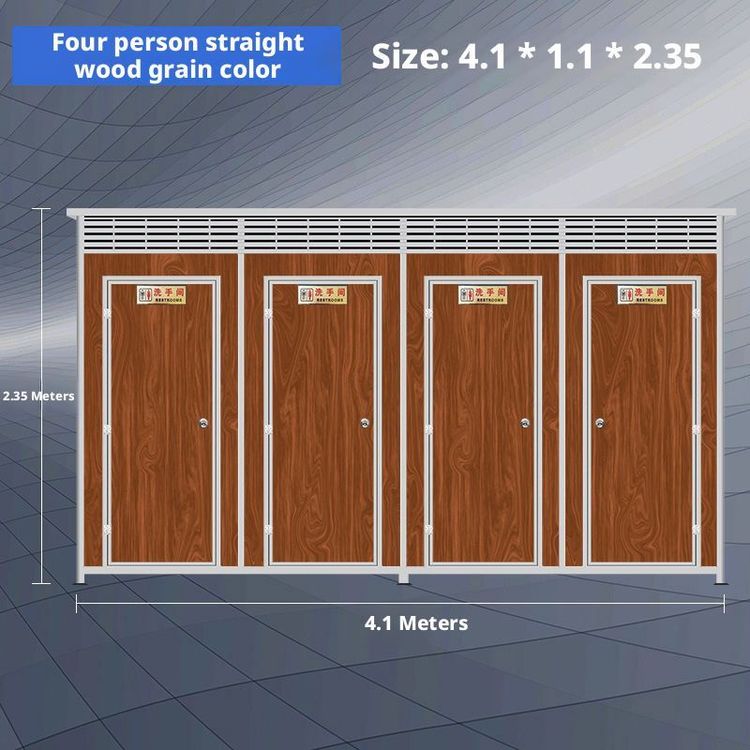
Wide applicability and mobility: Microbial mobile toilets can be applied in any location and can be freely moved without being restricted by the site. They are suitable for scenic spots, alpine and water-scarce areas, public places, and construction sites.
Intelligent environmental management: Integrated with a microcomputer control system, they can automatically sense toilet users and trigger operations such as lighting and ventilation. The system features real-time monitoring of toilet temperature and humidity, pedestrian traffic statistics, air quality monitoring, intelligent deodorization, face recognition paper dispensing, and real-time APP monitoring, facilitating environmental management and maintenance. Some models are equipped with intelligent temperature control systems that can operate at temperatures exceeding 60°C, providing both sterilization and disinfection functions.
Low construction and maintenance costs: The construction cost of a single toilet stall is 100,000 yuan lower than that of a traditional water toilet (based on the technology used in 13 venues at the 2022 Beijing Winter Olympics). The current annual maintenance cost is 15,000 yuan.