
What is the Maximum Height of a Container House?
The tallest container house can reach approximately 13.58 meters (the height of a 45-foot high-cube container), but the actual building height can be even higher through multi-layer stacking or special designs. Here is a detailed analysis:
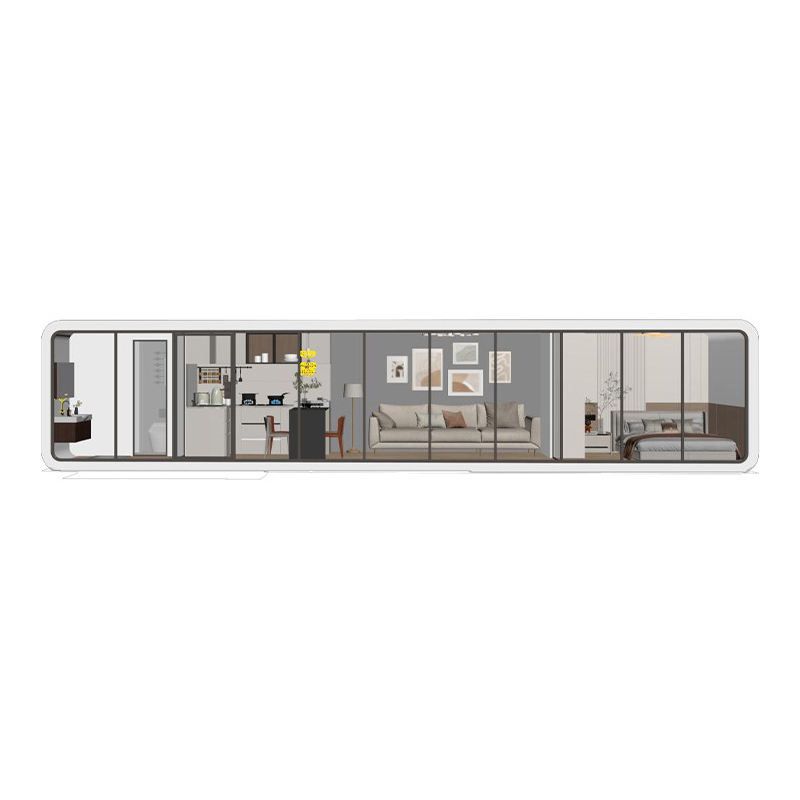
1. Height Limitations of Single Containers
Among international standard containers, the internal height of a 45-foot high-cube container is 2.68 meters, which is the tallest among common types. Other standard sizes, such as 20-foot containers (height 2.39 meters), 40-foot containers (height 2.39 meters), and 40-foot high-cube containers (height 2.896 meters), are all shorter. Although illegally modified containers may exceed height limits (e.g., reports of illegal containers reaching a height of 3.3 meters), such designs do not comply with safety regulations and pose serious risks.
2. Achieving Greater Heights through Multi-Layer Stacking
Container houses can increase their overall height through stacking. For example:
- Four-story building: Constructed by stacking 16 standard containers (each 3 meters tall), reaching a total height of 12 meters.
- Modular design: By connecting frames with horizontal beams and adding partitions and exterior wall panels, higher structures can be built. For instance, in a Canadian case, a container house was designed to form a 1,800-square-foot (approximately 167 square meters) four-bedroom home, significantly increasing the floor height.
- Special scenarios: Some projects extend vertical space further through cantilever structures or glass reinforcement, but additional calculations for load-bearing and stability are required.
3. Possibilities for Customized Designs
Non-standard container houses can be adjusted in height according to needs:
- Industry benchmark models: For example, a 40-foot high-cube container (40HQ) has an internal height of 2.655 meters, suitable for exhibition halls or housing with high ceiling requirements.
- Custom non-standard designs: Heights can be flexibly adjusted from 2.6 meters to 2.9 meters or even higher, but material strength and structural safety must be ensured. For example, some foldable container mobile homes achieve a balance between transportation convenience and space height through optimized designs.
4. Height Considerations in Practical Applications
- Transportation limitations: The height of a single container is restricted by road transportation regulations (e.g., a height limit of 4.5 meters for road transport in China), but the height of stacked buildings is not subject to this restriction.
- Building codes: Multi-story container houses must comply with national building codes to ensure seismic resistance, fire safety, and other performance standards. For example, the first two-story container home in the United States passed strict reviews, demonstrating technical feasibility.
- Cost and maintenance: Increased height raises material, transportation, and installation costs, while requiring more frequent maintenance (e.g., corrosion prevention, reinforcement). However, the service life can still reach 25 years or longer.



