
Material Requirements for Container Houses
The material requirements for container houses cover the main frame, enclosure structure, thermal insulation, fire protection and environmental protection, waterproof sealing, and other auxiliary materials, which must meet standards for strength, durability, safety, and functionality. Specific requirements are as follows:
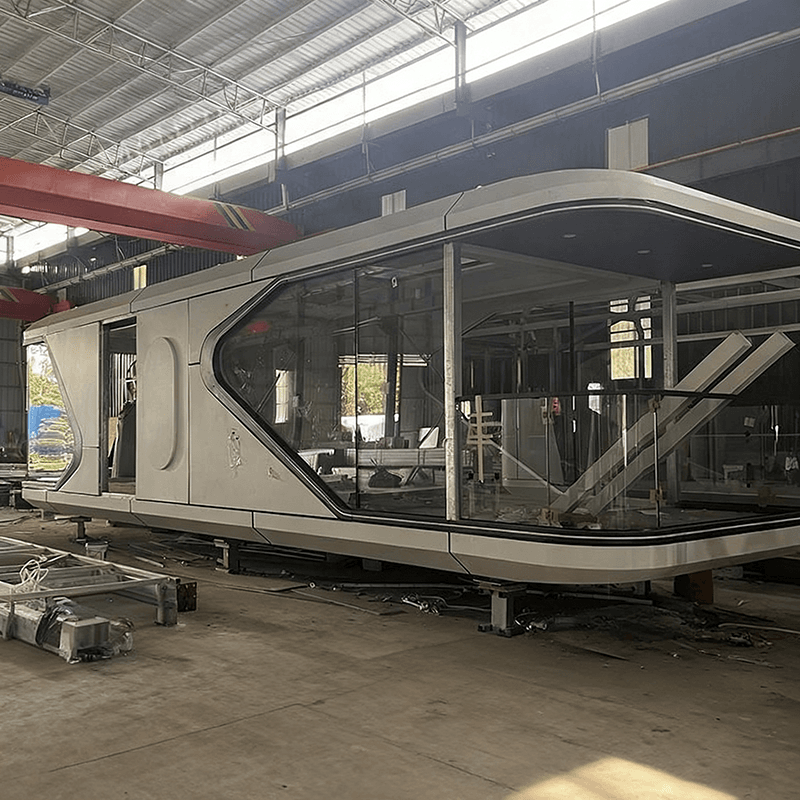
1. Main Frame Materials The main frame is almost entirely made of steel, with weathering steel being the standard choice. The yield strength must reach 235MPa to 345MPa or above (such as Q235B or Q345B steel) to ensure structural stability during lifting, transportation, and stacking. The steel must have good welding performance and toughness. For long-term outdoor use, anti-corrosion treatment is required: the hot-dip galvanizing process requires a coating thickness of ≥85μm, with a corrosion resistance life of up to 15-20 years; or a coating system of zinc-rich primer + polyurethane topcoat can be used to extend the service life.
2. Enclosure Structure Materials Color-coated steel sheets (color steel sheets) are commonly used for walls and roofs. The recommended base sheet thickness for exterior walls and roofs is 0.5mm-0.8mm to resist wind pressure and impact. In terms of coating materials, polyvinylidene fluoride (PVDF) coatings offer the best weather resistance and are suitable for highly corrosive or high-UV environments; polyester (PE) coatings provide good cost-effectiveness and are suitable for general environments. Additionally, wall panels can be made of glass fiber reinforced cement boards (GRC boards) or metal embossed panels to enhance fire resistance and aesthetic appeal. Wall materials can also include rock wool sandwich panels (top-tier fire resistance but high cost), polyurethane panels (good thermal insulation but flammable), and glass wool panels (excellent fire resistance but sensitive to water), all of which require an outer layer of color steel sheet for protection.
3. Thermal Insulation Materials Industry standards require materials with a thermal conductivity (λ) of ≤0.044 W/(m·K) to provide good thermal insulation. Common choices include polyurethane rigid foam (with a thermal conductivity as low as 0.022 W/(m·K), offering the best thermal insulation but at a higher cost), glass wool (with a thermal conductivity of about 0.045 W/(m·K), providing good cost-effectiveness along with sound absorption and fire resistance), and rock wool (with a fire rating of Class A and a thermal conductivity of about 0.048 W/(m·K), suitable for places with high fire protection requirements). The thickness of the thermal insulation layer is typically 50mm-100mm and must be calculated based on climatic conditions.
4. Fire Protection and Environmental Protection Standards All materials (especially thermal insulation materials and interior panels) must comply with the "Code for Fire Protection Design of Buildings" (GB 50016): when metal-faced sandwich panels are used for walls and roofs, the combustion performance grade of the core material should not be lower than Class B1 (fire-resistant), and Class A (non-combustible) core materials (such as rock wool) should be used in places with high occupancy like hospitals and schools. Interior materials (floors, wall panels, paints) must comply with the "Limits of Harmful Substances in Interior Decoration and Renovation Materials" standard to ensure that the release levels of harmful substances such as formaldehyde and VOCs meet the standards.
5. Waterproof and Sealing Materials Aluminum-zinc alloy steel sheets or ASA resin tiles are commonly used for roofs, offering better corrosion resistance and self-cleaning properties than ordinary color steel sheets. Seams, and connections between door and window frames and walls require ethylene propylene diene monomer (EPDM) rubber sealing strips or weather-resistant silicone sealants to ensure water tightness and air tightness, preventing rainwater leakage and thermal bridging effects.
6. Other Material Requirements If wood panels are used for interior decoration or partitions, materials that meet environmental protection standards and have good fire resistance should be selected; floors can be made of anti-static flooring, which combines compression resistance and anti-static properties.



