
Marine Container Houses
Marine container houses are modular buildings remodeled or newly built from steel containers, with high strength, fast construction, and flexible adaptation, widely used for temporary living, commercial space, and coastal scenes.
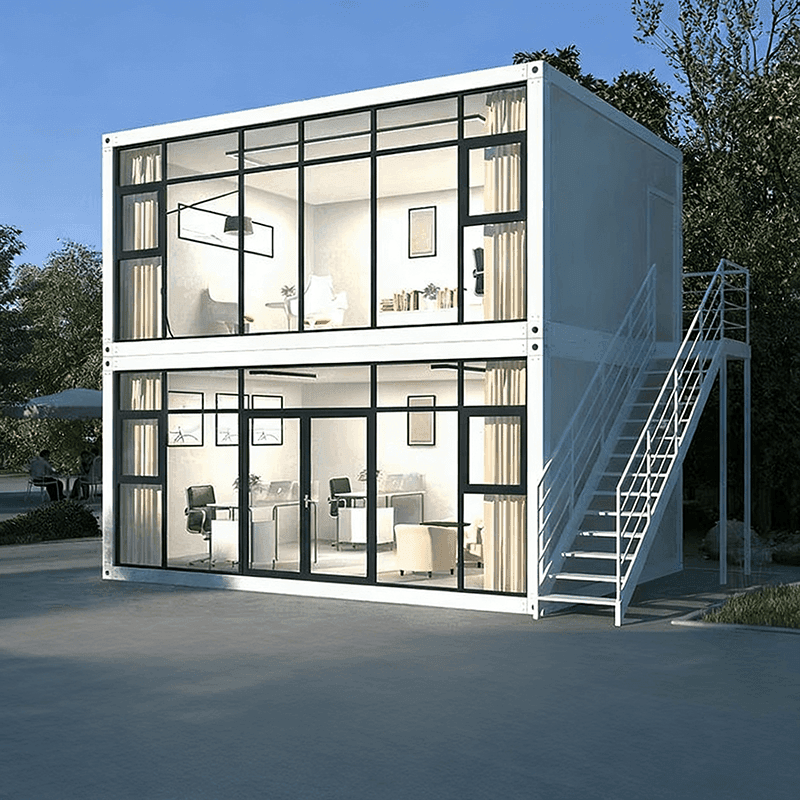
I. Structural traits and building process The core structure is a steel box treated with galvanizing or special coatings for weather resistance, wind-pressure resistance, moisture and corrosion protection, and suitability for extremes from -30°C-50°C. Modular design uses standardized connectors for unit combination, keeps the 10-30 ton load capacity of shipping containers, and solves thermal insulation with finished interior linings. Building processes fall into two types: direct conversion of shipping containers, and factory prefabrication of frames (top, bottom, and columns) to container size then filling walls with color-steel sandwich panels. The latter does not reuse old containers directly but keeps modular and standardized strengths.
II. Technical fit and application scenes In coastal settings, boxes of about 2.2 tons self-weight are fixed with anchor bolts to resist sea wind and salt-spray corrosion; coating integrity needs regular maintenance for long-term performance. In commercial scenes, modular traits support dynamic space changes—shops and bars can expand or shrink quickly by adding or removing units, far more flexible than traditional buildings. A typical case is CIMC’s 2012 design of the world’s first recyclable container hotel for the UK, proving circular reuse.
III. Core advantages
- Fast construction: Standardized design shortens build cycles for emergency housing or temporary commercial needs.
- Low-carbon and eco-friendly: Factory prefabrication cuts on-site pollution; materials can be refinished or dismantled and reassembled, extending life.
- High strength and durability: Steel resists typhoons, earthquakes, and harsh climates.
- Strong mobility: Whole-unit lifting or split transport suits temporary lodging, mobile offices, and similar scenes.
- Creative customization: Exterior and interior layouts can be personalized for both function and aesthetics.
IV. Limitations Long-term use requires attention to coating maintenance; coastal sites need regular corrosion checks. Modular joints may pose sealing challenges that process optimization must address.



