
Marine Container House
Marine container houses generally refer to the conversion of shipping containers into residential or functional buildings, with designs that need to meet the requirements of the marine environment, while paying attention to compliance and safety.
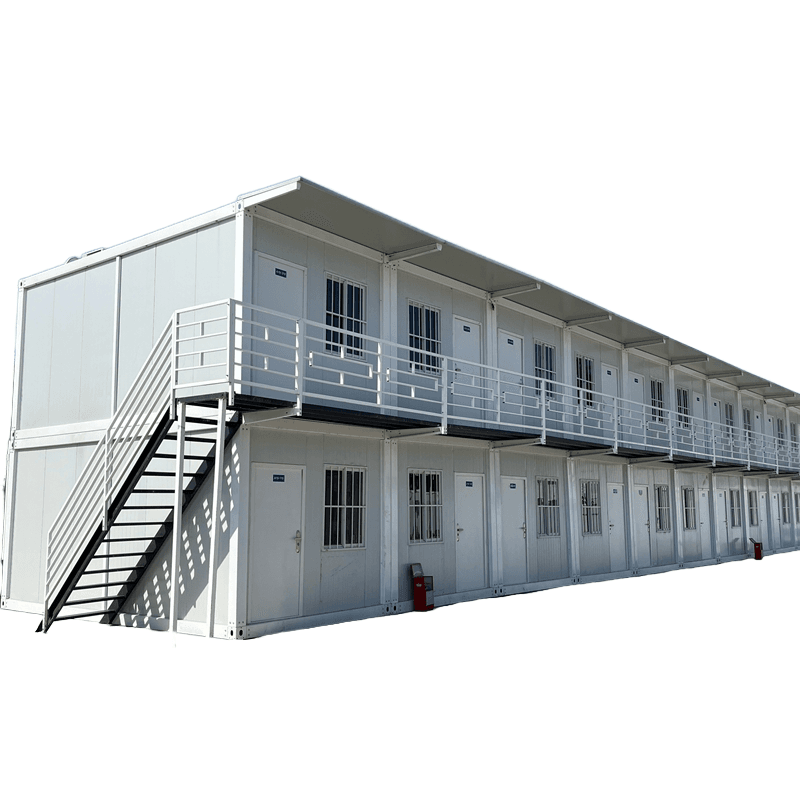
1. Typical Application Scenarios of Marine Container Houses
Temporary Living Quarters on Ships
Some engineering vessels, such as semi-submersible barges, may use containers as temporary living quarters due to space limitations. For example, a semi-submersible crane barge arranged 36 containers on the upper deck as accommodations for crew members and construction personnel, fixed in two layers. However, such modifications need to comply with ship safety regulations.Floating Houses on Water
By transforming containers into hull structures, floating houses can be constructed. For example, a British designer converted a 12-meter container into a floating residence on a river, integrating solar panels and energy-efficient heating devices to balance residential functionality and environmental protection needs.Modular Ship Support Facilities
Container houses can be used for ship offices, command centers, or living support facilities. For example, COSCO Shipping Heavy Industry (Nantong) used 96 specially made containers to assemble a three-story office building in its factory area, achieving rapid construction and structural stability through lightweight frame design and factory prefabrication processes.
2. Core Requirements for Marine Container Houses
Structural Safety
They need to meet the load-bearing and vibration requirements of ships. For example, the Nantong project used 6-millimeter steel plates bent into beam shapes to replace traditional square tube structures, reducing weight while improving stability to adapt to the dynamic environment of ships.Fire Protection and Escape
The marine environment has stringent fire protection requirements. Simple container modifications that do not have fixed fire detection systems, automatic sprinkler systems, or escape routes in compliance with the SOLAS Convention may pose safety hazards. Such non-compliant modifications should be avoided.Corrosion Protection and Durability
Shipping containers are originally designed to have a lifespan of about 10-12 years. After retirement, they can be extended to 15 years through inspection and maintenance. If hot-dip galvanized main frame materials are used, the service life can reach 50 years, making them suitable for long-term use at sea.
3. Limitations of Marine Container Houses
Compliance Risks
Container modifications not recognized by ship inspection agencies may violate international conventions (such as SOLAS). For example, a semi-submersible barge was required to make corrections before construction because its container living quarters did not hold a "Crew Accommodation Equipment Certificate."Space and Comfort
The interior height of standard containers is relatively low (about 2.6 meters), and the lateral space is narrow, requiring combined designs to optimize the layout. For example, the Wolff Cabin in Canada uses a cantilever structure and a lookout tower design to improve space utilization.Environmental Adaptability
Metal containers are prone to overheating or corrosion in high-temperature or high-humidity environments, requiring enhanced heat insulation, ventilation, and corrosion protection treatments. For example, container houses in desert areas need to be equipped with cooling systems, while those in marine environments need to use weather-resistant steel.



