
Back to blog
Article
Macau Housing Container
Admin September 15, 2026
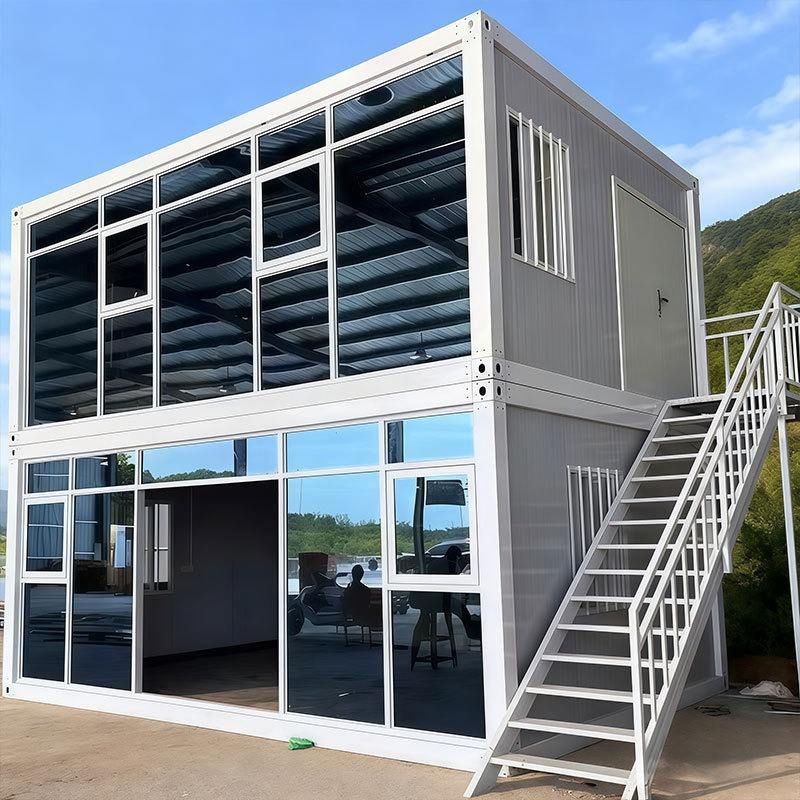
Macau housing containers generally refer to buildings that are transformed or assembled based on containers, featuring modularity, mobility, and environmental friendliness. They are widely used in sales offices, residences, offices, and other scenarios.
I. Types and Structures of Container Houses
Container houses mainly fall into two categories:
- Integrated Transformation Type: Using a single or multiple standard containers (such as 20-foot or 40-foot units) as modules, they are transformed into independent functional spaces through cutting, welding, window installation, and door and window fitting. Examples include one-bedroom, one-living-room residences or offices.
- Modular Assembly Type: Multiple containers are connected by bolts or welded together to form multi-story or multi-functional buildings. For instance, a sales office in Macau used nine containers to assemble a first-floor lobby and a second-floor office, combining functionality with unique styling.
II. Core Advantages
- Environmental Protection and Sustainability:
- High-strength bolts are used for connections, reducing welding processes and meeting low-carbon environmental requirements.
- Materials can be disassembled and reused multiple times, reducing resource consumption. For example, some products support customization in different thicknesses (50MM/75MM/100MM) to adapt to reuse needs in different climate zones.
- Rapid Deployment and Flexibility:
- Prefabricated production in factories and rapid on-site assembly shorten construction periods. For example, export data on modular buildings from Dongguan Humen Port shows that container houses can be assembled like “building blocks” into facilities such as schools and hospitals.
- Cost-Effectiveness:
- Compared to traditional buildings, container houses have lower costs, making them particularly suitable for temporary or low-cost scenarios. For example, prices for second-hand container houses can be as low as several thousand to ten thousand yuan, while starting prices for prefabricated container residences are mostly in the range of ten thousand to one hundred thousand yuan.
III. Application Scenarios
- Commercial Uses: Sales offices, shops, cafes, etc. For example, a container sales office in Macau achieves functional zoning and visual appeal through assembly.
- Residential Uses: Villas, apartments, temporary housing, etc. For example, low-cost earthquake-resistant prefabricated containers have been launched in the Australian market.
- Public Facilities: Schools, hospitals, data centers, etc. Export data on prefabricated buildings from China shows that products have been shipped to over 150 countries and regions, covering livelihood projects and infrastructure sectors.
IV. Technical Support and Customized Services
- Technical Investment: Some companies allocate more than 8% of their annual revenue to research and development of new products and assembly processes, with over 15% of their R&D team holding master's degrees or higher.
- Personalized Customization: Support for customized design of structures, sizes, and functional areas, such as expandable steel container houses and sandwich-panel structures, to meet different climate and usage needs.



