
Luoyang Prefabricated House Assembly-type
The development of prefabricated house assembly-type buildings in Luoyang is rapid, with significant manifestations in technological application, product types, market potential, and environmental efficiency.
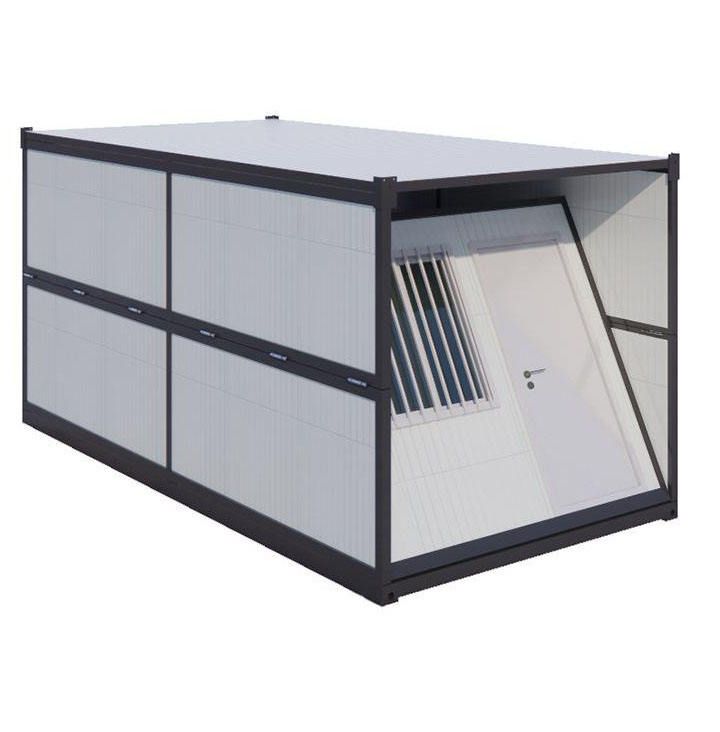
I. Enterprise Promotion and Technological Application
Luoyang, represented by Power Construction Corporation of China (Luoyang) Prefabricated Building Technology Co., Ltd., has built the first automated production line for concrete PC components, with an annual output of 50,000 cubic meters of prefabricated components. The production line adopts a circular assembly line design and full-process information control, achieving a high degree of automation. The company's developed 'Beret Easy-to-Live House' employs a dry connection technology of prefabricated components with bolts, enabling rapid construction through modular assembly. A two-story house can be completed within a week, significantly shortening the construction period.
II. Product Types and Characteristics
Prefabricated rural houses in Luoyang are mainly divided into two categories:
- Prefabricated Concrete Houses: These houses are cast in one piece in factories using C35 high-grade commercial concrete and national standard threaded steel, achieving professional design, modular production, and on-site assembly construction. Their characteristics include safety, comfort, energy efficiency, aesthetics, and affordability (with a basic rough unit price of approximately 300 yuan per square meter). A 200-square-meter main house can be erected in as little as 4 hours, with a standard service life of up to 70 years.
- Heavy Steel Structure Rural Houses: Components such as beams, columns, floor slabs, and wall panels are all prefabricated in factories, providing strong structural stability and suitability for scenarios with high seismic performance requirements.
III. Market Potential and Policy Support
Excluding urban areas, Luoyang has a total of 2,654 administrative villages. Assuming that approximately 15 households in each village adopt prefabricated concrete houses annually, it is estimated that 1.9109 million to 2.3886 million cubic meters of C35 prefabricated concrete will be consumed by 2025, generating an output value of 440 million to 549 million yuan. At the policy level, although Luoyang has not explicitly mentioned subsidy standards, cases such as Hebei Province providing a subsidy of 10,000 yuan per household for prefabricated rural houses and Hunan Province offering a reward of 400 yuan per square meter of building area (up to 50,000 yuan per household) demonstrate the significant driving effect of policy support on industry development.
IV. Environmental and Efficiency Advantages
Prefabricated buildings reduce on-site dust, construction waste, and noise pollution through factory production. Meanwhile, component production is not affected by weather conditions, enabling stable year-round operations and significantly improving construction efficiency. For example, the on-site assembly time for prefabricated concrete houses is reduced by more than 80% compared to traditional buildings, and material wastage rates are lowered to below 5%.



