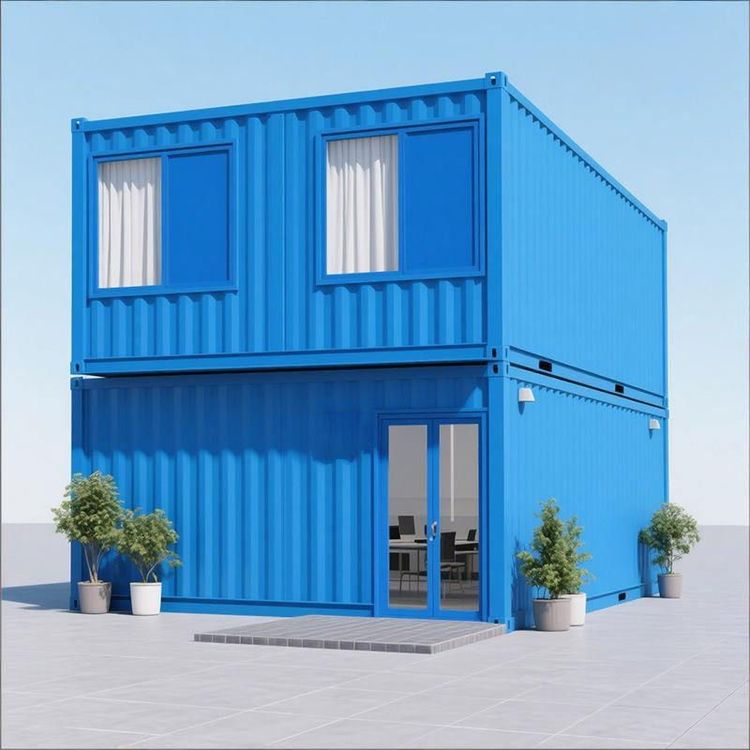
Luonan Prefabricated Houses
Luonan prefabricated houses mainly come in two forms: Luonan movable panel houses and Luonan color-steel houses.

Luonan movable panel houses: They are constructed from prefabricated lightweight panels and offer numerous significant advantages. Firstly, they can be quickly erected, enabling rapid deployment in emergency resettlement or temporary site usage scenarios. For example, in post-disaster relief efforts, they can swiftly provide shelter for affected individuals; temporary office spaces can also be rapidly set up to meet work requirements. Secondly, they are easily movable. When the usage scenario changes, they can be conveniently relocated to a new site. For instance, construction site dormitories can move along with the project site. Thirdly, they are cost-effective. Compared to traditional buildings, their material and construction costs are lower, making them suitable for projects with limited budgets. Additionally, they are environmentally friendly, energy-efficient, and highly secure. However, when constructing and using them in the Luonan area, attention should be paid to climate adaptability. Materials and structures with good thermal insulation, heat insulation, and moisture resistance should be selected to cope with local climatic conditions. Terrain adaptability is also crucial; structures with good stability and wind resistance should be chosen, and proper foundation treatment should be carried out to ensure the stability of the houses on different terrains. In terms of safety, strict adherence to relevant standards and regulations is essential to safeguard the lives and property of users.
Luonan color-steel houses: They are primarily built using color-steel materials and offer advantages such as lightness, durability, and easy installation. They are widely used in rural areas of Luonan County and some temporary buildings. The lightness makes transportation and installation relatively convenient; durability ensures a long service life for the houses; easy installation further reduces construction costs and time. However, they also have some drawbacks. Their thermal insulation is poor, and indoor temperatures are significantly affected by the external environment during hot summers or cold winters, resulting in reduced comfort. There are also safety concerns, such as structural instability that may pose risks during severe weather conditions, and non-standard electrical wiring that may cause fires. Additionally, there are environmental issues, as non-environmentally friendly materials or processes may be used during construction, impacting the environment to some extent.