
Luojiang Container House
Information about container houses in Luojiang can refer to the general characteristics and advantages of container movable houses, which have the characteristics of rapid construction, cost-effectiveness, safety and stability, flexible expansion, and environmental compliance, making them suitable for various scenarios such as construction sites, temporary offices, and living.
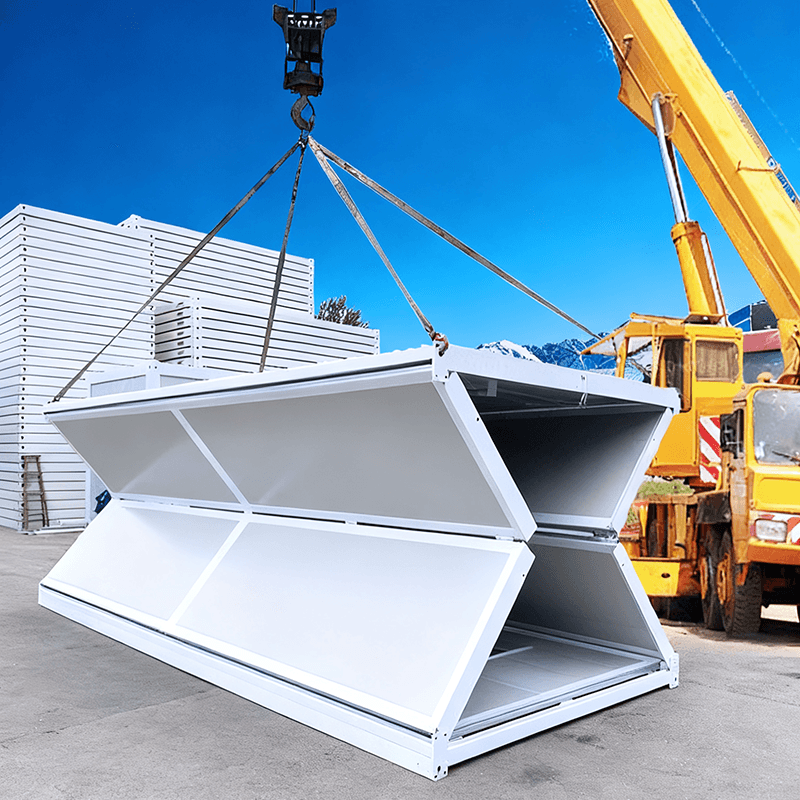
1. Structural and Material Characteristics
Container houses are constructed with high-strength cold-rolled steel plates or galvanized steel beams and columns as the load-bearing framework, filled with flame-retardant insulation materials such as rock wool and polyurethane, forming a stable triangular force system. The main frame wall thickness is usually ≥1.5mm, using Q235B or higher national standard carbon steel. Nodes are reinforced with high-strength bolts or full welding, and gap sealing is strictly handled to ensure an overall wind resistance of over 12 levels and stable seismic performance. The sandwich material must pass the national standard flame-retardant test (oxygen index ≥32), with low thermal conductivity, adapting to temperature differences between the north and south, and兼顾 (taking into account) both fire prevention and heat insulation needs.
2. Modular Design and Construction Efficiency
The “unitized design + modular combination” mode is adopted to achieve rapid hoisting and reuse through standardized interfaces. Components complete basic waterproofing, circuit pre-embedding, and epoxy zinc-rich primer spraying in the factory. On-site, only positioning, splicing, pipeline connection, and waterproof sealing are required, with no wet operations throughout the process. Daily production capacity can reach 3000㎡. The construction period is shortened by more than 50% compared to traditional civil engineering, making it particularly suitable for emergency disaster relief, municipal infrastructure construction, and other scenarios with high time requirements.
3. Flexibility and Recycling
It supports independent use of a single container or horizontal splicing and vertical stacking of multiple containers to adapt to different land occupation conditions. The all-bolt connection design supports non-destructive disassembly and assembly, with a material recovery rate exceeding 85% and low turnover costs. For example, a manufacturer in Yancheng achieves standardized production through an intelligent production line, making the product more suitable for the high-humidity environment along the coast, and reducing the assembly time by 30% compared to traditional movable plank houses.
4. Environmental Protection and Compliance
The production process has no dust or noise emissions, and waste is controllable, meeting the requirements of green construction site management. Product load performance and fire rating must comply with standards such as GB/T 8624-2012, and some enterprises have passed ISO system certification and special project construction filing to ensure a high acceptance rate. For example, an enterprise in Hefei has mastered patented technology for light steel frame reinforcement, significantly improving product stability during the plum rain season and extreme low-temperature environments.
5. Application Scenarios and Purchase Recommendations
Widely used in temporary command centers on construction sites, worker dormitories, commercial development sales offices, emergency disaster relief settlement points, and cultural tourism campsites, etc. When purchasing, it is necessary to focus on verifying the thickness and material of the steel, the fire rating of the panels, the node connection process, and the factory inspection report to avoid false labeling of parameters or the use of flammable sandwich panels.



