
Luohe Waterless Ecological Mobile Toilet
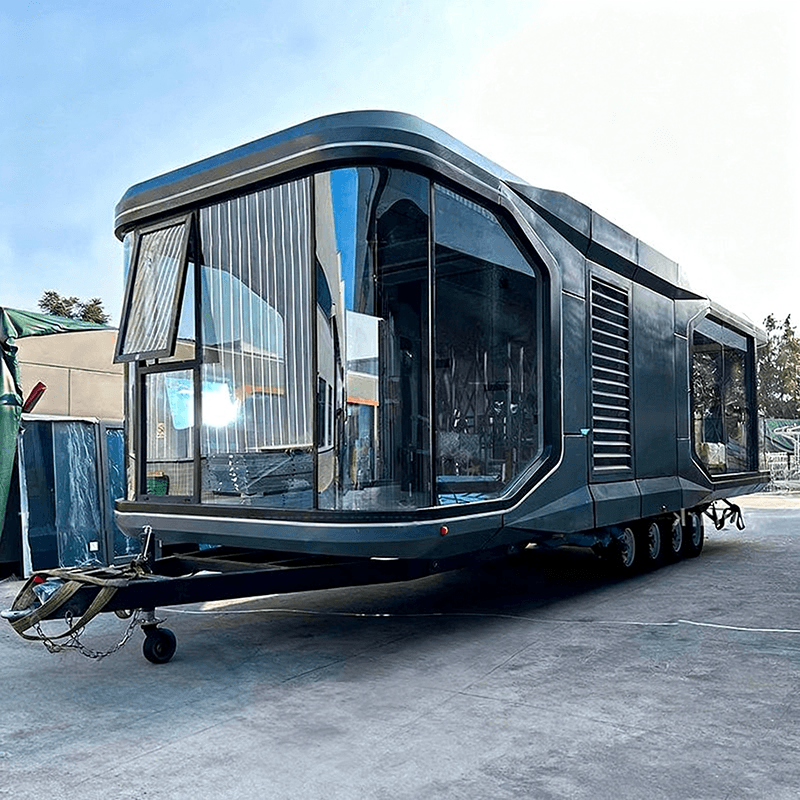
The Luohe waterless ecological mobile toilet is an environmentally friendly mobile toilet that does not require traditional water flushing and achieves efficient decomposition of feces and urine through microbial technology. It is suitable for various environments and features intelligent management functions.
Core Processing Technologies
- Feces Treatment: It employs solid-liquid separation technology. Solid excreta enter the fermentation tank through an automatic toilet bowl, mix with sawdust and biological strains, and decompose into carbon dioxide and water under temperature control, with a decomposition rate of ≥99%. The treatment process does not require water flushing and relies solely on microbial degradation.
- Urine Treatment: Urine is collected in a urine collection tank and then pumped into an aeration tank. Microorganisms in the aeration tank decompose the urine into water and carbon dioxide through phagocytosis, while preventing sediment formation through bubble convection. The treated wastewater flows into an evaporation reaction tank, where it undergoes secondary decomposition by high-temperature activated carbon adsorption and microorganisms, ultimately becoming colorless water stored in a water storage tank for toilet flushing, forming a recycling system.
Applicable Scenarios and Flexibility
This toilet is suitable for places such as schools, residential areas, squares, scenic spots, factory areas, and mining areas, and has strong adaptability to the environment. Whether in areas with or without water supply, or in hot or cold regions, functional adaptation can be achieved by adjusting the treatment plan (such as dry packing, vacuum suction, etc.). In cold regions, the insulation layer can be thickened and heating equipment can be installed, while in areas without electricity, solar power can be used to ensure normal operation under extreme conditions.
Functions and Configurations
- Compartment Customization: It provides modules such as toilet compartments, shower rooms, management rooms, and third toilets (including barrier-free facilities such as safety handrails), supporting personalized functional expansion.
- Standard Configurations: These include ventilation fans, lighting, squat toilets (ceramic/stainless steel), mop sinks, tissue dispensers, and occupancy display screens. Optional configurations include water storage tanks, septic tanks, and support for the installation of heating equipment in cold regions.
- Structural Materials: The main frame is made of galvanized steel pipes (with specifications such as 80×80×3.5mm). The doors and windows are aluminum profiles or thermal-break aluminum sliding windows. The floor is laid with anti-slip aluminum plates or tiles, and the exterior walls can be made of environmentally friendly materials such as aluminum-plastic panels or metal carved panels.
Advantage Summary
- Environmental Protection and Energy Efficiency: It does not require traditional water flushing and drainage systems and only needs a small amount of power to operate, significantly reducing water consumption and pollution emissions.
- Intelligent Management: It integrates functions such as background music, voice prompts, and automatic temperature control, making operation simple and maintenance costs low.
- Hygiene and Safety: Through microbial decomposition and a recycling system, it effectively inhibits the proliferation of pathogens and avoids cross-infection, meeting high hygiene standards.
- Aesthetic Appeal and Practicality: It has a compact shape, occupies a small area, can blend in with the surrounding environment, and has mobility, facilitating rapid deployment and relocation.



