
Low Cost of Container House Toilets
The low cost of container house toilets is mainly reflected in three aspects: price range, cost advantages, and comparison with traditional buildings.
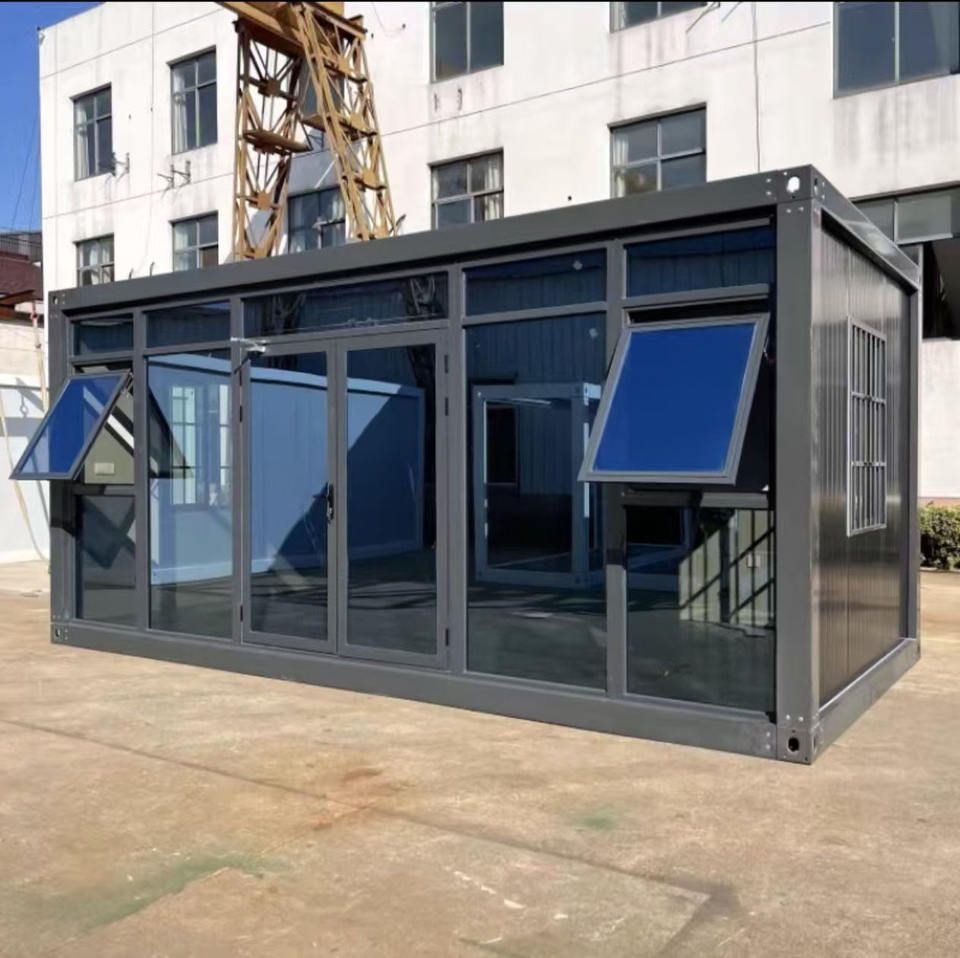
1. Flexible Price Range to Meet Different Needs
The price range of container house toilets is wide, allowing for the selection of different grades based on configuration and requirements. The market price of a basic single-squat toilet (excluding interior decoration) is approximately 3,000-6,000 yuan, suitable for temporary or simple scenarios. A standard model equipped with a simple sink, lighting, and ventilation system costs about 8,000-15,000 yuan, balancing practicality and comfort. A high-end customized model (including air conditioning, partitions, and high-quality sanitary ware) can reach 20,000-50,000 yuan, suitable for scenarios with high quality requirements. Additionally, toilets renovated from second-hand containers are even cheaper, at about 2,000-4,000 yuan, further reducing initial investment costs.
2. Significant Cost Advantages Due to Design and Production Optimization
- Modular Design and Efficient Production: Container toilets adopt a standardized production model, allowing factories to complete manufacturing within 7-15 days, while traditional brick-and-mortar toilets require 30-60 days, significantly shortening the construction period. As an integral structure, containers have a steel utilization rate of over 95%, reducing waste generation and lowering material costs.
- Localized Production Network: Taking Taizhou as an example, the mature container industry chain in the Yangtze River Delta region (steel suppliers, panel processing plants, and accessory markets) reduces logistics costs. Local procurement can save 10-15% on transportation fees while improving supply chain responsiveness, further compressing comprehensive costs.
- Low Operation and Maintenance Costs: Container toilets support rental or purchase options. After use, they can be resold or relocated, with a residual value rate of about 30-50%, reducing resource waste. Their independent operation capability is outstanding, requiring no complex piping. Equipped with a septic tank or biodegradation system, they can meet demand with material and installation costs less than 50% of traditional methods. Additionally, they are simple to maintain, resulting in lower long-term usage costs.
3. Outstanding Cost-Effectiveness Compared to Traditional Buildings
Compared to traditional brick-and-mortar toilets, container renovations offer advantages in cost, construction period, and flexibility. Traditional buildings require on-site construction, are greatly affected by weather and terrain, and have a high material waste rate. In contrast, container toilets can be prefabricated and quickly deployed, making them especially suitable for customers with limited budgets or temporary needs, such as construction sites, scenic spots, and disaster areas.



