
Longtou Cement Prefabricated House
Longtou cement prefabricated houses generally refer to houses constructed using prefabricated reinforced concrete modules. They have characteristics such as structural safety, efficient construction, relatively low cost, and environmental friendliness, but they also have drawbacks like poor sound insulation, susceptibility to water leakage, and inconsistent quality.
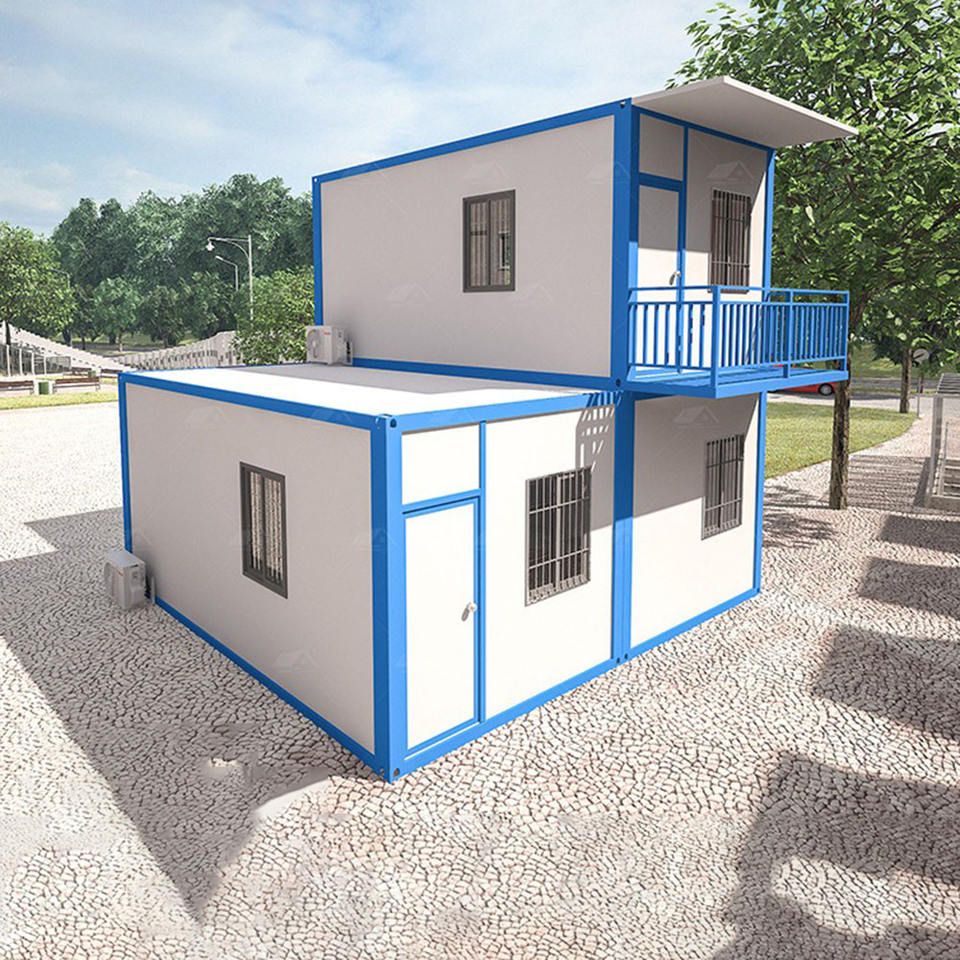
In terms of structural safety: Cement prefabricated houses often adopt a "full-frame shear wall" design. The framework is constructed using Φ10 - Φ14 national standard deformed steel bars, combined with C35 concrete for integral pouring. They can withstand earthquakes of magnitude 8 (with a designed seismic fortification intensity of 7 degrees). Under a typhoon of magnitude 12, the prestressed bolts connecting the modules remain loose-free. However, compared to cast-in-place houses, the modular prefabricated structure has slightly inferior seismic performance. It can meet requirements in non-seismic zones but is not suitable for constructing too many floors; otherwise, it may be difficult to meet seismic design requirements, with a maximum of 5 floors possible.
Regarding construction efficiency: The prefabricated modules are produced in a standardized manner in factories and assembled on-site, resulting in extremely high construction efficiency. For example, the overall installation of a 100㎡ house (composed of 3 modules) takes only 1 day, reducing the construction period by 90% compared to traditional methods. The modules have pre-embedded water and electricity pipelines before leaving the factory, and they can be used immediately after on-site connection. Building a cement "prefabricated house" of about 200 square meters can take as little as 4 hours at the fastest.
In terms of cost: Taking a 120㎡ self-built rural house as an example, the main construction cost of an assembled cement house is between 120,000 and 150,000 yuan, which is 30% less than that of a traditional brick-and-concrete structure. The cost per square meter is 300 yuan, making it relatively low-cost.
Regarding environmental protection: A 120㎡ house generates only 1.5 tons of construction waste, which is 90% less than that of traditional construction methods, making it environmentally friendly.
Drawbacks: Firstly, the sound insulation ability is poor. The thickness of the prefabricated panels is usually around 10 centimeters, with long circular holes in the middle. Sound has strong penetrating power, and the structure itself is prone to sound transmission. Noise from neighboring rooms can even be amplified after passing through the holes. Secondly, there is a water leakage problem. Since the house is composed of independent panels, there are tiny gaps between the panels, and rainwater can easily seep into the interior and corrode the steel bars. Thirdly, the quality is inconsistent. The quality of prefabricated cement panels on the market varies greatly, with a large proportion of inferior products. These products have a short service life and may even cause house collapses.



